height build
Height
Likely average height
Soldier and visitor accounts describe him as of ordinary stature among Plains men but notably agile, not exceptionally short or tall.
Portrait reconstruction
1840–1877 · Great Plains (Oglala Lakota, present-day South Dakota) · 19th century American West
Crazy Horse most likely looked like a lean, intensely focused Oglala Lakota warrior with long dark hair, plain dress, and little ornamentation.
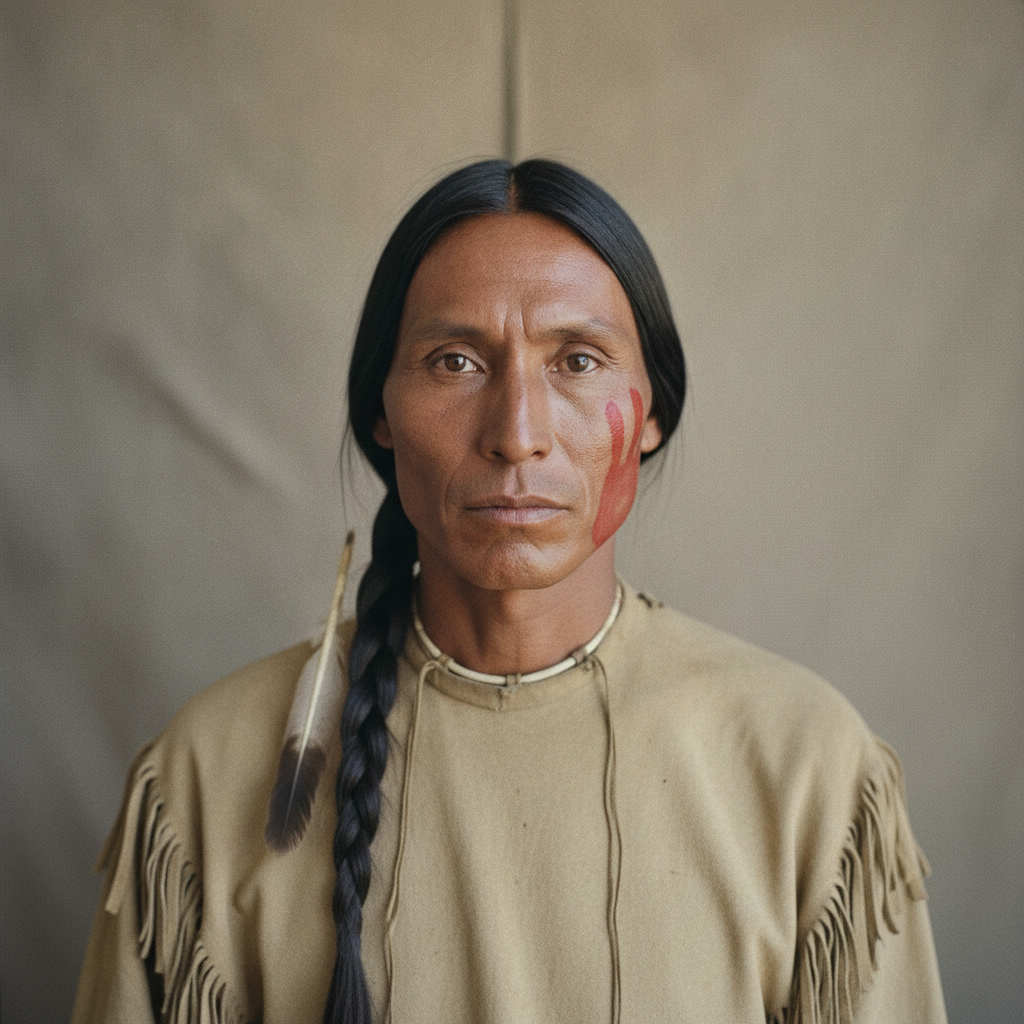
Face and hair: He probably had straight, dark hair worn long—often loose, tied back, or braided for activity—with a single feather or small hair ornament at times; his skin tone would have been medium-dark and his features angular, with high cheekbones and a narrow, determined face. Contemporary descriptions and circulating period images consistently suggest a serious, unadorned visage rather than a flamboyant or heavily decorated look. Build and bearing: Accounts describe him as spare and wiry—lean, quick, and muscular rather than bulky—moving with a lithe, animal-like grace. He was known for a quiet, intense presence: calm in repose but alert and fierce in action. His posture and expressions were often described as focused and severe rather than ostentatious. Clothing and accoutrements: Everyday and campaign dress would have been practical—buckskin shirt and leggings, moccasins, and a blanket—kept plain rather than heavily beaded or fringed. For battle or ceremonies he might wear simple war paint and small personal ornaments; he is not generally described wearing an elaborate full-feathered war bonnet but rather modest feathering or scalp-locks as personal marks. Facial hair and expression: He was probably clean-shaven or had minimal facial hair, as many Plains men of his age and rank did; his face is most often described as unadorned except for paint in specific contexts. Portraits and written accounts emphasize a concentrated, unsmiling stare—an expression that conveyed resolve more than theatricality.
Height / build
Likely average height · Likely lean and wiry
Hair
Likely black · Likely straight · Likely full; hair worn long with a scalp-lock and sometimes braided
Eyes
Likely dark (brown)
Complexion
Likely medium to dark (copper-toned)
Face
Likely long and narrow with high cheekbones · Likely straight to slightly prominent
Notable features
High cheekbones, long narrow face, long straight black hair with scalp-lock/braid, intense dark eyes, erect/economical posture
Grooming
Probably clean-shaven or minimal facial hair · Typically clean-faced; hair was kept long, often arranged with a scalp-lock, braids, and occasional feather or paint for ceremonies/war.
Dress / presentation
Traditional Oglala Lakota warrior dress: buckskin shirt and leggings, breechcloth, practical riding gear; war paint and a single feather or scalp-lock rather than full feathered headdress
height build
Height
Likely average height
Soldier and visitor accounts describe him as of ordinary stature among Plains men but notably agile, not exceptionally short or tall.
height build
Build
Likely lean and wiry
Descriptions and biographies emphasize a slim, muscular warrior body from riding and campaigning.
face
Face shape
Likely long and narrow with high cheekbones
Multiple accounts and later Lakota oral traditions mention his narrow face and prominent cheekbones.
eyes
Eye color
Likely dark (brown)
Most Plains Native men and eyewitness notes indicate dark eyes; no credible source records light-colored eyes.
hair
Hair color
Likely black
Contemporary descriptions and portraits consistently show dark or black hair typical of Lakota men.
hair
Hair style
Long, worn with a scalp-lock and often braided
Lakota warrior hairstyles included a scalp-lock (single forelock) and long hair braided or left loose; Crazy Horse is repeatedly described as wearing traditional warrior hair styles rather than western cuts.
For the Oglala Lakota, a warrior's appearance emphasized hair, paint, and earned adornments over ostentatious uniforms. Long hair, a scalp-lock or single feather, and minimal but meaningful ornament signaled bravery and status—qualities Crazy Horse embodied. His understated dress reinforced a reputation for steady courage rather than theatrical display.
Crazy Horse belonged to the Oglala band of the Lakota (Sioux), a Northern Plains people whose typical phenotype included straight black hair, dark eyes, and medium-to-dark copper skin. These regional and ancestral traits match descriptions of Crazy Horse and help form a plausible baseline for his appearance.
Modern images often exaggerate feathered headdresses, romanticized flowing hair, or European facial features; authentic descriptions emphasize practical dress, traditional hair styles (scalp-lock/braids), and a lean, spare appearance.
Movies and romantic art often give Crazy Horse a dramatic full-feather war bonnet, flowing hair, or European-style facial features. In reality, accounts emphasize much plainer but meaningful warrior dress—simple buckskin, targeted paint, and traditional hair arrangements—plus a lean, functional physique rather than Hollywood glamor.
Probably not notably tall—most sources describe him as of average height but notably agile and strong.
Likely dark brown—consistent with eyewitness descriptions and Lakota population traits.
Likely black, straight, kept long with a scalp-lock and often braided or tied with a single feather or ornament.
Probably clean-shaven or with minimal facial hair; sources don’t emphasize a full beard.
His quiet intensity and erect, economical bearing—long dark hair and striking cheekbones more than flashy dress—would make him noticeable.
No universally accepted photo exists; a few 19th-century images are attributed to him but remain disputed by historians.
Photograph widely attributed to Crazy Horse (disputed)
19th‑century photograph circulated in newspapers and books · c.1877 (attribution disputed)
A small number of late-19th-century photographs have been circulated as images of Crazy Horse, but historians remain divided about the identifications; they show a Native man with long hair and a serious expression.
Crazy Horse: A Lakota Life
Kingsley M. Bray · 2006
Modern biographical synthesis using Lakota oral histories and primary accounts that describes Crazy Horse's physique, hair, dress, and demeanor as lean, long-haired, and quietly intense.
Crazy Horse: The Strange Man of the Oglalas
Mari Sandoz · 1942
A formative popular biography drawing on oral tradition and early accounts; depicts Crazy Horse as spare, fierce, and plainly dressed—shaping much of his modern image.
Crazy Horse and Custer
Stephen E. Ambrose · 1996
Popular history synthesizing accounts of Plains campaigns; includes descriptions of Crazy Horse's appearance and behavior from soldier reports and later historians.
20th-century paintings and illustrations of Crazy Horse
Various artists and illustrators · 20th century
Many later artistic depictions emphasize dramatic headdresses or romanticized facial features and have influenced public imagination more than they reflect contemporary accounts.
National Park Service / Crazy Horse Memorial descriptions
National Park Service; Crazy Horse Memorial Foundation · 20th–21st century
Public history summaries that consolidate biographical details and commonly cited descriptions of Crazy Horse's appearance and dress.
skin
Complexion
Likely medium to dark (copper-toned)
Observers described Plains Lakota skin tones as copper or dark; Crazy Horse is described similarly in historical biographies.
grooming
Facial hair
Probably clean-shaven or minimal facial hair
Most depictions and descriptions of Plains warriors of his age show little facial hair; accounts do not emphasize a beard.
clothing
Typical clothing
Buckskin shirt and leggings, breechcloth, practical war paint and single feather or scalp-lock ornament
Contemporary descriptions and Lakota practice place emphasis on practical leather clothing with meaningful adornment rather than full ceremonial headdresses for many warriors.
other
Presence
Quietly intense and commanding
Eyewitness and oral accounts repeatedly note his reserved, concentrated manner that made him stand out more than showy dress.