hair
Hair color
Likely dark (black to dark brown)
Regional population traits and Philistine/Levantine iconography show predominantly dark hair; long dark hair is emphasized in material culture and later narrative focus on hair.
Portrait reconstruction
0–0 · Philistine territory, southern Levant (Sorek/Shephelah region) · Late Bronze Age / Early Iron Age (biblical Judges period)
Delilah likely looked like a Mediterranean woman with dark, wavy hair, warm olive skin, and richly worked jewelry reflecting Aegean‑Levantine fashions.
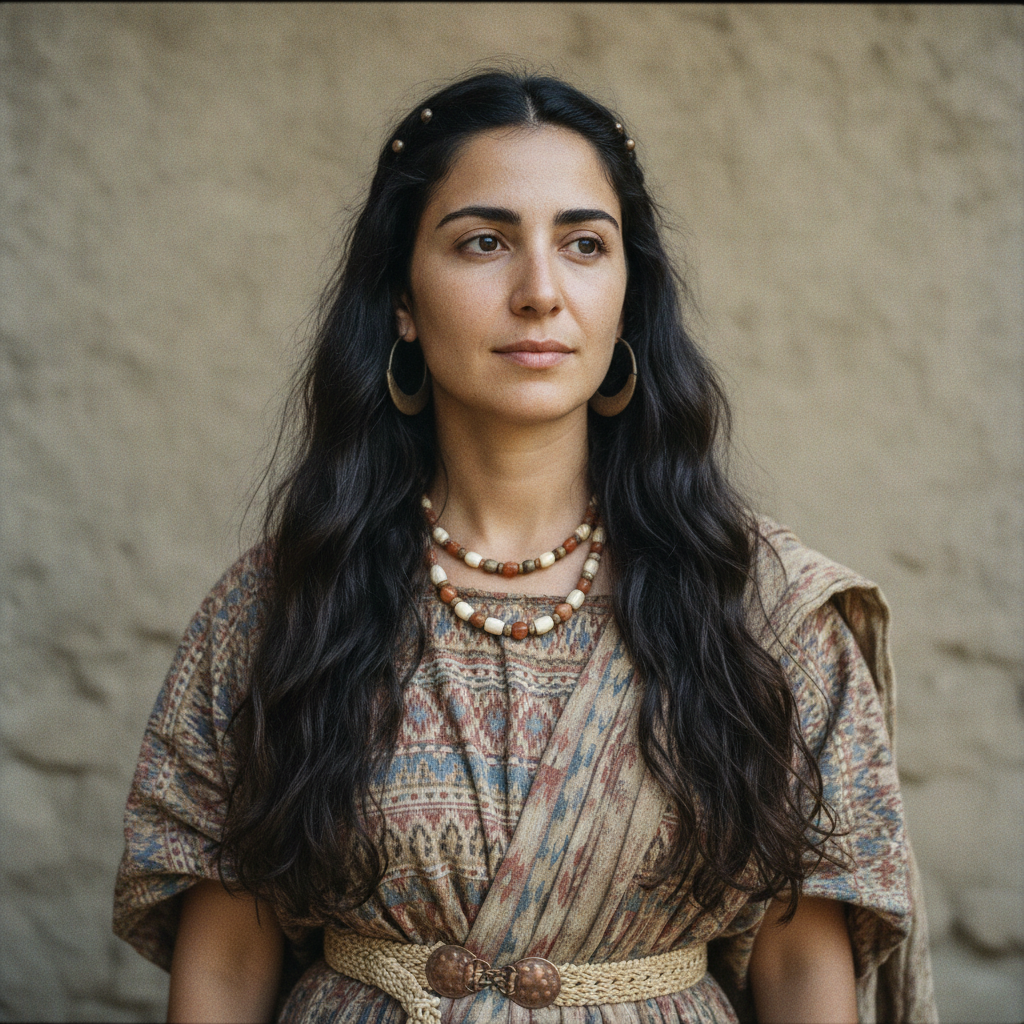
Face and complexion: Picture a Mediterranean face — olive to light‑brown skin, strong brows, dark eyes and full lips. Facial features would most likely read as rounded and robust rather than gaunt, with a healthy, sun‑tanned tone from living in the Shephelah. Hair and style: Hair was probably dark and long, naturally wavy or loosely curled; she might wear it braided, looped, or pinned up with decorative pins and beads so that loose lengths could be let down for effect. Hair ornaments—metal pins, beads, or small combs—would catch the light and draw attention. Clothing and jewelry: Expect layered tunics or a patterned dress with a fitted belt, influenced by Aegean dress styles blended with local Levantine tailoring: patterned borders, pleats, and sashes. Jewelry would be prominent—necklaces of faience, bronze or gold, dangling earrings, armlets and finger rings—used to signal status and allure. Grooming and makeup: Light cosmetics such as kohl to darken the eyes and rouge for cheeks were in the region; overall grooming would aim to highlight eyes and hair, complementing the jewelry and colorful textiles.
Height / build
Likely average height (for ancient Levantine women) · Likely average to curvy build
Hair
Likely dark (black to dark brown) · Likely wavy to curly · Likely normal (no special recession)
Eyes
Likely dark (brown)
Complexion
Likely Mediterranean / olive
Face
Likely oval to heart‑shaped · Likely straight to slightly aquiline
Notable features
Long dark hair, prominent jewelry (earrings/necklaces), attentive grooming that emphasized eyes and hair
Grooming
None · Likely well‑groomed: long hair styled or bound, cosmetics and scented oils, and visible jewelry.
Dress / presentation
Aegean‑influenced Levantine dress: patterned tunic or dress, shawl or cloak, decorative belt, and conspicuous jewelry
hair
Hair color
Likely dark (black to dark brown)
Regional population traits and Philistine/Levantine iconography show predominantly dark hair; long dark hair is emphasized in material culture and later narrative focus on hair.
hair
Hair length & style
Likely long and worn styled or bound
The Samson story emphasizes hair as a feature and Philistine/Levantine women’s figurines often show long hair or headdresses; long hair was a beauty marker.
eyes
Eye color
Likely dark (brown)
Dark eyes are typical for Mediterranean Levantine populations and consistent with regional depictions and ancestry.
skin
Complexion
Likely Mediterranean / olive
Philistine populations combined Aegean and Levantine ancestry and lived in a sunny coastal climate producing olive to light‑brown skin tones in archaeological and genetic studies.
clothing
Typical dress
Aegean‑influenced Levantine tunic with jewelry and belts
Philistine pottery, figurines, and imported Aegean styles show patterned tunics, shawls, and emphasized use of jewelry—women’s dress was decorative and conspicuous.
In Philistine and broader Levantine culture, beauty emphasized groomed long hair, decorative dress, and jewelry. Women used cosmetics, oils, and patterned textiles to display status and attract mates; hair and adornment were active tools of social presentation.
Philistines arrived with Aegean cultural elements and mixed with local Levantine populations. Visually, that meant Mediterranean features—olive skin, dark eyes and hair—combined with Aegean fashions like patterned tunics and specific jewelry shapes.
Modern art and film often turn Delilah into a European blonde or a purely exoticized femme fatale; historically she was likely dark‑haired and Mediterranean in appearance, wearing regional dress and Aegean‑style jewelry.
Films and paintings often recast Delilah as a European blonde or an exoticized 'Oriental' seductress. Historically, she was almost certainly Mediterranean in look and dressed in local/ Aegean‑influenced styles rather than Victorian or Hollywood glamour garb.
Likely average height for ancient Levantine women.
Likely dark (brown).
Likely dark (black to dark brown), probably wavy to curly, and worn long.
Probably — the narrative presents her as a seductive, attention‑drawing woman and material culture shows women emphasized beauty through dress and jewelry.
A patterned tunic or dress with a decorative belt, shawl or cloak, and conspicuous jewelry (earrings, necklaces, bracelets).
No contemporary portrait exists; archaeological and genetic context lets us build a probable visual profile.
Judges 16 (Hebrew Bible) — Samson and Delilah narrative
Hebrew Bible, Book of Judges 16 · composition traditionally dated to early Iron Age / final form later
Primary literary source introduces Delilah as a Philistine woman who seduces Samson and extracts the secret of his strength; provides social role but no physical description.
Philistine terracotta figurines and pottery depicting women
Archaeological finds from Philistine sites (e.g., Ashkelon, Ekron, Gath) · 12th–10th centuries BCE
Figurines show female dress, hairstyles, and jewelry styles (long hair, patterned garments, necklaces and earrings) offering a visual template for Philistine female appearance and adornment.
Aegean and Sea Peoples iconography
Aegean‑style pottery and Egyptian reliefs of Sea Peoples · Late Bronze Age / early Iron Age
Material culture and Egyptian depictions show clothing, belts, and hair treatments associated with Sea Peoples—contextual evidence for Philistine dress influences.
Ancient DNA and population studies referencing early Philistines
Genetic studies of Ashkelon and other Philistine contexts (published in scientific journals) · 21st century (ancient DNA era)
Genetic work indicates an influx of Aegean‑related ancestry into early Iron Age Philistines, later mixing with local Levantine populations—supporting a mixed Mediterranean appearance.
Medieval and Renaissance paintings and sculptures of Delilah
European art tradition (e.g., Titian, Rubens, medieval illustrators) · Medieval–Renaissance to modern
Later artworks shaped the popular visual image of Delilah (often Europeanized) but reflect later cultural values rather than historical reality.
grooming
Use of cosmetics and oils
Likely used cosmetics and scented oils
Cosmetics and perfumed oils are well attested across the ancient Levant and Mediterranean as elements of female grooming and attractiveness.
height build
Height
Likely average height (for ancient Levantine women)
No textual suggestion of unusual stature; skeletal and regional population data imply average female height for the period.
face
Facial hair
None
Women in the region were not typically bearded; cultural norms and depictions show smooth female faces.
cultural
Perceived attractiveness
Probably considered attractive / striking
The biblical narrative frames Delilah as seductive and persuasive; combined with attire and jewelry, she likely fit local beauty ideals.
other
Distinctive features in a room
Jewelry, polished hair, and confident dress would stand out
Philistine elite and urban women wore conspicuous jewelry and patterned textiles that signaled status and attracted attention.