height build
Height
Likely tall for his time
Medieval Norse kings and skaldic praise emphasize imposing stature; Harald was repeatedly cast as a commanding warrior-leader.
Portrait reconstruction
1015–1066 · Norway (active in Kievan Rus' and Byzantium) · 11th century (High Middle Ages)
Harald Hardrada most likely looked like a tall, powerfully built Norse warrior—fair-skinned, light-haired, and sharply dressed as both a king and a veteran of Constantinople.
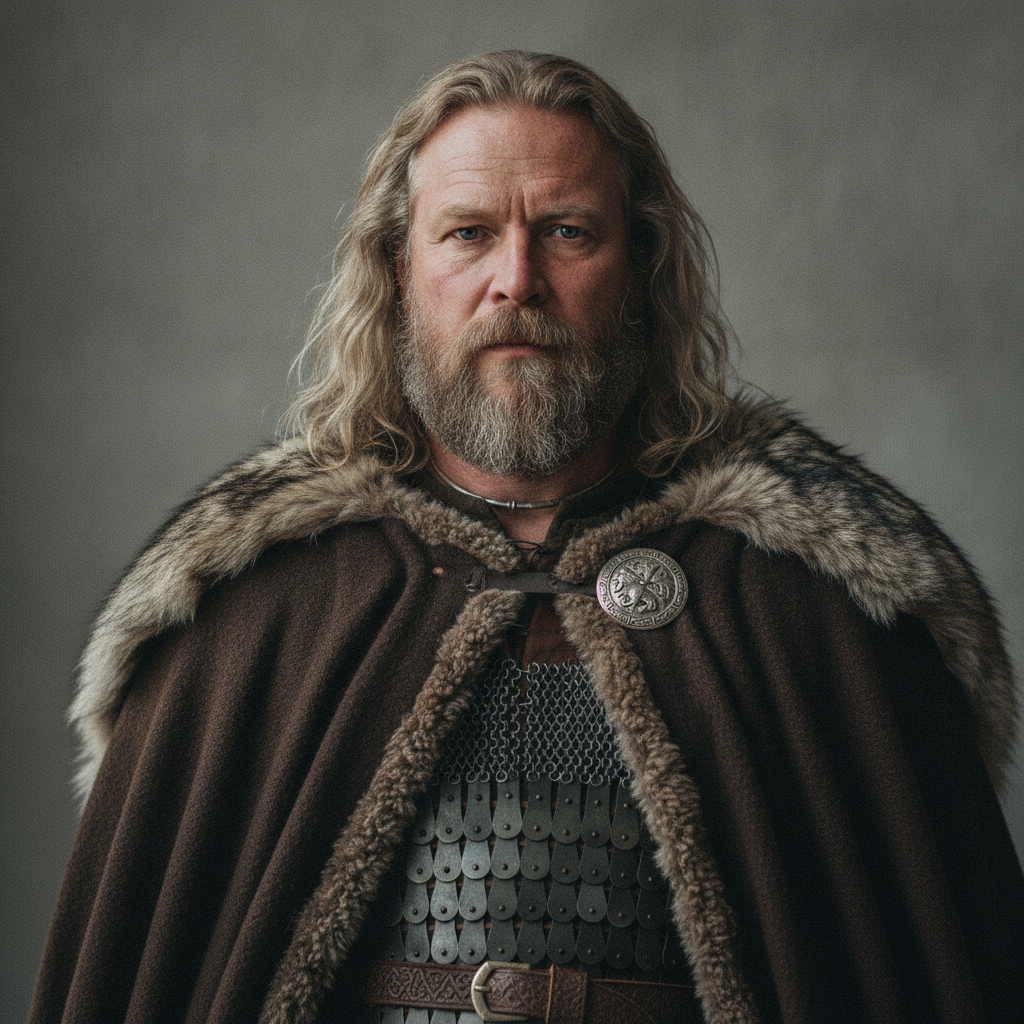
Physique and face: Harald would have presented as physically imposing—tall, broad-shouldered and strongly muscled from a life of warfare and seafaring. His face likely bore the hard lines of middle age and combat: a square jaw, high cheekbones and weathered skin from sun and cold, with the steady, commanding expression praised in contemporary verse. Hair and grooming: He probably had light hair—ranging from pale blond to light brown—and light eyes such as blue or gray, common among Norwegian elites. Grooming would have been purposeful: neat, practical hair and a trimmed beard or short facial stubble rather than long, unruly braids—the look of a veteran used to both battlefield demands and Byzantine court standards. Clothing and arms: Harald’s clothing and accoutrements would signal rank and martial prowess: well-made chainmail or lamellar, a robust helmet, a high-quality sword and axe, rich cloaks trimmed with fur, and decorative brooches or rings. Time in Byzantium and trade contacts likely added imported silks and fine metalwork, so his overall appearance mixed rugged northern practicality with flashes of eastern luxury.
Height / build
Likely tall for his time · Likely broad, muscular build
Hair
Likely light blond to sandy (possibly darkening to graying later in life) · Likely wavy · Likely full and worn long
Eyes
Likely blue-gray
Complexion
Likely fair with a ruddy (weather-tanned) cast
Face
Likely broad, square to oval face with strong jaw · Likely straight to slightly aquiline
Notable features
Tall stature, full beard, long light hair, weathered/ruddy skin, strong jaw and military bearing
Grooming
Likely full beard and moustache · Kept and tended: long hair combed, beard trimmed and possibly braided or tied as befitted a king and Varangian veteran.
Dress / presentation
Norse royal-military dress: fine wool tunics and cloaks, furs, decorated brooches and belts; mail or lamellar and helmets in campaign; Byzantine-style garments possible from Varangian service
height build
Height
Likely tall for his time
Medieval Norse kings and skaldic praise emphasize imposing stature; Harald was repeatedly cast as a commanding warrior-leader.
height build
Build
Likely broad, muscular build
Veteran of decades of campaigning and Varangian service; sagas portray him as powerful and enduring in battle.
hair
Hair color
Likely light blond to sandy, later graying
Typical Norse phenotype and later medieval depictions/epithets of Scandinavian rulers; skaldic praise often highlights hair.
hair
Hair style
Long and well-kept
Norse elite commonly wore hair long and groomed; Harald served among Varangians where appearance was also important for status.
other
Beard
Likely full beard and moustache
Beards were a normative sign of manhood and leadership among Norse elites; saga imagery and later portraits show him bearded.
eyes
Eye color
Likely blue-gray
Norse ideals prized height, strength, visible martial readiness and dignified grooming. Long hair and beards signaled adult masculinity; fine clothes and furs signalled rank. A king like Harald would balance warrior roughness with displays of status—well-kept hair, decorated brooches, and costly cloaks.
Harald came from Norwegian dynastic stock; physiognomy typical of 11th-century Scandinavia—light hair, light eyes and fair skin—tempered by a life at sea and on campaign that would give a weathered, ruddy cast and toughened musculature.
Modern imagery often exaggerates Viking stereotypes (e.g., horned helmets, huge wild beards, and flaming red hair); Harald's actual presentation was more polished, status-conscious and influenced by international dress.
Hollywood and romantic art inflate Viking theatrics: horned helmets, wildly unkempt hair, or uniform giant size. Harald likely presented a more refined, status-conscious image—long but groomed hair, trimmed beard, and carefully chosen robes or armor mixing practicality and display.
Likely tall for his time—sagas and praise-poems present him as physically imposing and commanding.
Likely blue-gray, typical of northern Scandinavians of the period.
Likely light blond to sandy, probably graying by the time of his death.
Probably a full beard and moustache—standard for Norse warrior-kings and shown in later portrayals.
His height and broad, kingly bearing—long groomed hair, trimmed beard and richly decorated cloak/furs marking rank.
No contemporary portrait or death mask survives; contemporary poets and chronicles plus archaeological context inform reconstructions.
Heimskringla (Snorri Sturluson) — Saga of Harald Hardråde
Heimskringla (13th century) · c. 1225–1230
Later Icelandic saga that gives a vivid narrative portrait of Harald: physically imposing, martial, handsome and richly attired; it shaped much later visual imagination.
Skaldic poetry praising Harald
Contemporary/near-contemporary skaldic verses (e.g., Sigvat Þórðarson) · 11th century (contemporary)
Contemporary praise-poetry emphasizes Harald’s martial prowess, brightness and regal bearing—language often used to suggest physical impression and presence.
Anglo-Saxon Chronicle entries for 1066
Anglo-Saxon Chronicle (English annals) · 1066 (contemporary chronicle)
Contemporary English chronicle records Harald’s invasion and death; while not visually detailed, it presents him as a major, imposing leader and mentions his large host and martial role.
Morkinskinna and Fagrskinna (Norse kings' histories)
Morkinskinna; Fagrskinna (medieval Norse kings' sagas) · 12th–13th centuries
Sagas that include anecdotal and descriptive material about Harald’s person, clothing and bearing; they complement Heimskringla’s portrait.
Byzantine references to Varangians
Byzantine chronicles and descriptions of Varangians (general) · 10th–12th centuries (various)
Accounts of Varangian guards show northern warriors prized for stature and distinctive blond/light-eyed looks; Harald’s years in Constantinople would have reinforced that martial, well-appointed image.
Later medieval and modern portraits/statues of Harald Hardrada
Later medieval art and 19th–20th century statues/portraits · 12th–20th centuries
Post-medieval images often show Harald bearded and helmeted; useful to understand later reception though not direct evidence of his true likeness.
High frequency of light eyes in medieval Scandinavian populations and period poetic emphasis on striking, bright eyes.
skin
Complexion
Likely fair with weather-tanned/ruddy tones
Northern European ancestry combined with heavy outdoor campaigning produces fair skin with a weathered, ruddy appearance.
face
Face shape
Likely broad, square to oval face with strong jaw
Descriptions of physical power and portraits/statues of Norse leaders favor strong jaws and broad faces as markers of masculinity.
clothing
Typical dress
Royal Norse martial dress with furs, cloaks and decorated metalwork
Kings combined local elite clothing (fine wool, furs, brooches) with armour in battle; Varangian and Byzantine service could add luxury textiles.
grooming
Grooming
Tidy, status-conscious grooming
Norse aristocracy prized neat hair and well-kept beards; Harald’s royal status would favor a polished appearance.
Archaeology of Viking-age elite dress and weapons
Archaeological finds from Viking-Age elite burials · modern archaeological literature
Grave-goods and textile remains inform likely clothing and ornament (furs, brooches, imported textiles) that would signal Harald’s royal status.