face
Face shape
Likely rounded to oval with full cheeks
Numerous temple reliefs and statues of Hatshepsut show a fuller, rounded face with pronounced cheeks and a soft jawline.
Portrait reconstruction
1507 BCE–1458 BCE · Ancient Egypt (Thebes, Upper Egypt) · New Kingdom, 18th Dynasty (c. 15th century BCE)
Hatshepsut appears as a soft‑featured Nile‑Valley woman who presented herself visually as king — dark hair, large kohl‑rimmed eyes, medium‑brown skin, and almost always in royal regalia (nemes and false beard).
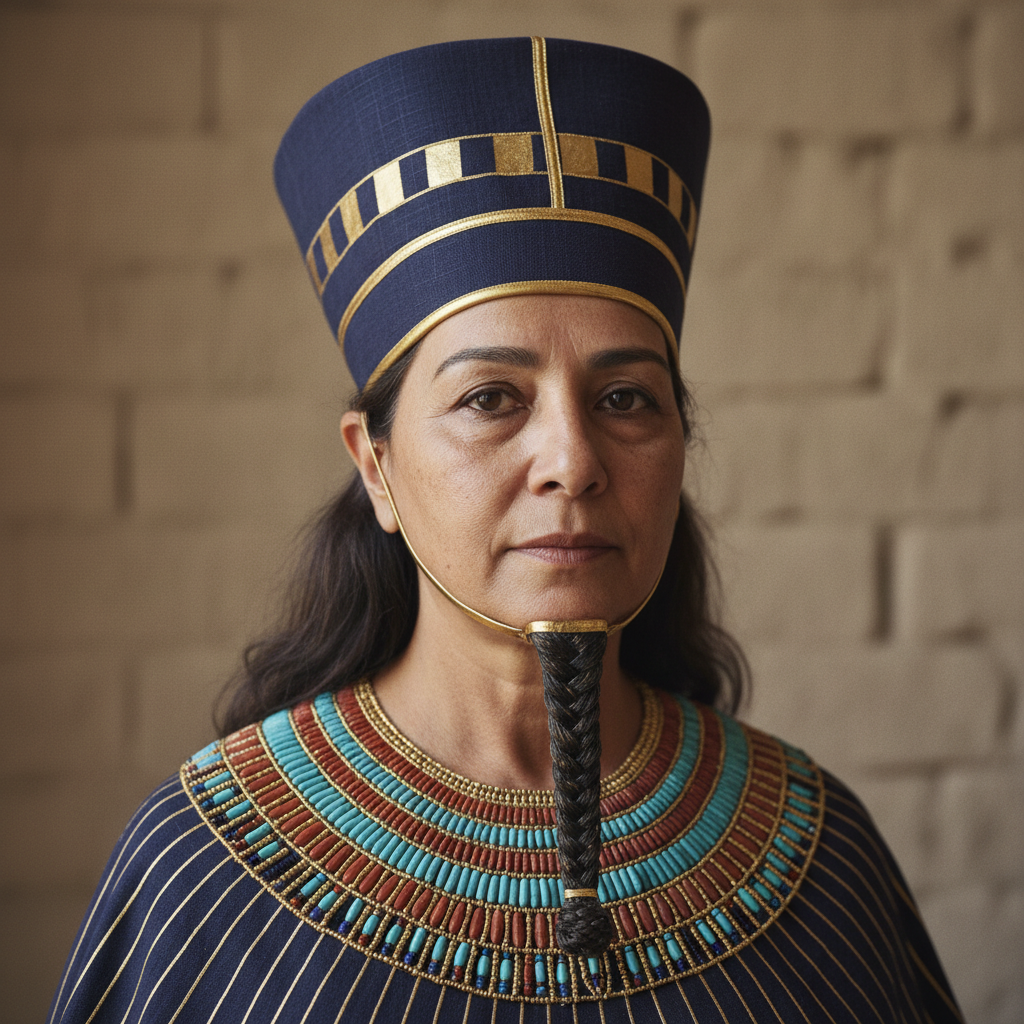
Facially, Hatshepsut is usually shown with full, rounded cheeks, a gently curved nose, prominent almond-shaped eyes and full lips — an idealized, slightly softened face rather than a sharp sculpted likeness. Sculptures and reliefs emphasize wide, attentive eyes rimmed with heavy kohl and well‑defined brows, giving her a striking, watchful gaze. Her hair is portrayed as dark and is most often shown under wigs or the striped nemes headcloth; when visible it would have been dark and typically styled in the short, formal wigs favored by elite women and royalty. On major monuments she is repeatedly depicted clean‑shaven and wearing the pharaonic false beard — a political symbol of kingship rather than a literal beard — and the striped nemes or royal crowns that visually declared her authority. Her skin tone in modern and ancient renderings aligns with Nile‑Valley physiognomy: a medium‑brown complexion polished in paint and relief, with cosmetics (kohl around the eyes and possibly red ochre on the lips and cheeks) used to sharpen features. Clothing is always fine white linen: kilted shendyt for formal state imagery, and heavy collars, broad necklaces and arm cuffs for added royal display.
Height / build
Likely average height · Likely average to slightly full
Hair
Likely dark brown to black · Likely straight to lightly wavy · Likely typical; usually shown concealed under wigs or crowns
Eyes
Likely dark (brown)
Complexion
Likely olive to medium brown
Face
Likely rounded to oval with full cheeks · Likely straight to slightly prominent
Notable features
Rounded/full face, prominent eyes, frequent depiction with nemes/khepresh or crown and a false beard; statues sometimes emphasize a strong chin.
Grooming
None naturally; regularly portrayed wearing the ceremonial false beard of a pharaoh · Regularly wore wigs, shaved or closely cropped natural hair, used kohl eye makeup and jewelry (broad collars, diadems) as royal grooming conventions.
Dress / presentation
Royal pharaonic garments: linen shendyt kilt or draped robes, broad collar, nemes/headcloth or crown, ceremonial false beard and sometimes the khepresh (blue war crown).
face
Face shape
Likely rounded to oval with full cheeks
Numerous temple reliefs and statues of Hatshepsut show a fuller, rounded face with pronounced cheeks and a soft jawline.
eyes
Eye color
Likely dark (brown)
Egyptian population context and painted portraits typically indicate dark brown eyes; sculptural emphasis on large eyes reflects stylistic convention, not light eyes.
hair
Hair color
Likely dark brown to black
Upper Egyptian population traits and surviving wigs/depictions consistently show dark hair; royal wigs were typically blackened and stylized.
hair
Hair presentation
Usually concealed under wigs or crowns
Statues and reliefs regularly show Hatshepsut wearing tripartite wigs, nemes headcloths or crowns; royal women often wore shaved heads with wigs for public display.
skin
Complexion
Likely olive to medium brown
Population and regional context for Theban elites and the pigments surviving in reliefs suggest medium‑brown/olive tones typical of Nile Valley peoples.
height build
In Hatshepsut’s Egypt, visual signals mattered more than literal realism: the false beard, nemes headcloth, broad collar and kilt visually declared kingship. Portraits blended feminine features with male pharaonic accoutrements to communicate both legitimacy and divine rule—so Hatshepsut’s look emphasized office as much as individual appearance.
Hatshepsut belonged to the Theban elite of the 18th Dynasty, a population with Mediterranean/Levantine and Nile Valley affinities. That implies olive to medium brown skin, dark hair and dark eyes—features common among upper Egyptian aristocracy of the period—reflected in painted portraits and sculptural conventions.
Modern media often either feminize her as a glamorous queen or masculineize her into a male warrior; in reality she blended feminine features with pharaonic regalia and was usually shown wearing wigs and beards as symbols of office.
Popular culture often flips between two extremes—portraying Hatshepsut as an impossibly glamorous goddess‑queen or as a masculinized warlord. In reality she was presented as a mature, commanding pharaoh who used standard royal male and female visual language; her individuality was subordinated to the office’s visual codes.
Likely average height for an elite Egyptian woman of her time.
Likely dark brown.
Likely dark brown to black, straight to lightly wavy; usually concealed beneath wigs or crowns.
She did not naturally, but she is regularly shown wearing the ceremonial false beard of a pharaoh.
Portrayals emphasize a commanding, regal presence rather than conventional youthful beauty—she was depicted as dignified and authoritative.
Portraits are partly idealized and symbolic; they reliably indicate key features (rounded face, dark hair/eyes, royal dress) while emphasizing office over an exact likeness.
Deir el-Bahri reliefs and statues
Mortuary temple of Hatshepsut, Deir el-Bahri · c. 1479–1458 BCE
Extensive series of reliefs and several colossal statues depict Hatshepsut both with feminine facial features and in full pharaonic regalia (nems, kilt, false beard); these are primary visual sources for her public appearance.
Kneeling offering and seated statues attributed to Hatshepsut
Museum collections (various Kneeling/Seated statues from her reign) · New Kingdom, 18th Dynasty
Multiple smaller statues show her facial style—full cheeks, prominent eyes—and common royal dress; some pieces emphasize feminine features while others are more androgynous.
Reliefs at Karnak showing royal titulary and portraits
Karnak temple inscriptions and reliefs · New Kingdom
Architectural reliefs and inscriptions record Hatshepsut’s royal titulary and show portraits that help reconstruct her public image and costume.
Royal inscriptions and titulary
Contemporary inscriptions and dedicatory texts · c. 15th century BCE
Titles and self‑presentation in inscriptions show how Hatshepsut wished to be seen (as king), explaining why many portraits include male regalia.
Possible identification: KV60A mummy (announced 2007)
KV60A mummy, Egyptian Antiquities announcements (Zahi Hawass et al.) · 2007–2010 (studies and CT followups)
A female mummy (KV60A) has been proposed as Hatshepsut based on associated artifacts and a tooth; CT studies offer some age and health information but identification remains debated.
Later depictions and defaced images
Defaced statues and later erasures of Hatshepsut’s cartouches · Post‑Hatshepsut (18th Dynasty onward)
Many of her images were later altered or defaced, which both complicates and informs modern reconstruction of her original appearance and how she was perceived by successors.
Build
Likely average to slightly full
Iconography commonly renders Hatshepsut with slightly rounded body and full facial features consistent with a mature royal woman rather than a slender youth.
grooming
Facial hair / beard
No natural beard; wore ceremonial false beard
As pharaoh she is frequently shown wearing the false ceremonial beard, a standard symbol of kingship, not natural facial hair.
clothing
Regalia and dress
Royal pharaonic garments, wigs, crown and broad collar
Reliefs and statues consistently show her in pharaonic dress (shendyt kilt or wrapped robes), crowns (nemes, khepresh) and jewelry denoting kingship.
other
Age in most portraits
Middle‑aged to older adult
Many official images and statues created during her reign display mature facial features and stately bearing, consistent with a mature ruler.
comparison
How she stood out
More regal and symbolic than physically exotic
Her visual prominence came from royal symbols—false beard, crowns, large statues—rather than unusual physical traits; she fit local royal type while projecting authority.
Museum reconstructions and modern portraits
20th–21st century reconstructions and reconstructions in museum labels · Modern
Modern restorations, drawings and reconstructions interpret surviving statues and texts to show likely skin/hair/eye colors and clothing; useful for visualization but influenced by modern conventions.