height build
Height
Likely average height (about 5'5"–5'8")
Typical stature for Eastern Woodland males before modern nutrition; oral tradition and ethnography imply a physically active leader rather than unusually tall stature.
Portrait reconstruction
0–0 · Haudenosaunee (Iroquois) territory — present-day upstate New York and the Great Lakes region · Traditional late pre-contact / early contact period (oral-historical timeframe)
Hiawatha likely had long dark hair, dark eyes, a medium, sturdy build, and wore deerskin clothing with wampum and modest ceremonial adornments.
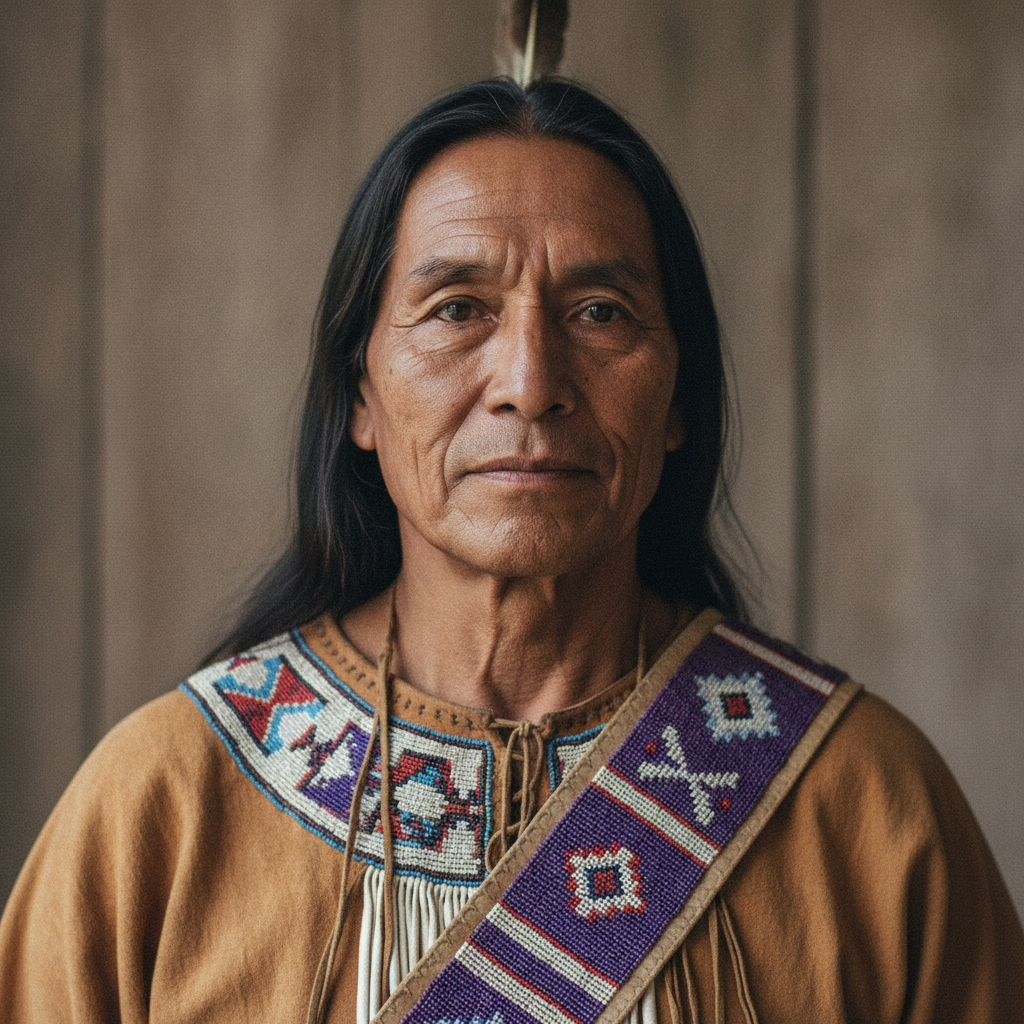
Face and hair: He likely had dark brown to black hair worn long—often tied back, braided, or bound for public speaking—paired with dark eyes and strong, expressive features suited to a gifted orator. Men in the Haudenosaunee world commonly presented with little or no facial hair, so he was probably clean‑shaven or only lightly stubbled. Build and bearing: Expect a medium, sturdy build shaped by a life of travel, ceremony, and leadership rather than exaggerated size; his posture and expression would read as calm, authoritative, and deliberate—qualities emphasized in oral descriptions of his speaking and negotiating. Clothing and regalia: Typical garments would be deerskin tunics and leggings, sometimes decorated with porcupine quillwork or early beadwork, and a wampum belt or sash carried visibly as a sign of authority and message-bearing. Small feather clusters, hair plates, or a modest gustoweh-style cap might mark his rank—distinct from the tall Plains war bonnet often shown in popular art. Adornment and ceremony: He likely wore shell or bone pendants, simple ear ornaments, and used patterned pigments or face paint for ceremonial occasions. In council or formal settings his clothing and wampum would be neatly arranged to match the gravity of his role.
Height / build
Likely average height (about 5'5"–5'8" by modern measures) · Likely lean to athletic
Hair
Likely dark (black) · Likely straight to slightly wavy · Likely full hairline, worn long and tied back or in braids
Eyes
Likely dark (brown)
Complexion
Likely medium‑dark / copper to brown
Face
Likely oval to high‑cheekboned · Likely straight to slightly rounded bridge, medium width
Notable features
Long dark hair, high cheekbones, steady gaze, dignified posture, often wearing wampum and decorated deerskin
Grooming
Probably little or no facial hair or minimal moustache · Hair likely well‑kept, oiled and decorated with feathers, shells, or beads; personal grooming emphasized cleanliness and symbolic ornamentation.
Dress / presentation
Deerskin tunic or shirt and leggings, wampum sash, beadwork, and seasonal furs; not the Plains feathered warbonnet seen in later stereotypes
height build
Height
Likely average height (about 5'5"–5'8")
Typical stature for Eastern Woodland males before modern nutrition; oral tradition and ethnography imply a physically active leader rather than unusually tall stature.
height build
Build
Likely lean to athletic
Life of hunting, travel, and ceremonial duties produced a wiry, strong frame common among Haudenosaunee men.
hair
Hair color
Likely black
Dark hair is typical among Iroquoian peoples recorded in ethnographic sources and oral descriptions.
hair
Hair length & style
Likely long, worn tied back or braided and ornamented
Haudenosaunee men customarily wore long hair, often tied, braided, and decorated with feathers, shells, or beadwork to indicate status.
other
Facial hair
Probably little or no facial hair
Many Eastern Woodland men had minimal facial hair; colonial descriptions and portraits of 17th–19th c. Haudenosaunee men typically show clean‑shaven faces or very light moustaches.
eyes
In Haudenosaunee society, authority was expressed through measured dignity: clean grooming, clear speech, and meaningful adornment like wampum, beads, and feather tokens. A leader's appearance emphasized sobriety, dignified posture, and symbolic objects rather than flamboyant costume.
Hiawatha would have shared the general physical profile of Iroquoian peoples: dark hair and eyes, medium‑dark skin, and a medium stature suited to hunting, farming, and seasonal travel across the woodlands — features shaped by regional ancestry and lifestyle.
Modern images often borrow Plains‑tribal motifs (full feather warbonnets) or romantic Victorian features; historically Hiawatha would have worn regional woodland clothing and modest, meaningful ornamentation.
Popular portrayals often give Hiawatha a Plains‑style full feather warbonnet, exaggerated facial features, or Victorianized facial hair — none of which match Haudenosaunee visual traditions; these are borrowings from other Indigenous cultures or from 19th‑century romanticism.
Probably not especially tall—likely average height for Eastern Woodland men, roughly 5'5"–5'8".
Likely dark brown.
Likely black and straight, worn long—tied back or braided and ornamented with feathers or beads.
Probably little or no facial hair; if any, minimal moustache or sideburns.
Decorated deerskin clothing, a wampum sash or belt, beadwork, and feather or hair ornaments—symbols of status rather than showy pan‑tribal regalia.
We combine Haudenosaunee oral descriptions, regional ethnography, and material culture to form the most likely visual portrait.
Haudenosaunee oral traditions collected by 19th–20th century ethnographers
Collections by Lewis H. Morgan, Arthur C. Parker, and Haudenosaunee storytellers · mid 19th–early 20th century (oral accounts)
Oral narratives describe Hiawatha as a prominent orator and lawgiver; descriptions stress role, regalia (wampum, ornaments), and social presence rather than precise facial detail.
Ethnographic and anthropological summaries of Haudenosaunee appearance
Handbook of North American Indians (Smithsonian) and related ethnographies · 20th century summaries
General phenotypic traits of Iroquoian peoples (dark hair/eyes, medium stature), material culture (deerskin clothing, wampum), and grooming practices used to infer likely appearance.
Longfellow’s The Song of Hiawatha and 19th-century illustrations
Henry Wadsworth Longfellow (poem) and illustrators · 1855 and later 19th c.
Highly influential literary and artistic portrayals that popularized a romanticized image (often Plains-style headdress and sentimental features) not rooted in Haudenosaunee regalia.
Haudenosaunee material culture: wampum, beadwork, and regalia in museums
Museum collections and catalogues (various) · 17th–19th c. artifacts and later collections
Physical artifacts show the types of clothing and ornamentation leaders wore — wampum belts, decorated deerskin garments, and feather/hair tokens that inform likely clothing and adornment.
19th-century paintings, woodcuts, and photographs of Haudenosaunee individuals
Various artists and early photographers · mid–late 19th century
Depictions of historical Haudenosaunee people and leaders show regional clothing, hairstyles, and ornamentation; useful for regional stylistic reference though not direct portraits of Hiawatha himself.
Eye color
Likely dark (brown)
Dark brown eyes are the dominant phenotype for Indigenous peoples of northeastern North America in historical accounts.
skin
Complexion
Likely medium‑dark / copper to brown
Consistent with Haudenosaunee population and outdoor lifestyle recorded in ethnography and oral descriptions.
clothing
Typical clothing
Deerskin tunic, leggings, wampum sash, beadwork, and seasonal furs
Haudenosaunee leaders wore decorated deerskin garments and wampum belts for status; European contact introduced trade cloth but core regalia remained regional.
other
Headgear
Likely feathers or hair ornaments — not Plains warbonnet
Iroquoian leaders used feathers and roaches, but not the full feathered headdresses associated with Plains cultures; later art often misattributes Plains styles.
face
Facial features
Likely high cheekbones, straight nose, firm jaw
Common descriptors in Haudenosaunee tradition and comparative ethnography emphasize dignified, angular features for male leaders.
grooming
Grooming & ornamentation
Well‑groomed hair, wampum and bead decoration, possible tattooing or face paint for ceremonies
Status and ceremonial roles were signaled by specific ornaments, hair care, and painted symbols according to Haudenosaunee practice.