hair
Hair color
Likely dark to graying
Portrait tradition shows dark hair with grey tones in older depictions; Greek islanders typically had dark hair.
Portrait reconstruction
460 BCE–370 BCE · Kos, Greek world (Aegean) · Classical Greece (5th–4th century BCE)
Hippocrates likely looked like an older Aegean Greek man with receding dark hair, a full graying beard, deep forehead lines, and a prominent nose.
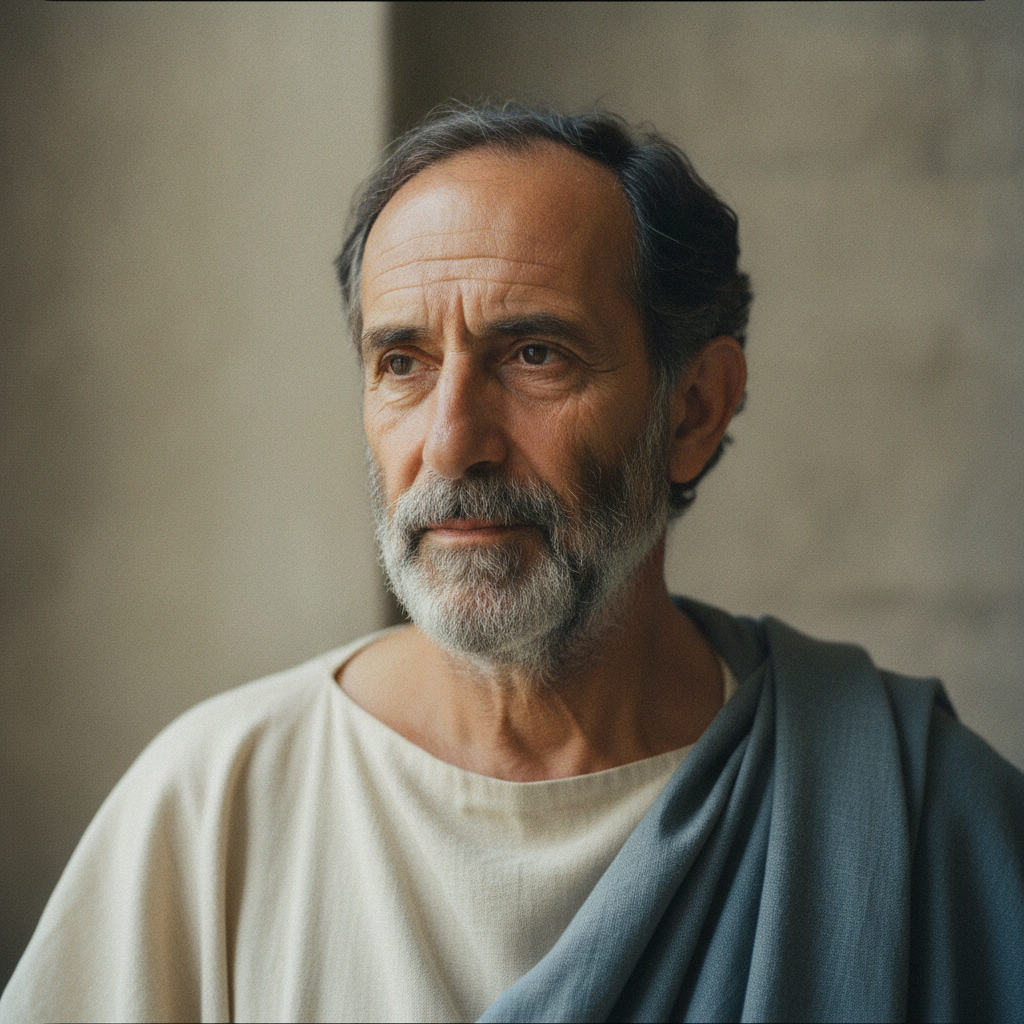
Face: Imagine a lined, weathered face of an elder—deep forehead creases, a straight or slightly hooked prominent nose, and calm, deep-set eyes that suggest steady attention rather than dramatic expressiveness. The overall countenance reads as thoughtful and authoritative rather than youthful or flashy. Hair and beard: Likely dark brown to black hair, receding at the temples and beginning to gray at the sides; he is best pictured with a full, neatly kept beard that may be flecked with gray, a conventional sign of age and seriousness. The beard follows Greek male fashion of the time—substantial but not unkempt. Build and dress: Modestly built, with a posture of quiet dignity, draped in a simple himation or cloak rather than armor or ornament. He would be presented in practical, respectable clothing of a professional—hands calm, stance purposeful—more scholar-practitioner than mythic sage. Skin tone would reflect the eastern Mediterranean: olive to light-brown, with weathering from outdoor life and travel.
Height / build
Likely average height · Likely slender to average build
Hair
Likely dark to graying · Likely wavy · Likely receding / balding on top
Eyes
Likely dark
Complexion
Likely Mediterranean / olive
Face
Likely long/oval with a broad forehead · Likely aquiline/straight (prominent Greek nose)
Notable features
High furrowed forehead, deep‑set eyes, prominent nose, lined/expressive brow
Grooming
Probably full beard (short to medium length) · Likely well‑kept beard and short hair; older portraits emphasize a neatly trimmed, dignified look.
Dress / presentation
Classical Greek physician's drapery: simple chiton and himation, practical and respectable
hair
Hair color
Likely dark to graying
Portrait tradition shows dark hair with grey tones in older depictions; Greek islanders typically had dark hair.
hair
Hairline
Likely receding / balding on top
Multiple classical portraits emphasize a high forehead and reduced hair on the crown.
other
Beard
Probably full beard (short to medium)
Classical Greek men of status and learned professions are consistently shown bearded; surviving busts show a full beard.
face
Forehead and brow
High, furrowed forehead with pronounced brow lines
Sculptural portraits emphasize deep lines and a broad forehead, signaling age and intellect.
face
Nose
Likely prominent / aquiline
Many portraits depict a strong, straight to slightly hooked Greek nose.
eyes
Eye color
Likely dark
Aegean Greek populations mostly had dark eyes; no evidence suggests light‑colored eyes.
In Classical Greece, authority and intellect were often expressed through sober, mature appearance: beards, restrained clothing, and an austere bearing signaled learned status. As a physician and respected elder, Hippocrates’ beard, lined brow, and simple robes fit cultural expectations for a wise practitioner.
Kos sits in the Dodecanese, part of the Hellenic Aegean. The island population was ethnically Greek with Mediterranean features—olive skin, dark hair and eyes—and lifestyles shaped by seafaring, sunlight, and a Mediterranean diet, all reflected in typical physical traits.
Modern images often idealize or anachronistically stylize him as a classical ideal or as a modern 'sage' with white robes; actual portraits show a weathered, realistic older man with receding hair and a trimmed beard.
Modern portrayals often sanitize or mythologize Hippocrates into a near‑divine sage (white robes, perfect symmetry) or, conversely, a fetishized 'ancient scientist' in modern lab coats. Realistic classical portraits portray a weathered, older man—practical and human rather than idealized deity.
Likely average height for a Classical Greek man.
Likely dark—brown or dark brown, typical of Aegean Greeks.
Likely dark, turning gray in later life.
Yes — probably a neatly trimmed full beard, the standard for learned Greek men.
Simple, practical Classical Greek clothing: a chiton and himation suited to a physician and elder.
They reflect a long portrait tradition—likely based on an early visual prototype—but are later copies and idealizations used by cultures to give him a face.
Roman‑era marble portraits traditionally identified as Hippocrates
Various museum collections (Roman copies of Greek models) · 1st–3rd century CE (copy of earlier Greek portraits)
Several Roman‑period busts and heads, thought to copy an earlier Hellenistic prototype, show an older man with receding hair, full beard, deep forehead lines and a prominent nose—images used as the visual template for Hippocrates.
Hippocratic mosaic and imagery from Kos
Hippocratic Museum, Kos and local archaeological finds · Hellenistic to Roman periods
Local mosaics and museum displays on Kos show portrait‑like images of Hippocrates in traditional drapery, reinforcing the visual tradition of a bearded, older physician.
Later classical references and medical writers
Galen and other ancient medical authors (2nd century CE onward) · 2nd century CE and later
Medical writers like Galen treat Hippocrates as a foundational figure and preserve traditions about his practices and persona; while not a physical description, these texts support the image of an elder, respected physician.
Renaissance and later depictions
European printed portraits and paintings (15th–19th centuries) · 15th–19th century
Renaissance and later artists reimagined Hippocrates following classical busts and learned book descriptions, reinforcing the bearded, elderly image in Western visual culture.
Public statues and commemorations
Modern statues and museum reproductions · 19th–20th century
Modern public statuary on Kos and elsewhere follows the classical portrait tradition—robe, beard, lined face—keeping a consistent visual identity into the present.
skin
Complexion
Likely Mediterranean / olive
Born on Kos, an Aegean island, he would likely share the olive skin tone common to the region.
height build
Height
Likely average height
No direct measurement; demographic data place Classical Greek men around modest heights by modern standards.
height build
Build
Likely slender to average
Professional, intellectual life and island diet suggest a lean, wiry frame rather than heavy musculature.
clothing
Attire
Simple classical Greek dress: chiton and himation
Physicians and educated men in Classical Greece wore practical drapery; portraits show him in robes.
other
Overall impression
Commanding, thoughtful, weathered
Portraits present a lined, serious face projecting authority and long practice rather than youthful beauty.