height build
Height
Likely average height (≈5'2"–5'4")
Multiple witness descriptions at the rehabilitation and trial describe her as of ordinary stature for a young woman; population data supports this modern equivalent.
Portrait reconstruction
1412–1431 · Domrémy (northeastern France) · Late Middle Ages / Hundred Years' War
Joan of Arc looked like a slight, vigorous teenage peasant—likely dark-haired and probably clean-shaven—who cropped her hair short and wore men’s clothes and armor.
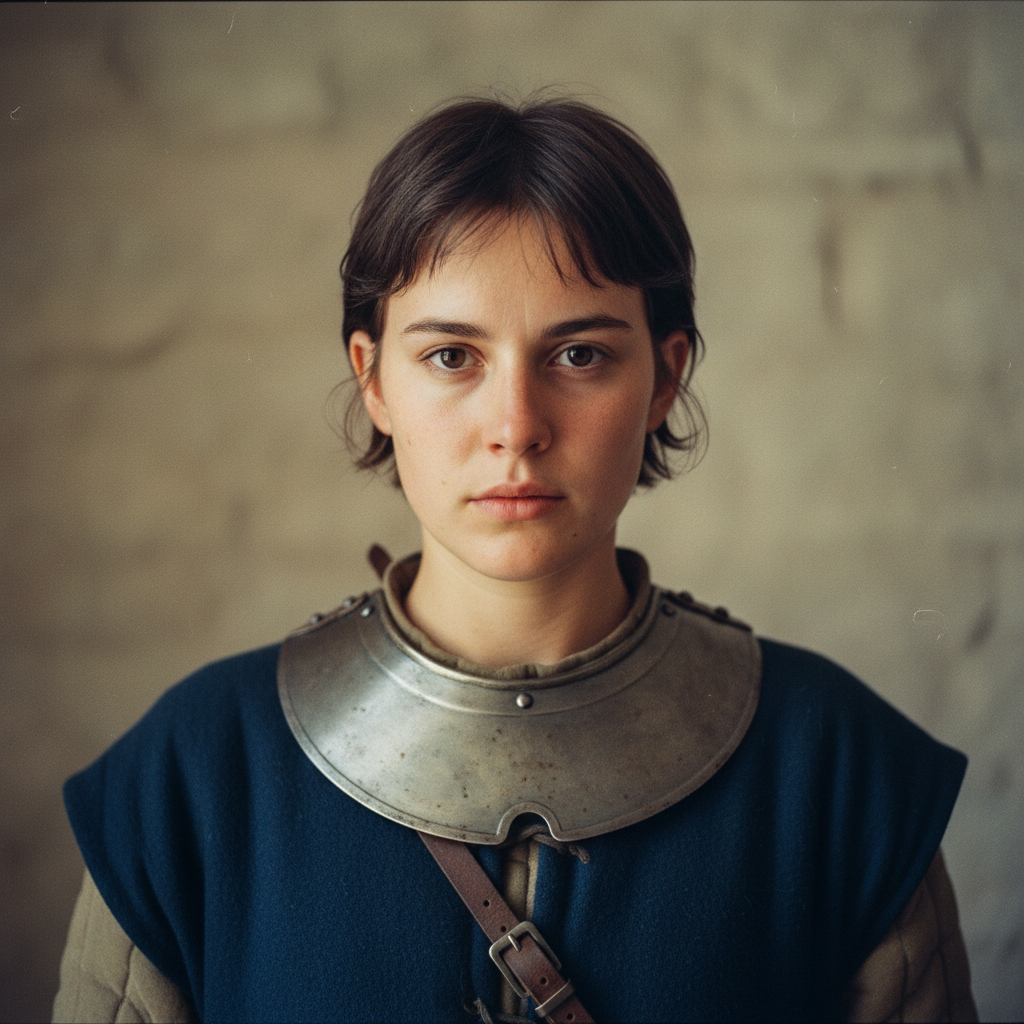
She was young and slight rather than tall and heavy-set: witnesses describe a lean, athletic build shaped by farm work and long days on horseback and in camp. Her movements were quick and purposeful, the sort of energy people remember when they speak of her presence. Her hair was cropped short—above the ears or to the jaw—matching multiple contemporary descriptions and images; it was likely dark rather than fair. Her face would have read as youthful and direct: a clear, weathered complexion from outdoor life, steady eyes, and a determined jaw rather than ornament or softness. Joan kept a practical, groomed appearance: masculine clothing—breeches, doublet, cloak—and simple soldier’s gear when she fought, later adding a harness or breastplate. She was probably clean-shaven, presenting an unadorned, almost androgynous silhouette that emphasized action over femininity.
Height / build
Likely average height (≈5'2"–5'4" / 157–163 cm modern equivalent) · Likely slender but athletic
Hair
Likely dark brown · Likely straight to slightly wavy · Likely normal; typically short-cropped after she cut it
Eyes
Likely dark (brown)
Complexion
Likely fair to ruddy (sun‑exposed)
Face
Likely narrow to oval · Likely straight to modestly prominent
Notable features
Short cropped hair; androgynous/military clothing; youthful face with an intense, commanding expression.
Grooming
None · Cut her hair short (to a boyish style) and kept a practical, unadorned appearance; avoided jewelry and cosmetics publicly.
Dress / presentation
Men's riding garments and armor when on campaign; simple peasant dress off-duty—she publicly favored male military clothing for safety and function.
height build
Height
Likely average height (≈5'2"–5'4")
Multiple witness descriptions at the rehabilitation and trial describe her as of ordinary stature for a young woman; population data supports this modern equivalent.
height build
Build
Likely slender but athletic
Accounts describe a peasant who worked outdoors and rode into battle—activities that produce a lean, strong physique.
hair
Hair length & style
Short-cropped (boyish cut)
Joan testified that she cut her hair short and wore men's clothing; many contemporary images show her with cropped hair in armor.
hair
Hair color
Likely dark brown
Regional population traits and later witness descriptions imply darker hair rather than the blond often used in later romantic images.
eyes
Eye color
Likely dark (brown)
Brown eyes were and are the dominant phenotype in medieval France; no contemporary source claims strikingly light eyes.
skin
Complexion
In 15th‑century France, feminine ideals emphasized long hair, modest dress and domestic roles. Joan's short hair and male clothing deliberately inverted those conventions: practical for travel and battle and central to her identity as divinely guided. Her rejection of feminine dress made her both controversial and instantly memorable.
Joan came from Domrémy in the borderlands of Lorraine—an area with mixed Celtic and Germanic roots. Clothing, skin tone and facial traits would reflect rural northeastern France: generally dark hair, brown eyes and a practical, sun‑kissed complexion from outdoor labor.
Modern art and film often show Joan as a golden‑haired, idealized heroine or a romanticized young woman; historical evidence favors a darker, more practical, and androgynous look.
Many paintings, films and nationalistic art show Joan as a blond, ethereal maiden in flowing robes. Contemporary records emphasize a gritty, militarized appearance—short hair, armor and male dress—so the iconic blond saint is more romantic myth than historical portrait.
Likely average height (about 5'2"–5'4" modern equivalent).
Likely dark (brown).
Likely dark brown and usually short‑cropped (she cut it ‘like a man’).
She was described as striking and commanding rather than classically beautiful—youthful and intense.
She wore men's riding clothes and armor; she did not have facial hair.
Modern portrayals often make her a blond, romantic figure; historically she was darker‑haired, practical, and androgynous in appearance.
Rouen Trial Record (Procès de Rouen, 1431)
Official trial transcripts · 1431
Joan's testimony and prosecutor/witness exchanges: she admits cutting her hair short, wearing men's clothes, and describes her own appearance and reasons for her clothing choices.
Rehabilitation Trial Testimonies (1455–1456)
Proceedings of the nullification/rehabilitation · 1456
Posthumous witness statements from companions, townspeople and nobles describing Joan's stature, demeanor, hair, dress, and the impression she made—used widely by historians to reconstruct appearance.
15th‑century Illuminations and Miniatures
Contemporary/near‑contemporary manuscript images · 15th century
Illustrations often depict Joan in armor with short hair—visual corroboration of trial testimony on clothing and hairstyle, though not precise facial likenesses.
Chronicler descriptions (15th c.)
Contemporary chroniclers (e.g., Jean Chartier, others) · 15th century
Narrative accounts that emphasize Joan's courage, youth and exceptional demeanor; they occasionally comment on her appearance and dress.
19th–20th Century Paintings and Statues
Romantic and nationalist art · 1800s–1900s
These popular images idealize Joan—often blond and saintly—and shaped modern visual expectations but are not direct historical evidence.
Modern scholarly syntheses
Régine Pernoud; Helen Castor; other historians · 20th–21st century
Academic biographies integrate primary records and regional context to produce the standard appearance profile used here.
Likely fair to ruddy / sun‑tanned
As a rural girl and soldier she would have spent long periods outdoors, producing a more weathered, ruddy complexion than courtly portraits.
grooming
Facial hair
None
No witness mentions facial hair; female facial hair would have been noted and remarked on at trial if present.
clothing
Typical clothing
Male riding clothes and armor in public; simple peasant dress otherwise
Joan repeatedly wore male military clothes and armor for travel and battle and explained the practical and divine reasons for doing so in testimony.
face
Facial expression / presence
Commanding, intense, resolute
Multiple contemporary witnesses emphasize her resolute manner and compelling presence more than conventional beauty.
other
Age appearance
Late teens (≈17)
Her known birthdate (~1412) and campaign years (1429–1430) place her in mid‑late teens; witnesses note her youth.
comparison
How she'd compare in a crowd
Would stand out for short hair, male dress, and firm bearing
Women of the period typically wore long hair and female dress; Joan's masculine clothing and short hair made her visually exceptional.