height build
Height
Likely average to slightly tall for her time
Viking-age female stature studies and the leadership/warrior role suggest she would be at least average and possibly taller or more imposing than peers.
Portrait reconstruction
0–0 · Scandinavia (traditionally Denmark / Norway) · Viking Age (legendary figure recorded c.12th century)
Lagertha would have looked like a strong, athletic Norse woman with long braided hair, practical layered clothing and visible weapons and jewelry.
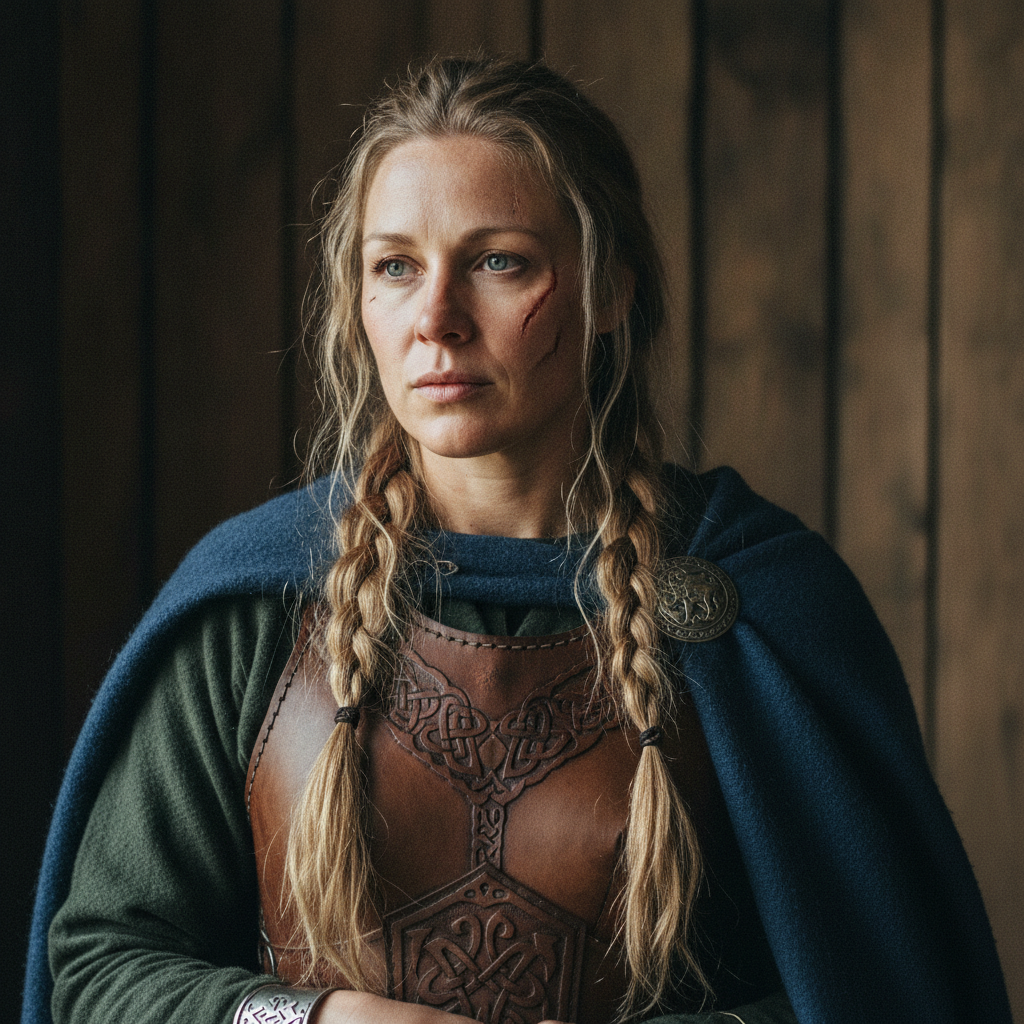
Face and hair: imagine a face with clear, fair-to-ruddy skin, high cheekbones and a firm jaw—features shaped by outdoor life and hard work rather than cosmetic artifice. Her hair was long, thick and likely kept in braids or a practical updo for fighting; she would not be bearded and would present a carefully groomed, purposeful appearance. Body and bearing: she would be compactly built and muscular from physical labor and combat—broad shoulders, strong forearms and hands with work-calluses, an upright, controlled stance and quick, practiced movements. Her height would sit within Viking-age female ranges, but her posture and musculature would read as commanding and capable rather than fragile. Clothing and equipment: layered wool and linen garments, a sturdy leather jerkin or gambeson for protection, a heavy travel cloak fastened with ornate brooches, sturdy boots and a utility belt. She would carry a round shield, likely an axe or spear and perhaps a sword; helmets or mail were rare, so protection would favor leather, layered padding and a pragmatic approach to battle dress. Adornment and grooming: high-status touches—silver or bronze brooches, bead necklaces (amber or glass), woven trim and patterned textiles—signaled rank and identity. Jewelry and well-maintained hair signaled both femininity and authority; dirt and battle wear would be real but not constant, since Norse culture valued personal grooming and appearance.
Height / build
Likely average to slightly tall for her time · Likely athletic / muscular
Hair
Likely fair — blond to light brown · Likely straight to wavy · Likely normal (not receding)
Eyes
Likely blue to blue-gray
Complexion
Likely fair to light, often wind-weathered
Face
Likely oval to slightly angular · Likely straight to slightly aquiline
Notable features
Long braids or loose long hair, muscular forearms, possible battle scars, and striking eyes
Grooming
None — feminine; likely clean-shaven face · Hair likely long and kept in warrior-appropriate styles (braids, plaits, or tied back); utilitarian grooming with some decorative jewelry.
Dress / presentation
Practical Viking-age dress: wool tunics, leather armor or protective layers for fighting, cloaks, and metal brooches/arm-rings as status markers
height build
Height
Likely average to slightly tall for her time
Viking-age female stature studies and the leadership/warrior role suggest she would be at least average and possibly taller or more imposing than peers.
height build
Build
Likely athletic / muscular
A life of combat and travel implies developed arms, shoulders, and core from handling weapons and seafaring.
eyes
Eye color
Likely blue to blue-gray
Light eye colors were common in Norse populations; literary tradition and modern reconstructions favor light eyes.
hair
Hair color
Likely fair — blond to light brown
Northern European populations of the Viking Age often carried lighter hair pigments; medieval descriptions of Norse beauty and later art emphasize light hair.
hair
Hair style / texture
Likely long and straight to wavy, often braided or tied back
Archaeological finds, grave textile depictions, and Norse costume evidence show long hair arranged in braids or practical styles for activity.
skin
Norse culture admired practical beauty: sturdiness, health, and the ability to work and defend. Women could be valorized for courage in battle and household competence alike; visible signs of strength and the right jewelry were part of social standing.
Viking-age Scandinavians commonly displayed light hair and eyes with fair skin, but there was diversity from regional gene flow. To picture Lagertha, imagine northern-European facial proportions and coloring but with the weathered look of frequent sea exposure.
Modern TV and film often exaggerate height, armor style, and glamorous looks (very polished, modern 'fantasy' armor); real Viking warrior dress was more practical and less sexualized.
Contemporary TV often turns Lagertha into a hyper-stylized, highly sexualized warrior in custom armor and immaculate hair; the historical reality would emphasize functionality—simple leather, layered wool, and hair kept out of the way for combat.
Likely average to slightly tall for her time—noticeably imposing by local standards.
Likely blue to blue-gray, a common eye color in Viking-age Scandinavia.
Likely fair — blond to light brown, often worn long and braided for practicality.
Probably described as attractive and striking—tradition emphasizes both beauty and martial prowess.
No—she would be a clean-faced woman; facial hair is not part of Norse female portrayals.
Her image is reconstructed from medieval narrative (Saxo), Viking-age burials, and regional physical anthropology—combined to form a likely visual.
Gesta Danorum — Saxo Grammaticus
Gesta Danorum · c. 12th century
Saxo’s account provides the main narrative description: a woman warrior, described as beautiful and brave, who fought alongside men and held leadership; this shapes later visual imaginations.
Later Norse saga and legendary material
Ragnar Lodbrok sagas / Norse saga tradition · 13th century and later compilations
Later sagas and legendary material repeat and embellish the figure of Lagertha and her role as a shieldmaiden, reinforcing her martial and attractive characterization in medieval memory.
Oseberg ship burial (garments and textiles)
Oseberg (Norway) burial finds · c. 834 CE (Viking Age)
Exceptional female burial with preserved textiles, brooches, and wood carvings that show the richness and practical styles of high-status Norse women’s dress—useful for imagining jewelry, cloaks and hair arrangements.
Viking-age burial and osteological studies
Multiple archaeological and osteological analyses · 20th–21st century
Skeletal analyses provide average stature ranges, signs of physical activity on bones, and demographic patterns that support reconstructing a muscular, capable female body for a warrior.
Medieval and post-medieval depictions
Late medieval art, 18th–19th century romantic images · 12th–19th centuries
Artistic images from centuries later often portray Lagertha with long flowing hair and idealized beauty, which influenced modern popular images but reflect later aesthetics more than Viking reality.
Contemporary popular portrayals (e.g., TV series 'Vikings')
History Channel 'Vikings' and similar media · 2010s
Modern portrayals amplify Lagertha’s height, polished armor, and stylized beauty; useful for contrast but not primary evidence for historical appearance.
Complexion
Likely fair to light, weathered by outdoor life
Scandinavian ancestry implies lighter skin; prolonged outdoor activity would produce wind-chapped or tanned features.
grooming
Facial hair / grooming
Probably no facial hair; typically clean-faced
Medieval Norse women are not recorded as having facial hair; grooming focused on hair and practical cleanliness.
clothing
Clothing
Practical wool and leather; cloaks, brooches, and arm-rings for status
Archaeological garments (tunics, cloaks), metal dress fittings, and saga descriptions indicate functional dress with visible jewelry that signalled rank.
other
Notable marks
Likely battle-hardened — scars or muscular marks visible
Active combat roles produce scars and pronounced musculature; tradition emphasises her martial prowess.
cultural
Presence / bearing
Commanding, assertive, and visibly competent in arms
Literary descriptions present her as a leader and fighter whose bearing would convey authority.