eyes
Eye color
Likely dark (brown)
Most Jews of Andalusian and Egyptian origin had brown/dark eyes; later portraits and regional population patterns support this.
Portrait reconstruction
1135–1204 · Born in Córdoba (al-Andalus); lived in Fez, Damietta/Fustat (Egypt) · Medieval (12th century)
Maimonides probably looked like a Mediterranean scholar: dark-haired, dark-eyed, olive-skinned, bearded, and robed as a physician and rabbi.
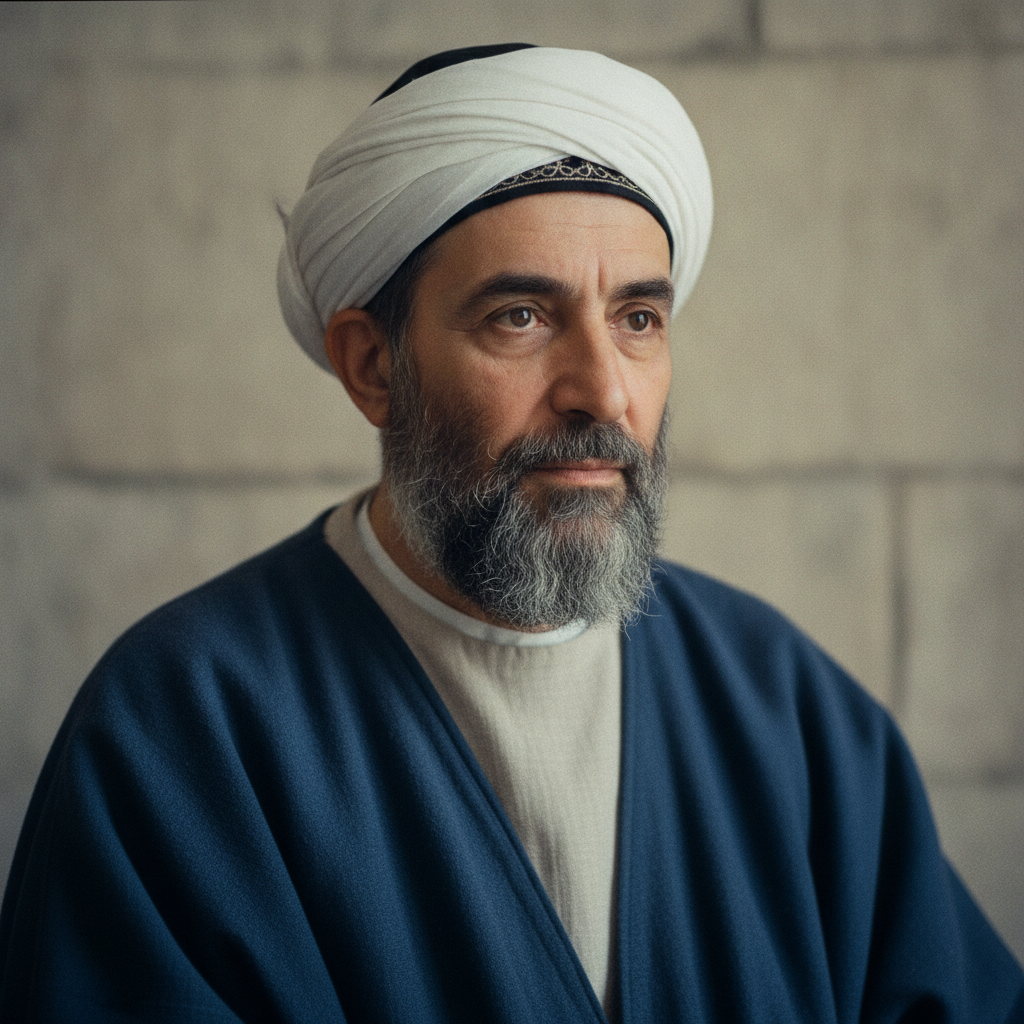
Face and coloring: He likely had dark hair and dark brown eyes with an olive or warm Mediterranean complexion common to Andalusi and North African populations. As he aged he would have carried the lined, thoughtful features of a man who spent decades studying, teaching, and treating patients. Hair and facial hair: Most later portraits and the cultural context point to a modest beard rather than a clean-shaven face—short to medium length, neatly kept—paired with close-cropped or medium-length hair tucked under headwear. Clothing and bearing: Expect robes of sober but good-quality fabric, a wrapped headcovering or turban typical for scholars and physicians in al-Andalus, Fez, and Fatimid/Ayyubid Egypt, and simple practical shoes; his posture would read as composed and authoritative—the steady bearing of a court physician and senior rabbinic authority.
Height / build
Likely average height for his time · Likely slender to average build
Hair
Likely dark, later graying · Likely straight to wavy · Likely normal hairline, probably receding/graying with age
Eyes
Likely dark (brown)
Complexion
Likely Mediterranean/olive complexion
Face
Likely oval to angular Mediterranean face · Likely prominent/straight or slightly aquiline nose
Notable features
Dark eyes, greying hair in later years, scholarly bearing (robe and headwrap), likely an intelligent, spare facial expression.
Grooming
Probably a trimmed full beard · Clean, purposeful grooming: trimmed beard and neat hair under headcovering, matching scholar/physician norms.
Dress / presentation
Scholarly/physician robes of 12th‑century Muslim Mediterranean society — long robe, tunic, and headwrap or turban; sometimes a small skullcap beneath.
eyes
Eye color
Likely dark (brown)
Most Jews of Andalusian and Egyptian origin had brown/dark eyes; later portraits and regional population patterns support this.
hair
Hair color
Likely dark, later graying
Mediterranean origin predicts dark hair; many later depictions show graying in old age and texts note him as elderly when he died.
hair
Hair texture
Likely straight to wavy
Typical hair textures in Andalusian and Egyptian Mediterranean populations and in manuscript portraits.
other
Beard
Probably a trimmed full beard
Jewish learned men and physicians in medieval Muslim lands ordinarily wore beards; later portraits consistently show him bearded.
skin
Complexion
Likely Mediterranean/olive complexion
Andalusian Jewish origins and long residence in North Africa/Egypt point to an olive to light‑brown skin tone.
height build
Height
Likely average height for his time
In 12th‑century Andalusia and Egypt, learned status was signaled by sober, high‑quality robes, a covered head, and a well‑kept beard. A physician‑rabbi like Maimonides projected authority through quiet dignity rather than ostentation: neat grooming, modest colors, and practical layers for clinic and study.
Maimonides belonged to the Sephardic/Andalusian Jewish milieu and later settled among North African/Egyptian populations; that background places him solidly in the Mediterranean phenotypic range—dark hair and eyes, olive‑toned skin, and facial proportions common across Iberia and the Maghreb.
Later portraits often add exoticized turbans, dramatic features, or idealized Westernized faces; the real Maimonides was likely less theatrical and more like an understated Mediterranean scholar.
Many later portraits exaggerate exotic elements—oversized turbans, theatrical robes, or a Hellenized face—shaping an image that fits later tastes. The real Maimonides was likely less exotic and more like a practical, modestly dressed Mediterranean scholar and physician.
Likely average height for his time.
Likely dark (brown).
Likely dark in youth and graying with age.
Probably a trimmed full beard, as was customary for learned Jewish men and physicians.
Long scholarly/physician robes and a head covering (headwrap/turban or skullcap) typical of learned men in 12th‑century Muslim lands.
Moderate confidence—no authenticated contemporary image survives, but textual and regional context allow a responsible and specific reconstruction.
Letters and biographical notes by Abraham Maimuni (son)
Abraham Maimuni (son) — 13th century · 13th century (post‑1204)
Sonly recollections and writings present Maimonides as a venerable rabbi and physician; while not a physical description, these family memories shaped later portrayals and confirm his role and age profile.
Ibn Abi Usaibia — Lives of the Physicians (mentions Maimonides)
Ibn Abi Usaibia — Uyūn al-Anbāʾ fī ṭabaqāt al-aṭibbāʾ · 13th century
A near‑contemporary Arabic biographical tradition of physicians that treats Maimonides as a distinguished physician; implies the social dress and status of court physicians in which Maimonides participated.
Manuscript and printed portraits (15th–18th century)
Later Jewish portraits and illuminations (various) · 15th–18th century (series of manuscript and printed images)
Many post‑medieval portraits—illuminated manuscripts, printed books, and synagogue art—consistently show a bearded, turbaned or robed Maimonides; these images shaped popular imagination but are not contemporary likenesses.
Medieval Jewish communal descriptions and honors
Communal letters and later medieval Jewish commentaries · 13th–15th centuries
References to Maimonides’ standing, age, and professional roles help situate his likely age, grooming, and dress in community memory.
Modern scholarly biographies
Modern biographies (e.g., Jonathan Sacks; Joel L. Kraemer) · 20th–21st century
Contemporary historians synthesize textual sources and regional context to produce plausible physical profiles (dark hair/eyes, scholar's dress); useful for contextual reconstruction.
No direct measurements; typical medieval Mediterranean male height and his scholarly lifestyle suggest average stature.
height build
Build
Likely slender to average build
Active intellectual life, travel, and medical practice argue against heavy corpulence; many period scholars were lean or average.
clothing
Typical dress
Long scholar/physician robes with headwrap/turban (and sometimes a skullcap)
As a court and community physician and rabbinic leader in Muslim lands he would wear contemporary learned‑man clothing.
face
Facial features
Likely an intelligent, spare face with a prominent nose
Mediterranean judges and portraits often show strong noses and a measured expression; later images emphasize a prominent nose and thoughtful look.
grooming
Grooming
Neat, purposeful grooming — trimmed beard and covered head
Religious and professional norms for rabbis and physicians favored orderly appearance and headcoverings; textual references show his standing and role.