height build
Height
Likely average height
Warring States northern Chinese males averaged shorter than modern populations; scholars were not specially large and textual sources emphasize intellect over size.
Portrait reconstruction
372 BCE–289 BCE · State of Zou (modern Shandong), northern China · Warring States period (c. 4th–3rd century BCE)
Mencius likely appeared as a lean, dignified northern Chinese scholar with dark hair, a modest beard, and the long robes and cap of his rank.
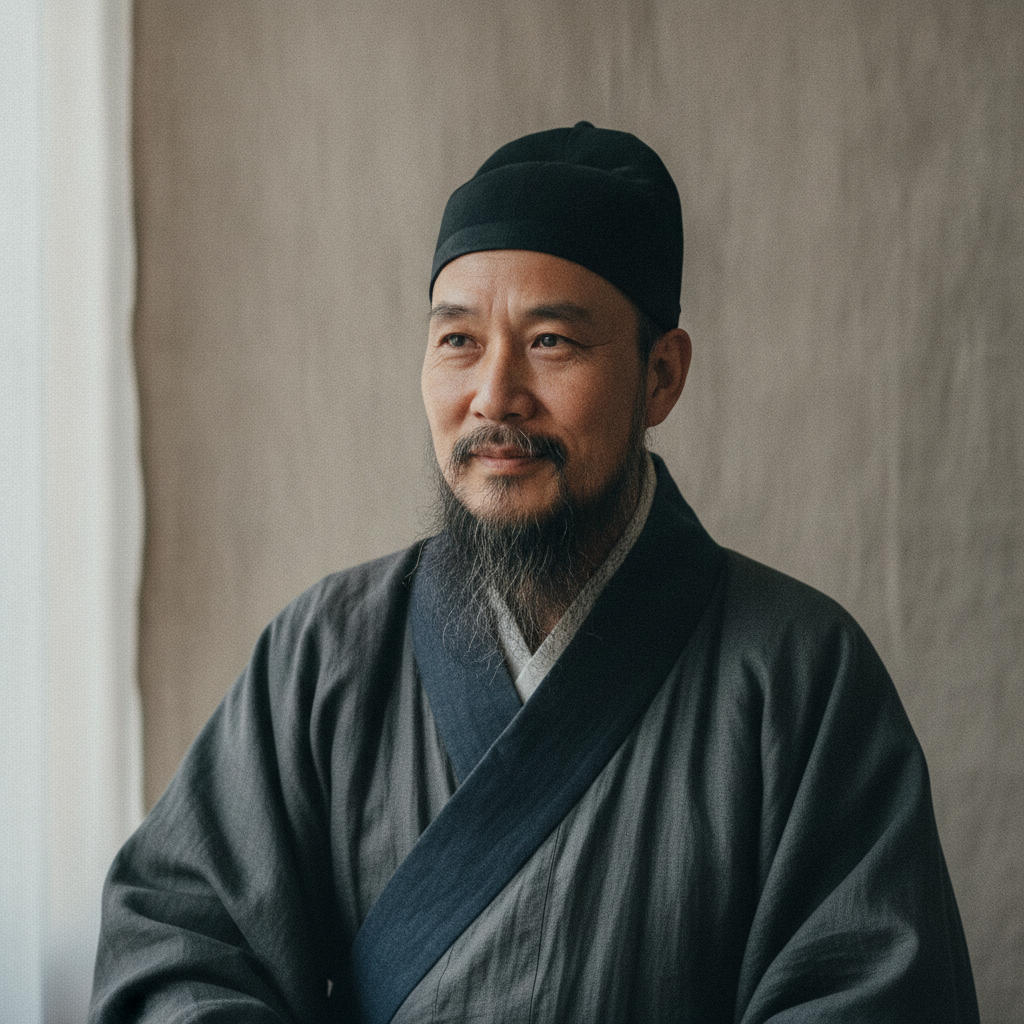
Face and hair: He most likely had straight, dark hair—black or very dark brown—worn long and tied or covered by a simple scholar’s cap; the facial proportions would have been those common to northern China at the time, with a medium to narrow face and expressive features suited to a teacher and debater. Facial hair and age: As a respected elder and moral teacher he probably showed restrained facial hair—a short to medium-length beard or mustache rather than a full, wild beard—styled neatly to convey seriousness and self-discipline. Body and bearing: Imagine a lean, upright figure rather than a bulky warrior: average height for his region, a wiry scholar’s build from travel and teaching, steady posture, and hands callused from writing bamboo slips; his presence emphasized calm authority more than physical strength. Clothing and accoutrements: He would have worn the simple, flowing robes (early hanfu) of a learned gentleman in muted earth tones, with a plain guan or cap, a sash, and practical shoes—nothing ostentatious, the clothing of a man who signaled learning and moral standing through restraint rather than decoration.
Height / build
Likely average height · Likely slender to medium build
Hair
Likely dark to graying · Likely straight to slightly wavy · Probably receding or higher forehead in older age
Eyes
Likely dark (brown/black)
Complexion
Likely light to medium East Asian complexion
Face
Likely long/oval face · Likely straight, moderate nose
Notable features
Beard, high forehead, composed expression, scholar’s cap and robes
Grooming
Probably moustache and full or trimmed beard in later life · Kept in the Confucian scholar style: hair tied up under a cap, a groomed beard, neat and modest presentation.
Dress / presentation
Long, layered Confucian scholar robes (hanfu) with a guan or scholar’s hat
height build
Height
Likely average height
Warring States northern Chinese males averaged shorter than modern populations; scholars were not specially large and textual sources emphasize intellect over size.
height build
Build
Likely slender to medium build
Lifestyle of a travelling scholar and court adviser favored leaner body types compared with agrarian or military classes.
eyes
Eye color
Likely dark (brown/black)
East Asian populations in Shandong historically had dark brown/black irises; no evidence for non-dark colors.
hair
Hair color
Likely dark to graying
Native northern Chinese hair is dark; portraits and descriptions of sages often show graying with age.
hair
Hair style
Hair tied up under a cap (scholarly topknot)
Confucian scholars wore hair bound and covered by a guan or cap as a sign of decorum; later portraits follow this convention.
grooming
Facial hair
Confucian culture prized modesty, neatness, and symbolic dress: plain but high-quality robes, a bound hairstyle, and a cap signalled education and moral seriousness. For a thinker like Mencius, projecting restraint and dignity through clothing and grooming was essential to the role of moral adviser.
Born in what is now Shandong, Mencius would have shared the common northern East Asian phenotype: dark hair and eyes and a complexion that ranges light-to-medium. Think of him as visually continuous with later classical Chinese scholars rather than exoticized or Mediterraneanized.
Modern images often exaggerate a long flowing white beard or idealize him as pietistic and elderly; real-life Mencius was probably more restrained, with dark hair that grayed with age and conventional scholar’s dress.
Modern paintings, films, and schoolbook prints often show Mencius with an extremely long white beard and wildly flowing robes like a mythic wizard. In reality, portraits and tomb imagery indicate a far more modest, neatly kept beard and the conventional scholar’s robe—graceful and restrained rather than theatrical.
Likely average height — typical for northern China in the Warring States era and not notably tall by his society's standards.
Likely dark (brown/black).
Likely dark in youth and dark to graying in later life.
Probably — later portraits and temple statuary typically show him with a moustache and beard, consistent with elite male grooming.
Long Confucian scholar robes (hanfu) and a guan or scholar’s cap—modest, layered garments marking his status as a learned man.
Through later portrait conventions, temple statues, textual context about his social role, and regional population norms; these together give a plausible visual picture.
Mencius (Mengzi) — the text
Mengzi (Mencius) · compiled c. 3rd–2nd century BCE (text of sayings and dialogues)
Classical text records Mencius' role, speech, and moral presence; emphasizes character, not physical description, but situates him as a cultured northern scholar.
Records of the Grand Historian (Shiji) — mentions of philosophers
Sima Qian, Shiji · c. 1st century BCE
Provides historical context for philosophers like Mencius and their social roles; informs assumptions about clothing, status, and demeanor.
Song dynasty portraits of sages including Mencius
Song-period portrait tradition · 10th–13th century CE (Song dynasty)
Song-era portraits established the familiar iconography of Confucian sages: long robes, caps, restrained posture, and bearded faces—images that shaped later temple imagery.
Ming dynasty woodblock images and temple portraits
Ming-era portraits and prints · 14th–17th century CE
Widespread printed images and temple portraits during Ming popularized a standardized depiction of Mencius used for education and ritual.
Temple statues of Mencius in Confucian temples
Confucian temple statuary (various dynasties) · compiled over many dynasties (Song onward)
Statues show Mencius as a bearded, robed elder in the classical scholar’s pose, reinforcing dress and grooming conventions.
Studies of ancient Chinese dress and scholar presentation
Historical costume and social role studies · 20th–21st century scholarship
Academic work on hanfu, guan, and scholar presentation helps reconstruct how a Warring-States Confucian would dress and groom himself.
Probably moustache and beard in later life
Classical Chinese male elites typically wore facial hair; later portraits and temple statues depict Mencius with a beard.
face
Face shape
Likely long/oval face with a high forehead
Later portrait tradition and idealized scholar imagery favor an elongated face and prominent forehead as marks of intelligence and age.
skin
Complexion
Likely light to medium East Asian complexion
Origin in northern China and social class combining indoor scholarly life with some travel suggests relatively fair-to-medium complexion.
clothing
Clothing
Long Confucian scholar robes and a guan (scholar’s cap)
Confucian scholars and advisers wore long layered robes and headwear signalling status and propriety; later portraits show this dress for Mencius.
cultural
Overall demeanour
Reserved, commanding, sage-like
Classical sources emphasize Mencius' persuasive moral authority and dignity; artists depicted him with composed, serious expression.
Regional demographic and phenotype research
Archaeological and anthropological studies of northern China · 20th–21st century
Provides baseline on typical hair, eye color, complexion, and stature for populations in Shandong and surrounding regions.