height build
Height
Likely average height
Population studies and comparative descriptions indicate Nahua adult male stature was around regional norms; no source describes exceptional tallness.
Portrait reconstruction
1466–1520 · Tenochtitlan, Aztec Empire (Central Mexico) · Late Postclassic / early 16th century
Montezuma II was likely a middle‑aged Nahua man with dark hair, medium‑brown skin, a lean, dignified bearing, and striking feather-and-gold regalia.
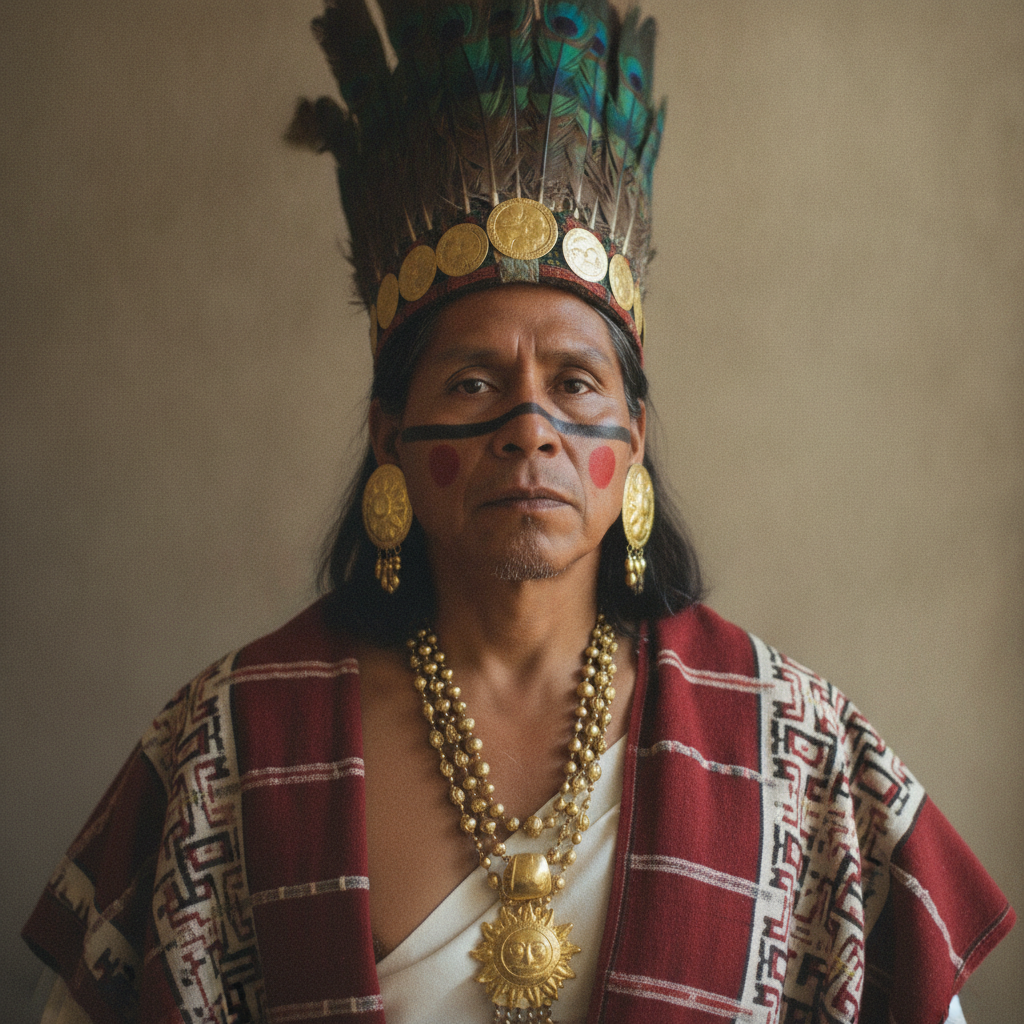
Face and hair: He probably had straight, dark hair—worn long and usually tied back or arranged under a feathered headdress—and medium‑brown skin. Contemporary images and descriptions suggest a mature, composed face with a steady gaze; he was likely clean‑shaven or with little facial hair, showing the polished grooming expected of elite Nahua men. Build and posture: Montezuma would likely have been of medium height with a lean, muscular frame typical of central Mexican nobles—strong but not heavily bulky. His stance and carriage would have been poised and deliberate, projecting authority more through bearing than sheer size. Clothing and ornament: What made his appearance unmistakable was his costume: a richly patterned cotton tunic and mantle, a towering quetzal‑feather headdress or plumework, and abundant gold—earrings, pectorals, bracelets, and nose or chest ornaments inlaid with turquoise and shell. Ceremonial face paint or pigments and finely worked sandals completed a look designed to mark sacred rulership.
Height / build
Likely average height · Likely medium build, somewhat robust from elite diet
Hair
Likely dark to graying · Likely straight to slightly wavy · Likely slightly receding or high forehead with hair worn up/covered by headdress
Eyes
Likely dark (brown)
Complexion
Likely medium brown (indigenous Central Mexican complexion)
Face
Likely oval to broad-faced · Likely straight, medium nasal bridge
Notable features
Wore elaborate quetzal-feather headdress, gold earspools and jewelry, ritual facial paint; commanded an austere, ceremonial bearing
Grooming
Probably clean-shaven or minimal facial hair · Nahua elites practiced careful grooming—regular body hair removal and cosmetic use—so Montezuma would present a neat, hair-free face and styled hair under his regalia.
Dress / presentation
Elaborate Aztec imperial regalia: cotton mantle (tilmatli), decorated maxtlatl, quetzal-feather headdress, gold ornaments and patterned textiles
height build
Height
Likely average height
Population studies and comparative descriptions indicate Nahua adult male stature was around regional norms; no source describes exceptional tallness.
height build
Build
Likely medium, slightly robust
As a ruler with access to better diet and less manual labor, he would likely be sturdier than commoners but not heavyset.
eyes
Eye color
Likely dark (brown)
Dark brown eyes are overwhelmingly characteristic of Central Mexican indigenous populations and are the default in contemporary descriptions and painted portraits.
hair
Hair color
Likely dark to graying
Nahua men typically had dark hair; Spaniards described Montezuma as mature in age, so some graying is likely by his 50s.
hair
Hair texture & style
Likely straight to slightly wavy; worn neat and often covered by regalia
Nahua hair tended to be straight; elite grooming and headdresses figure prominently in codices and Spanish descriptions.
grooming
In Aztec elite culture, status came less from personal musculature and more from ritual dress and controlled presentation: finely woven cotton, luminous gold, and spectacular featherwork (especially quetzal) were the visual shorthand of divine rule. Montezuma's authority would be read first through his regalia — bright feathers, patterned textiles, and jewelry — rather than by body size alone.
Montezuma belonged to the Nahua (Mexica) elite of the Valley of Mexico. Highland Mesoamerican populations typically had dark eyes, dark hair, medium brown skin tones, and average-stature bodies; these population characteristics form the baseline for imagining his appearance before adding elite dress and grooming.
Modern portrayals often show him as a swarthy ‘noble savage’ or Europeanized aristocrat; the real visual distinction was his dazzling regalia and ceremonial bearing rather than exotic physical traits.
Popular images either over-Europeanize him (fair skin, classical features) or exoticize him as a wild noble with gaudy, impractical ornaments. The real Montezuma would have been recognizably indigenous in features and made visually striking by polished, ceremonial dress — a sophisticated, intentional costume of power rather than random exoticism.
Probably not exceptionally tall—likely around the average adult male height for Central Mexico at the time.
Likely dark brown, the overwhelmingly common eye color among Nahua peoples.
Likely dark and straight to slightly wavy; as an older man some graying was probable.
He was probably clean-shaven or had minimal facial hair; Nahua elites often presented with little facial hair.
His dazzling regalia: a quetzal-feather headdress, gold jewelry, and fine cotton garments — these ceremonial items made him visually unmistakable.
Contemporary Spanish letters and later indigenous-painted codices provide descriptions and images of his dress and general features; physical portraits were produced later and are influenced by artists' styles.
Letters of Hernán Cortés (Cartas de Relación)
Hernán Cortés · 1519–1520
Spanish eyewitness letters emphasize Montezuma's rich gold ornaments and featherwork; they note his dignity and age but give limited anatomical description.
Florentine Codex illustrations and descriptions
Bernardino de Sahagún / indigenous painters · compiled c. 1570s (based on earlier testimonies)
Post-contact Nahua paintings and Sahagún's descriptions show Montezuma in imperial dress (feathers, gold, cotton) and provide visual templates used by later artists for features and regalia.
Codex Mendoza illustrations
Codex Mendoza (commissioned for Spanish Crown) · c. 1541
Shows Aztec rulers and regalia, reinforcing how emperors were portrayed ceremonially — feathered headdresses, patterned mantles, and gold — which informs visual reconstructions of Montezuma.
Lienzo de Tlaxcala and 16th-century indigenous paintings
Lienzo de Tlaxcala and related pictorial manuscripts · 16th century
Indigenous painted manuscripts depict rulers with specific regalia and stylized facial types; they are key visual sources for Montezuma's dress and general physiognomy.
Diego Durán's history of the Indies of New Spain
Diego Durán · c. 1579
A Spanish friar's account based on indigenous informants describing Aztec court life, dress and some depictions of rulers; helpful for context though compiled decades after events.
Population and anthropological studies of Central Mexican prehispanic remains
Anthropological literature · 20th–21st century
Skeletal and demographic studies provide baseline data for average stature, robusticity, and population phenotypes used to estimate Montezuma's likely build and complexion.
Facial hair
Probably clean-shaven or minimal facial hair
Spanish chroniclers noted indigenous grooming practices that favored little visible facial hair; painted depictions rarely show heavy beards.
skin
Complexion
Likely medium brown (Nahua/Central Mexican)
Indigenous painted portraits and demographic context place him within the typical highland Mesoamerican skin tones.
clothing
Imperial dress
Elaborate featherwork headdress, cotton mantle, gold jewelry
Multiple codices and Spanish descriptions emphasize his golden ornaments, quetzal feather regalia, and fine cotton garments as markers of rank.
other
Notable adornments
Quetzal-feather headdress and gold earspools/pendants
Aztec emperors are consistently shown wearing distinctive feather crowns and gold ornaments that marked divine authority.
face
Facial features
Likely broad/oval face with straight nose
Painted portraits and population context suggest medium facial breadth and straight nasal profiles typical of Nahua elites.
Post-contact portraits (17th–19th century)
European and colonial painters · 17th–19th centuries
Later painted portraits of Montezuma show a range of idealized looks — often Europeanized — useful for tracing modern myths but not direct evidence of his real features.