hair
Hair color
Likely black
Typical East Asian pigmentation for central-eastern China; later portraits show dark hair; textual tradition makes no claim to exotic hair color.
Portrait reconstruction
470 BCE–391 BCE · Central-Eastern China (traditionally the State of Lu) · Warring States period (c. 5th–4th century BCE)
Mozi probably appeared as a lean, sober-faced man with long dark hair tied up, plain practical robes, and a focused, disciplined presence.
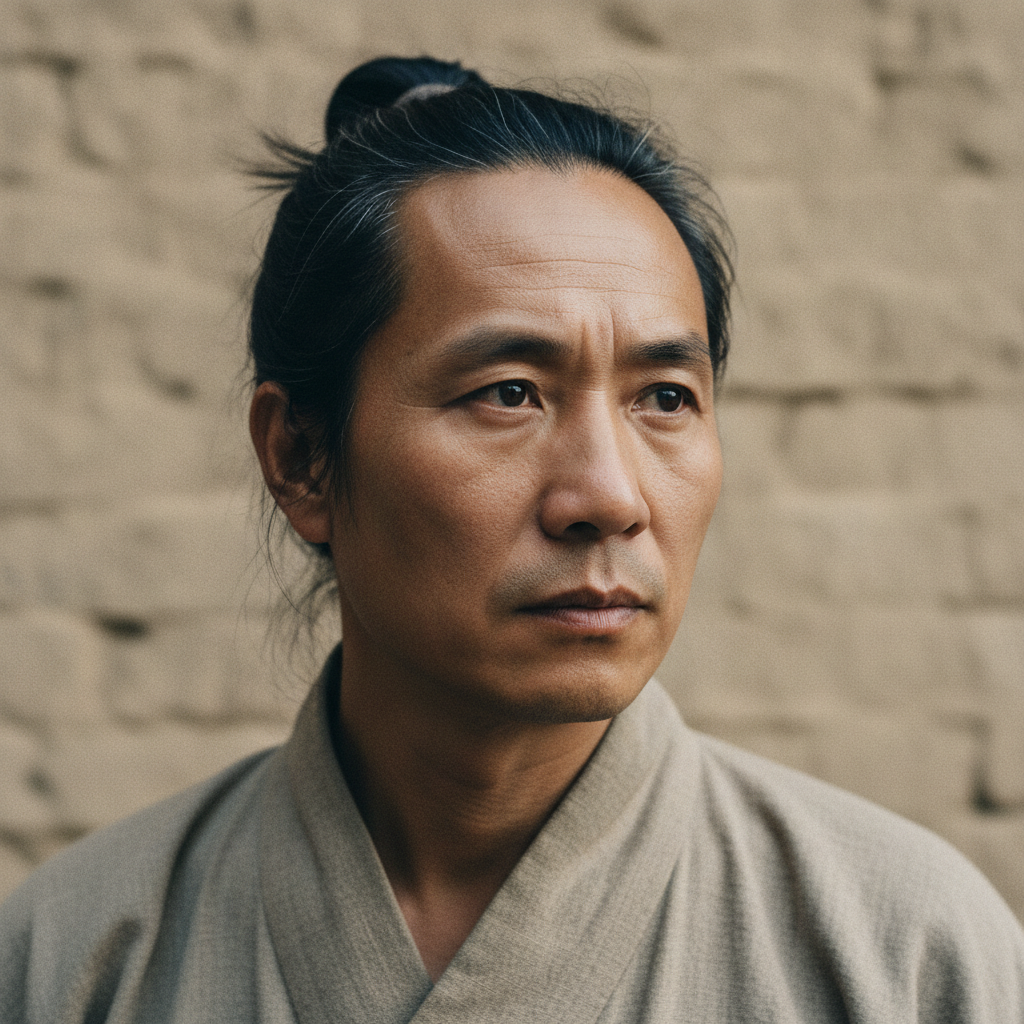
Face and expression: Picture a measured, earnest face—lean rather than fleshy, with an alert, concentrated gaze and a calm, restrained expression. His features would read more pragmatic than ornate: steady eyes, a straight nose, and a mouth set in reserve rather than flourish. Hair and grooming: Likely dark hair worn long and bound up in the practical style of the time—tied into a topknot or simple bundle to keep it out of the way. He was probably clean-shaven or kept minimal facial hair, presenting a tidy, functional appearance rather than decorative whiskers. Clothing and bearing: He would have worn plain, functional robes in muted colors or plain hemp—no gold thread or heavy ornament—fastened with a simple belt. His posture and hands would suggest discipline and craft: steady, possibly callused hands from technical work and teaching, moving with purposeful economy rather than theatrical flourish.
Height / build
Likely average height · Likely average to lean
Hair
Likely black, possibly dark to graying with age · Likely straight · Likely normal; possibly receding with age
Eyes
Likely dark (brown/black)
Complexion
Likely medium to light-olive East Asian complexion
Face
Likely oval to slightly long · Likely moderate/straight (typical East Asian profile)
Notable features
Sober, austere expression; plain dress; practical hairstyle; possibly signs of aging such as graying hair
Grooming
Probably clean-shaven or minimal facial hair · Hair worn long and tied up in the customary topknot/bun for men of the period; grooming plain and functional.
Dress / presentation
Plain, modest Warring States–era robe or hemp garment suited to a craftsman-turned-teacher; no luxurious ornamentation
hair
Hair color
Likely black
Typical East Asian pigmentation for central-eastern China; later portraits show dark hair; textual tradition makes no claim to exotic hair color.
hair
Hair style
Long hair tied in a topknot/bun
Male grooming norms in Warring States China required hair be kept long and bound; teachers and sages wore hair tied up rather than loose.
eyes
Eye color
Likely dark (brown/black)
Regional population pigmentation and later depictions indicate dark eyes.
other
Facial hair
Probably clean-shaven or minimal
Many Warring States depictions and artisan/teacher images show limited facial hair; Mohist frugality favored sparing grooming rather than fashion.
clothing
Typical clothing
Plain, practical robe or hemp garments
Mozi criticized lavish ritual and ostentation and his followers promoted frugal dress; later images show him in modest robes.
height build
Height
Warring States Chinese elites and thinkers prized proper grooming (hair kept long and bound), dignified bearing, and clothing that signaled rank and ritual correctness. Mohists, however, explicitly rejected ostentation: modest, practical dress and a serious bearing would have been seen as morally superior and fitting for a teacher who condemned wasteful ritual.
Mozi lived in central-eastern China during the Warring States era. Imagine the typical East Asian phenotype of that region and era: straight black hair, dark eyes, medium complexion. As a craftsman-turned-philosopher, his features would have blended with the common population rather than exhibiting aristocratic flamboyance.
Modern images often imperialize or romanticize him (flowing robes, stylized beards); the real Mozi was likely plainer, more utilitarian, and closer to an artisan-scholar than a court sage.
Modern paintings and film often show Mozi as an idealized sage in luxurious flowing robes or with dramatic facial hair. In reality, Mohist ideology and biographical tradition point to plain, workmanlike clothing and restrained grooming—less theatrical and more utilitarian than many modern portraits.
Likely average height for a Warring States Chinese man.
Likely dark brown to black.
Likely straight, black hair, probably darkening-to-graying in older age.
Probably clean-shaven or with minimal facial hair.
Plain, functional Warring States–era robes or hemp garments—simple, unadorned clothing suited to travel and teaching.
We combine his textual tradition and later portraits with general Warring States grooming and population context to produce the likely visual profile.
Mozi (墨子) — the Mohist text
Mozi (collected sayings and essays) · compiled c. 5th–3rd century BCE (core material older)
Contains philosophical teachings and some biographical hints (criticisms of luxury, emphasis on frugality) that imply a plain, functional personal style.
Sima Qian — Records of the Grand Historian (史记) (references to masters)
Shiji (史记) · c. 1st century BCE
Later historical compilations place Mozi in the intellectual landscape of the Warring States and describe his role and background, aiding contextual appearance reconstruction.
Medieval and early-modern painted portraits of Mozi
Song–Ming dynasty portraits and later reproductions · 10th–17th centuries CE (various copies)
These images consistently depict Mozi with plain robes, tied hair, and a sober expression—visual tradition that influenced later imagination of his appearance.
Temple statues and imagery of Mozi
Mohist temples (various sites, later periods) · medieval to modern replicas and temple art
Statues present Mozi as a modestly robed teacher—these inform modern visualizations even though they postdate him by many centuries.
Warring States cultural and grooming norms
Archaeological and textual studies of Warring States dress and grooming · modern scholarship
Provides the baseline for likely hair styles (long, bound), clothing cuts, and grooming appropriate to a male teacher and craftsman of the period.
Likely average height
No recorded exceptional height; population averages for the era suggest unremarkable stature.
height build
Build
Likely lean to average
A life of travel and earlier artisanal labor implies a practical, working build rather than corpulence.
skin
Complexion
Likely medium East Asian complexion, weathered
Central-eastern Chinese ancestry and outdoor travel would produce a medium tone with weathering.
face
Facial expression
Sober, austere, serious
Mohist ethical emphasis and later portraits present him as grave and authoritative rather than decorative.
grooming
Grooming
Neat, functional grooming
Mohist teachings promoted modesty and utility; a teacher traveling to courts would present himself tidily but without ornament.