height build
Height
Likely slightly taller than average for his time
Elite nutrition and the relatively tall proportions of life‑size Qin statuary and some han-era descriptions point to a ruler who was not unusually short.
Portrait reconstruction
259–210 · State of Qin (modern Shaanxi, China) · Warring States / Qin dynasty (3rd century BCE)
Qin Shi Huang likely had dark hair pulled into a formal topknot, a broad, authoritative face, and the polished robes or armor befitting an early imperial ruler.
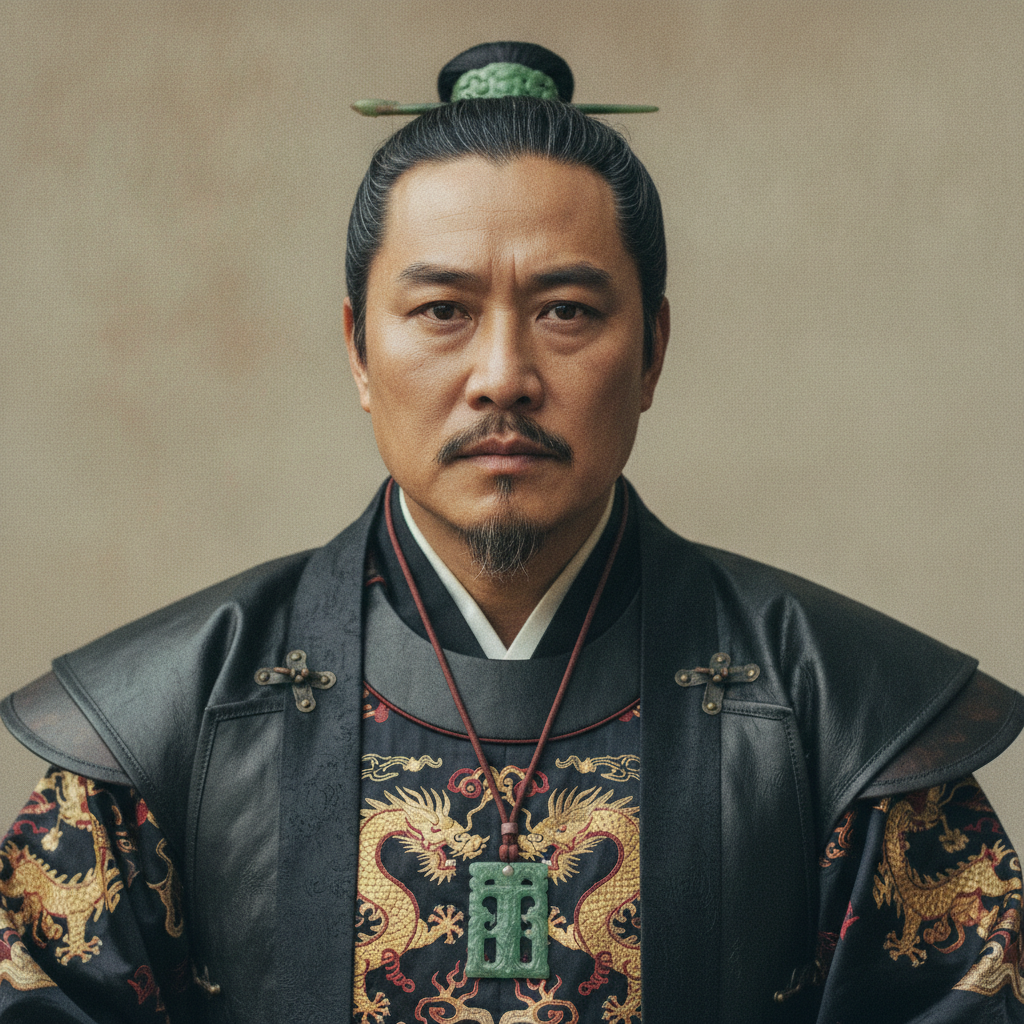
He would have presented as a solid, authoritative man rather than a gaunt ascetic — a stocky, sturdy build with a broad face and a strong jaw that conveyed command. Skin tone and eye color aligned with north‑central Chinese populations of the time: medium to warm complexion and dark brown eyes, giving a sober, intense appearance. His hair was almost certainly dark and worn in the elite style of the period: drawn up and tied into a topknot or bun and secured with pins and lacquered accessories; in formal settings he would add a court headdress. Facial hair on Qin‑era elite varied, but the most likely look for an emperor in official portraits was neat and managed — probably clean‑shaven or with a carefully trimmed moustache rather than a long flowing beard. For public and ceremonial life he would have worn layered, richly finished robes fastened with a broad belt and decorated with metal and jade ornaments; on military inspections he would appear in heavy brocade or lamellar armor, projecting both regality and martial authority. His bearing would be measured and intense — stern, composed, and always visually the center of attention.
Height / build
Likely slightly taller than average for his time · Likely average to stocky build
Hair
Likely black, darkening to graying with age · Likely straight · Likely normal for age; possibly receding slightly in later life
Eyes
Likely dark (brown/black)
Complexion
Likely a yellowish‑olive East Asian complexion
Face
Broad‑oval to square‑jawed · Medium width with a modest bridge (typical north‑Chinese morphology)
Notable features
Commanding brow, firm jawline, imperial posture; possible signs of age such as lines and graying temples
Grooming
Probably clean‑shaven or with minimal, closely trimmed facial hair · Court protocol favored long hair worn in topknots and careful grooming; imperial images and artifacts show neat, formal hair arrangements and trimmed facial presentation.
Dress / presentation
Formal Qin imperial robes and ceremonial garments, sometimes shown with lacquered armor and jade/metal accoutrements
height build
Height
Likely slightly taller than average for his time
Elite nutrition and the relatively tall proportions of life‑size Qin statuary and some han-era descriptions point to a ruler who was not unusually short.
other
Body build
Likely average to stocky
As a military ruler who traveled and inspected troops, combined with grave goods depicting robust figures, a solid frame fits both role and era.
hair
Hair color
Likely black (dark to graying late in life)
Typical east‑Asian pigmentation and later descriptions of age; material culture shows dark hair styles among Qin elites.
hair
Hair texture and style
Likely straight, long and tied in an elite topknot
Period grooming for Chinese elites involved long hair worn in knots; tomb figurines and ritual images show this convention.
eyes
Eye color
Likely dark brown/black
Consistent with East‑Asian population genetics and period descriptions that do not note light eyes as distinctive.
grooming
In Qin political culture, power was shown through austerity, strict grooming, controlled posture, and formalized dress rather than ornaments of softness. Emperors emphasized military competence and legalist order, so appearance was meant to convey command, discipline, and durability.
Qin Shi Huang came from the north‑central Chinese population of the Qin state (modern Shaanxi). Physically, that means the standard East‑Asian features of dark hair and eyes and a yellow‑toned complexion; elite status would make him look relatively well‑nourished and groomed compared with rural subjects.
Modern films and paintings often exoticize or dramatize his features (overemphasizing beards, odd skin tones, or fantasy costumes); the likely reality was a straightforward north‑Chinese appearance in standardized imperial dress.
Modern art often dramatizes Qin Shi Huang with exaggerated beards, fantasy armor, or exoticized facial features. The likely reality was simpler: a north‑Chinese face in standardized imperial dress; beards and flamboyant fantasy elements reflect later imagination more than Qin reality.
Likely slightly taller than the average person of his time.
Likely dark brown to black.
Likely black, straight, long and worn tied in a topknot; probably showed some graying by his late 40s.
Probably clean‑shaven or with minimal, closely trimmed facial hair.
His imperial robes, formal hair, stern bearing, and the way attendants and guards framed him — an unmistakable center of authority.
No secure contemporary portrait survives; our image is built from tomb statuary, archaeological finds, and later textual/visual tradition.
Records of the Grand Historian (Shiji)
Sima Qian, Shiji · c. 1st century BCE (compiled)
Key historical narratives about Qin Shi Huang's life, public demeanor, dress for ceremony, and some anecdotes that shape later images of his person and bearing.
Terracotta Army (mausoleum sculptures)
Terracotta Army, Mausoleum of Qin Shi Huang (Lintong, Shaanxi) · Built c. late 3rd century BCE
Thousands of life‑size figures showing individualized faces, hair styles, and armor; provides primary visual context for Qin‑era physiognomy and elite hair/grooming conventions.
Later imperial portraits and painted images
Song–Ming dynasty painted imperial portraits and ritual images · 10th–17th century CE (later representations)
Post‑Qin dynastic portraits shaped later visual traditions for emperors, often idealizing features and adding beards or regalia; useful for understanding evolving imaginations of Qin Shi Huang though not direct likenesses.
Grave goods and lacquer figurines from Qin tombs
Archaeological finds from Qin burials · 3rd century BCE (excavated modern era)
Small figurines, clothing remnants, and decorative items show elite dress, hairpins, and ceremonial items that inform likely imperial attire and grooming.
Later historical commentaries and biographies
Han dynasty and later historians referencing Qin · 2nd century BCE onward
Later writers shaped the emperor’s physical reputation (sternness, commanding look) and ceremonial dress descriptions used in reconstructions.
Facial hair
Probably clean‑shaven or with minimal, trimmed facial hair
Many elite portraits and protocol emphasize neat appearance; later idealized portraits sometimes add beards, but contemporaneous elite grooming often favored minimal facial hair.
skin
Complexion
Likely yellowish‑olive East Asian complexion
Regional population traits and court lifestyle suggest a typical north‑Chinese skin tone, less weathered than outdoor laborers.
face
Face shape and features
Broad‑oval face with a firm jaw and prominent brow
Imperial statuary and later portraits consistently emphasize a strong jaw and projecting brow to convey authority.
clothing
Typical dress
Ceremonial imperial robes and occasionally lacquered armor for inspections
Archaeological finds and historic descriptions show rulers wearing richly ornamented robes and ceremonial armor on state occasions.
cultural
Presence
Commanding and austere; projected authority
Contemporary political culture prized stern authority; surviving visual tropes for rulers stress an imposing, disciplined bearing.