height build
Height
Likely tall for his time
Saga traditions describe him as imposing; Viking-age skeletal averages are above many contemporary populations, and leaders are often portrayed as larger-than-average.
Portrait reconstruction
0–0 · Scandinavia (traditionally Denmark/Sweden) · Viking Age (9th century; semi-legendary)
Ragnar likely looked like a tall, broad Viking war-leader with light hair, blue/gray eyes, a trimmed beard, weathered skin, and practical but decorated clothing and furs.
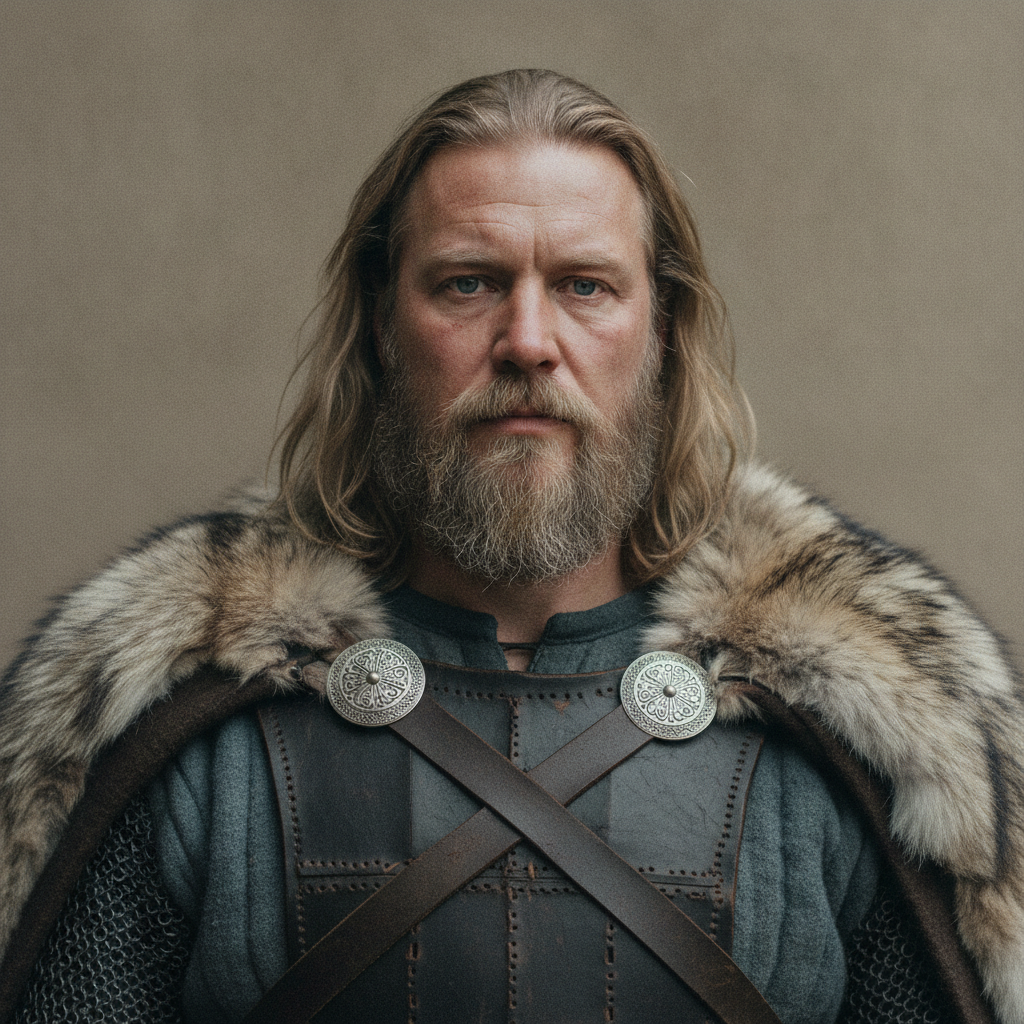
Physique and bearing: Imagine a man with a strong, athletic frame—broad shoulders, thick neck, and solid legs hardened by sea voyages and combat. Osteological patterns from the Viking Age point to robust builds for fighting men, so picture a powerful, upright silhouette with healed cuts and scars marking past battles. Hair and face: He most likely had light hair—ranging from blond to light brown or reddish-blond—worn long at times but usually tied back or braided for practicality. Facial hair would be present but managed: a trimmed beard and mustache that signaled maturity and authority rather than wildness. His eyes were probably blue or gray, and his skin weathered and sun-darkened from life outdoors. Clothing and accessories: Clothing was layered and purposeful—linen undergarments, a wool tunic, sturdy trousers, and a cloak fastened with a decorated brooch; high-status men added furs, patterned textiles, and metal adornments. In battle he would carry a shield, a seax or sword at his belt, and wear leather or textile protections; the epithet Loðbrók suggests distinctive, practical garments possibly lined or trimmed with animal hair. Overall impression: Not a theatrical icon but a striking presence—cleanly groomed by contemporary standards, visibly wealthy enough to show decorated metalwork and fine cloth, and weathered by travel and warfare so that his face told of experience as much as his dress told of rank.
Height / build
Likely tall for his time · Likely solid/athletic
Hair
Likely blond to light brown · Likely straight to slightly wavy · Likely full hair, usually long and worn tied or braided
Eyes
Likely blue-gray
Complexion
Likely fair with a weathered, ruddy cast
Face
Likely oval to rugged, with strong jawline · Likely straight to slightly aquiline
Notable features
Long hair and beard, battle scars, wind‑tanned skin, status accessories (cloak brooches, fur trim)
Grooming
Likely full beard (kept and groomed) · Probably well-maintained for the time — long hair, trimmed/arranged beard, and use of combs and oils were common among Norse elites.
Dress / presentation
Elite Viking dress: wool tunic, cloak fastened with brooches, leather boots, fur trims; armour (mail/leather) in battle.
height build
Height
Likely tall for his time
Saga traditions describe him as imposing; Viking-age skeletal averages are above many contemporary populations, and leaders are often portrayed as larger-than-average.
other
Physique
Likely solid, muscular/athletic
Raiding, shipboard work and combat favored broad shoulders and powerful upper bodies among Norse warriors.
eyes
Eye color
Likely blue-gray
Light eye colors (blue/gray) were common in medieval Scandinavia per population genetics and historical descriptions.
hair
Hair color
Likely blond to light brown
Northern European populations in Viking Age Scandinavia commonly had light hair tones; sagas and later tradition emphasize striking hair on leading men.
hair
Hair length/style
Likely long, often tied or braided
Long hair on male elites is a recurrent motif in Norse narrative and matches archaeological finds of grooming items suggesting hairstyling.
other
Beard
Norse ideals prized visible signs of strength and honor: long hair and an impressive beard were markers of status, battle scars and a robust physique signaled proven bravery, and well-kept clothes and jewelry broadcast wealth and leadership. Appearance was public: leaders crafted looks to inspire followers and intimidate opponents.
Ragnar’s look would fit the northern European populations of his time: generally fair skin, often light eyes and light-to-medium hair. That regional template, combined with a seafaring lifestyle, produced a weathered, practical appearance rather than an idealized, delicate portrait.
Modern film and TV often exaggerate flowing platinum blond hair and perfect looks; actual Norse leaders varied more in hair tone and would show more weathering, scars, and practical clothing.
TV and film often give Ragnar immaculate, very blond flowing hair and stylized tattoos; historically, hair tones varied, grooming was practical (not cinematic), and tattoos are poorly evidenced for this exact figure. Expect grit, scars and practical hairstyles rather than cinematic glamour.
Likely tall for his time — accounts and the warrior context emphasize an imposing stature.
Likely blue-gray, matching common northern European eye colors of the period.
Likely blond to light brown — a typical Scandinavian hair range in the Viking Age.
Probably — a full, groomed beard was standard for Norse leaders.
Fine wool tunics and cloaks with decorative brooches and fur trims — visible signs of rank among Viking elites.
These are best-supported reconstructions using saga imagery, contemporary mentions and Viking-age archaeology — reasonably confident but not based on a preserved portrait.
Ragnarssona þáttr (Tale of Ragnar's Sons) and related Icelandic sagas
13th-century Icelandic saga tradition · c. 13th century (written), oral tradition older
Later medieval narratives that portray Ragnar as a great, often physically remarkable hero (long hair, imposing frame, notable exploits); source of many familiar stories (Loðbrók/‘hairy-breeches’ episode).
Gesta Danorum
Saxo Grammaticus · 12th–13th century
Danish medieval history that preserves tales of Ragnar and describes legendary deeds; provides later literary image of Norse leaders and attributes.
Annals of St. Bertin (reference to Reginherus)
Frankish annals · 845 CE (entry describing siege of Paris)
A near-contemporary continental chronicle that names a Viking leader Reginherus active in 845; often linked by historians to the Ragnar legend and used to anchor a historical image of a leader.
Anglo-Saxon Chronicle & other English sources
Anglo-Saxon Chronicle · 9th–12th centuries (compilation)
Records of Viking activity in England and the Great Heathen Army (often associated with Ragnar’s sons) help place Ragnar in a real social milieu of Scandinavian war-leaders.
Archaeological finds: grooming tools (combs, tweezers) and high-status burials
Birka, Oseberg and other Viking Age sites · 8th–11th centuries
Material culture shows Norse elites used grooming kits and wore decorated textiles, brooches and furs — indicating an appearance-conscious elite class.
Osteological studies of Viking Age stature and trauma
Viking Age bioarchaeology literature · 20th–21st century research
Skeletal studies indicate many Norse men had robust builds and show healed combat injuries, supporting the idea of sturdy, battle‑scarred physiques for warriors.
Likely full beard
Beards were a standard masculine trait in Norse culture and are repeatedly referenced in saga imagery of leaders and warriors.
skin
Complexion
Likely fair, ruddy or weathered
Scandinavian skin tones tend to be fair; outdoor life and seafaring produce wind‑reddened, weathered faces.
grooming
Grooming
Well-maintained for the time
Norse elites used combs, tweezers and oils; good grooming signaled status and was common among chieftains.
clothing
Dress
Elite Viking garments: wool tunic, cloak, fur trims, decorative brooches
Chieftains wore decorated clothing visible on grave finds and art; furs and brooches signaled rank and wealth.
other
Scars and marks
Likely bore battle scars
A life of raiding and combat implies visible wounds and healed scars commonly mentioned in warrior literature.
cultural
Status markers
Wore status items (brooches, fine cloaks, possibly jewelry)
Material culture from wealthy Viking graves shows chieftains displayed wealth through clothing hardware and jewelry.
Ancient DNA and population studies for Scandinavia
Ancient DNA research (general literature) · 2010s–2020s
Genetic studies show light eye and hair alleles were common in northern Europe during and before the Viking Age, supporting likely blue/gray eyes and lighter hair tones.
Modern dramatizations (e.g., TV ‘Vikings’)
Contemporary media portrayals · 2010s
Stylized popular images of Ragnar: long, often very blond hair, tattoos, and cinematic battle costumes — useful for modern imagination but not a primary historical source.