height build
Height
Likely tall for his time
Viking-age Scandinavians were commonly at or above regional average height; elite warriors were often described or presumed to be physically imposing.
Portrait reconstruction
860–931 · Scandinavia (likely Norway/Denmark) and Normandy (northern France) · Viking Age / Early Middle Ages
Rollo probably looked like a sturdy, broad-shouldered Norse war-leader with long dark hair, a trimmed full beard, weather-beaten skin, and practical leather, wool, and furs marked by his rank.
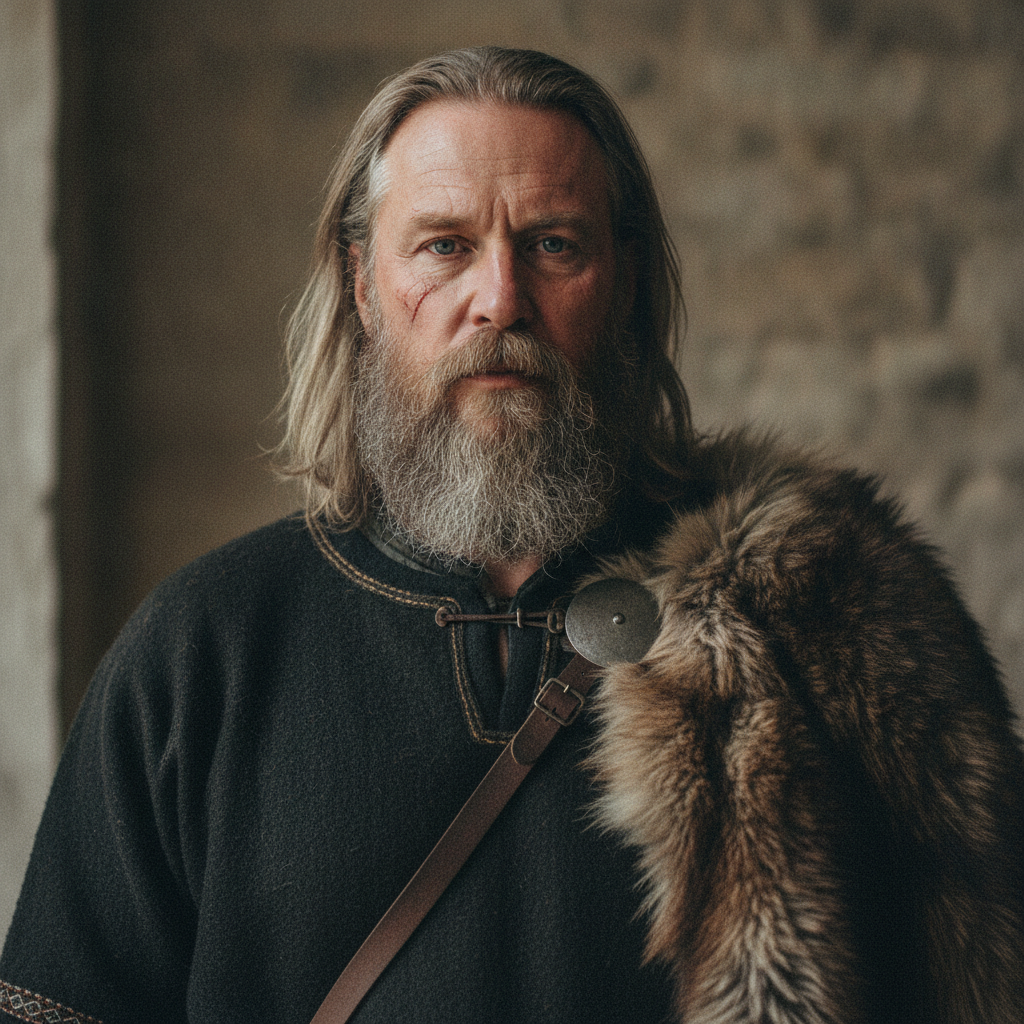
Build and face: Expect a solid, imposing physique — not oversized, but broad-shouldered, muscular from years at sea and on raids. He would have been at least sturdily built and often taller than local peasants, with a square jaw, a strong nose, and a face weathered by wind, sun and salt spray; a few battle scars would have been visible. Hair and grooming: Likely dark hair kept long and practical — shoulder-length or longer, often tied back or braided for fighting — and a trimmed full beard with a mustache; Norse men of rank used combs and oil, so his hair and beard would look deliberately maintained rather than wild. Small braids, beads or simple metal clasps in his hair or beard are possible as personal touches. Clothing and kit: Off the battlefield he would wear a wool tunic, sturdy trousers, leather boots, and a heavy cloak fastened with a brooch, with furs for warmth; arm-rings, a decorated belt, and quality brooches signaled status. In war he’d don practical mail or leather and a conical helmet, carry a round shield and an axe or sword — gear that is functional, worn-looking, and visibly used rather than purely ceremonial.
Height / build
Likely tall for his time · Likely sturdy, muscular
Hair
Likely blond to light brown (probably graying in later life) · Likely straight to lightly wavy · Probably somewhat receding or thinning with age
Eyes
Likely blue-gray
Complexion
Likely fair to ruddy
Face
Likely broad to oval face with a strong jaw · Likely prominent, straight to slightly aquiline
Notable features
Tall stature, strong jaw, weathered/scarred skin, piercing light eyes, graying hair in later life
Grooming
Probably a full beard and mustache · Functional Viking elite grooming — long hair often tied back and a trimmed but substantial beard; practical, not highly ornate.
Dress / presentation
Viking elite/warrior clothing (wool tunic, leather, fur cloak) later combined with Frankish/Norman garments and symbols of authority
height build
Height
Likely tall for his time
Viking-age Scandinavians were commonly at or above regional average height; elite warriors were often described or presumed to be physically imposing.
height build
Build
Likely sturdy, muscular
Active seafaring, raiding and fighting produced broad-shouldered, muscular bodies among Norse leaders and warriors.
hair
Hair color
Likely blond to light brown (graying in later life)
Scandinavian populations of the period commonly had light hair; later accounts describe him in older age (so graying is likely).
hair
Hair texture and style
Likely straight to lightly wavy; long and often tied back
Norse grooming favored long hair tied for battle or travel; skeleton and textile evidence suggest straight to wavy textures in the region.
eyes
Eye color
Likely blue-gray
Light eye colors (blue/blue-gray) were common among Scandinavians and are often attributed to Norse leaders in medieval sources.
grooming
Facial hair
Norse ideals emphasized strength, visible prowess and practical grooming. Long hair and a substantial beard signaled masculinity; battle-scars and a weathered face were badges of experience. Clothing and jewelry marked status — a well-made tunic, cloak, brooches or arm-rings signaled wealth and leadership more than delicate ornamentation.
Rollo originated from the Norse world (likely Norway or Denmark) where light hair and blue eyes were common; after settling in northern France he and his followers blended Norse features with local Frankish fashions, creating the early Norman look — northern European physiognomy with hybrid dress.
Modern films often show Rollo as either a clean-shaven stereotype or anachronistically armored; the real Rollo was likely older, grayer, and dressed in a practical mix of Norse and Frankish clothing reflecting his role as a settled ruler.
Films and TV often present Rollo as either a young, manic berserker or a clean-shaven 'barbarian' stereotype. Real leaders like Rollo were pragmatic: older, grayer, and more concerned with appearances that signaled negotiated power — mixing Norse prestige items with Frankish court dress — rather than constant wild ferocity.
Probably — Likely tall for his time; as a Norse elite warrior he would have been on the more physically imposing side.
Likely blue-gray.
Likely blond to light brown, probably graying in later life.
Probably — a full beard and mustache were typical and socially expected for a Norse leader.
A blend: Viking elite clothing (wool tunic, leather, fur cloak) with Frankish/Norman additions and status items.
Moderate confidence: no contemporary portrait exists, so reconstructions combine medieval descriptions and archaeological/population context to produce the most likely image.
Vita Normannorum by Dudo of Saint-Quentin
Dudo of Saint-Quentin · c. 1000–1015
A near-contemporary medieval chronicle that describes early Norman leaders in heroic terms; emphasizes martial dignity and status but is stylized and written a century after Rollo's career.
Gesta Normannorum by William of Jumièges
William of Jumièges · c. 11th century
An 11th-century Norman chronicle that records earlier traditions about Rollo; useful for narrative but composed much later.
19th–20th century statues and portraits of Rollo (Rouen and elsewhere)
Modern commemorative sculptures and portraits · 19th–20th century
Later artistic imagings show a bearded, heroic warrior; they reflect modern nationalist and romanticized views rather than contemporary likeness.
Archaeological evidence on Viking grooming and clothing
Viking Age grave finds (combs, brooches, textile fragments) · 8th–11th centuries (archaeological record)
Combs, grooming tools, and clothing fragments show long hair, maintained beards, and garments (tunics, cloaks, furs) typical for a Norse elite; supports likely hairstyle and dress.
Viking-age osteological and population studies
Skeletal studies of Viking populations · 20th–21st century
Skeletal data provides average stature, robusticity and health context for Scandinavian males in the Viking Age, supporting a reconstruction of sturdy, often taller-than-local-average leaders.
Norse saga conventions and later medieval narrative
Norse sagas and legend compilations · 12th–13th centuries (oral traditions earlier)
Saga descriptions contribute to expectations about appearance (bearded, long-haired, imposing) though they are literary and composed later.
Probably full beard and mustache
Viking masculine identity and contemporary accounts emphasize beards; elite Norse leaders usually wore facial hair.
skin
Complexion
Likely fair to ruddy (weathered)
Northern European ancestry with wind- and sun-weathering from time at sea and in campaigns gives a fair but ruddy, leathery look.
face
Notable facial features
Prominent nose, strong jaw, likely battle-scars
Medieval portrayals of Norse leaders and general warrior lifestyle suggest prominent facial bones and likely scarring from combat.
clothing
Dress
Viking elite clothing blended with Frankish/Norman accoutrements
As a settled leader he would keep Norse dress (tunic, cloak, fur) while adopting Frankish garments and insignia to assert authority locally.
cultural
Grooming habits
Functional and maintained — practical grooming with combs and trimming
Archaeological combs and textual references show Vikings cared for and maintained hair and beards as a sign of status.
comparison
How he stood out
Commanding physical presence: taller, broader, and more weathered than typical Frankish peasants
Elite warrior background and leadership role would make him physically and sartorially distinct in courts and villages.