height build
Height
Likely tall for his time
Chronicles emphasize a commanding, imposing presence consistent with taller-than-average martial leaders.
Portrait reconstruction
1137–1193 · Ayyubid Sultanate (origin: Kurdish zones of Upper Mesopotamia; active in Syria & Egypt) · 12th century / High Middle Ages
Saladin likely presented as a mature, dark‑haired, olive‑complexioned man with a trimmed beard, steady dark eyes, and an authoritative, austere presence.
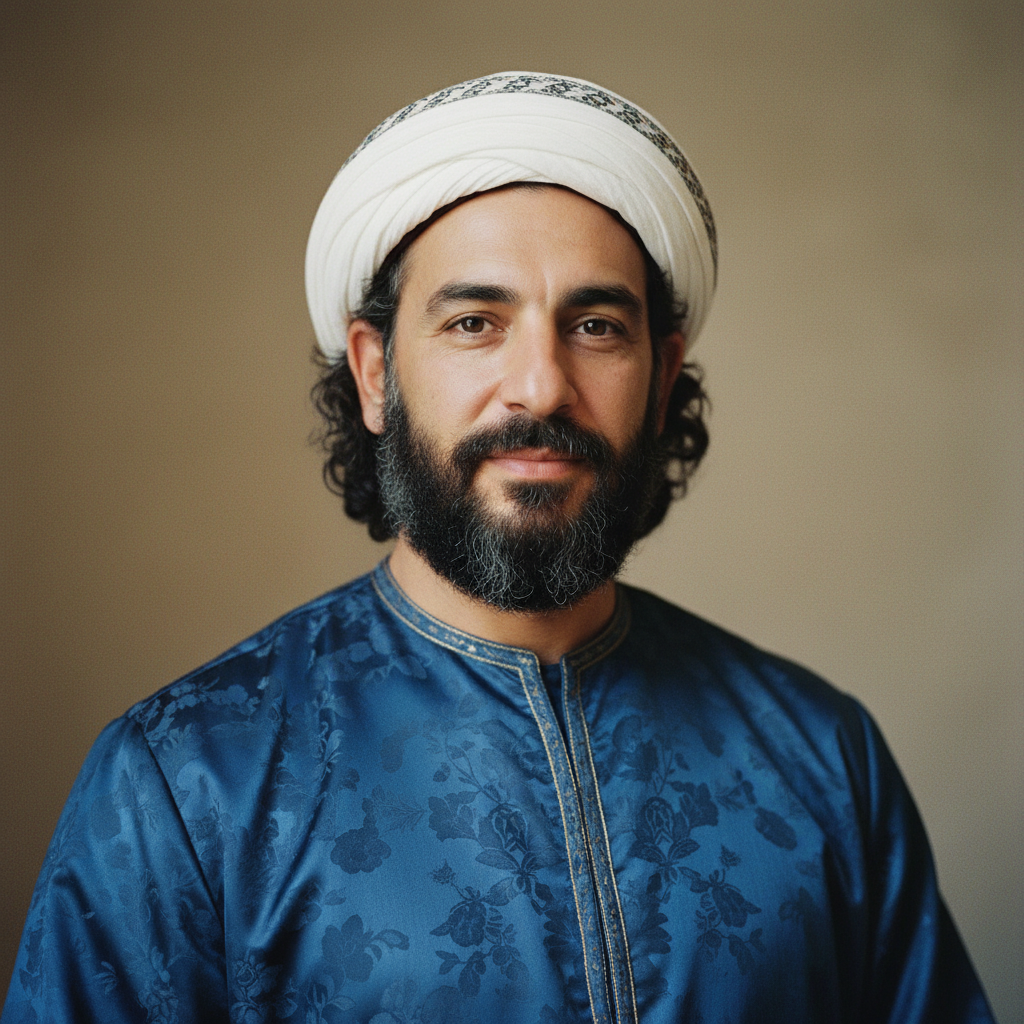
In life Saladin would have looked like a mature, substantial man rather than a youthful ideal: probably in his forties and fifties during his peak, with dark hair and dark eyes and an olive to medium‑brown complexion. His face was likely shaped by campaigning—firm jaw, a composed, serious expression, and the sort of weathered skin you expect from years in the field. His hair was probably kept short or bound under a turban; facial hair was most likely present as a neatly trimmed beard and mustache rather than long, flowing whiskers or total clean‑shavenness. He would have worn a turban or mail coif and helmet in battle and simpler headwraps at court, so much of his hair was usually covered. Physique and posture conveyed authority: medium to tall and broadly shouldered from constant campaigning, with a straight, upright stance and steady gaze. In public or on campaign he favored practical, dignified dress—armor, a sturdy cloak, well‑made textiles and a functional sword and scabbard—eschewing flashy jewelry for restrained marks of rank.
Height / build
Likely tall for his time · Likely lean and muscular
Hair
Likely dark to graying (in later life) · Likely wavy to curly · Likely receding in later years
Eyes
Likely dark (brown)
Complexion
Likely olive / Mediterranean
Face
Likely long to oval · Likely aquiline (prominent, slightly hooked)
Notable features
Tall, commanding posture; dark eyes; aquiline nose; neatly kept beard; turban/robes
Grooming
Likely full, neatly trimmed beard · Maintained the conventional elite Muslim grooming of his time — well-kept beard, hair usually covered by a turban in public.
Dress / presentation
Ayyubid elite Islamic dress: fine robes and turban for court; mail, lamellar, and practical riding gear when campaigning
height build
Height
Likely tall for his time
Chronicles emphasize a commanding, imposing presence consistent with taller-than-average martial leaders.
height build
Build
Likely lean and muscular
Long-term cavalry command and campaign life imply a wiry, fit body rather than heavy build.
eyes
Eye color
Likely dark (brown)
Typical for Kurdish/Levantine populations and consistent with descriptions emphasizing dark, piercing eyes.
hair
Hair color
Likely dark to graying
Regionally likely dark hair; contemporaneous references to him aging and later portraits show graying in older representations.
hair
Hair texture
Likely wavy to curly
Common hair texture among Kurdish and Levantine men; later depictions and regional norms support this.
face
Nose
Likely aquiline (prominent)
Many Arabic accounts emphasize a noble, distinguished profile; aquiline noses were commonly noted as a mark of presence.
The Islamic and Kurdish-Levantine elite of the 12th century prized dignified modesty, a well-kept beard, high-quality but conservative clothing, and a visibly authoritative bearing. Piety, restraint, and martial competence mattered as much as facial attractiveness; a ruler looked authoritative rather than ostentatiously handsome.
Saladin’s Kurdish roots and long life across Upper Mesopotamia, Syria, and Egypt mean his appearance would blend Kurdish features—olive complexion, dark eyes and hair—with broader Levantine traits, producing a look typical of medieval Near Eastern military aristocrats rather than a narrowly 'European' or 'Arab-only' stereotype.
Modern Western art and film often Eurocentric him (lighter eyes/skin or romantic knightly looks) or portray him as anachronistically exotic; actual likely look was broadly Middle Eastern/Kurdish and militarily austere.
Films and western paintings frequently Eurocentricize Saladin—lighter skin, blue eyes, or romanticized knightly armor—or alternatively make him an exotic fantasy figure. In reality he would have appeared recognizably Middle Eastern, practical in armor when campaigning and modestly elegant in court.
Likely tall for his time — chroniclers emphasize a commanding, imposing presence.
Likely dark (brown), typical for Kurdish and Levantine populations.
Likely dark in youth and dark to graying in later life; probably not bald but likely receded somewhat with age.
Yes — likely a full, neatly trimmed beard consistent with Islamic elite grooming.
His tall, lean stature, calm authoritative bearing, and dignified robes and turban — a presence more impressive than flashy dress.
No authenticated life portrait or mask survives; our visual picture is reconstructed from contemporary texts, later depictions, and regional context.
Al‑Nawādir al‑Sultāniyya wa'l‑Maḥāsin al‑Yūsufiyya (Biography of Saladin)
Baha al‑Din ibn Shaddad · 1192 (near-contemporary)
Near-contemporary biography by a close associate emphasizing Saladin's dignified, pious bearing, martial competence, and age/appearance references that suggest a mature, authoritative figure rather than a youthfully handsome icon.
Al‑Kāmil fi al‑Tārīkh (The Complete History)
Ibn al‑Athir · early 13th century
Chronicle containing descriptions of Saladin’s actions and occasional physical notes; useful for corroborating contemporary impressions of stature and bearing.
Western crusader chronicles and letters
Various (e.g., chroniclers like Richard of Devizes and later Latin accounts) · late 12th–13th centuries
Crusader-era commentary offers outsider impressions—sometimes admiring, sometimes polemical—that highlight his dignity and leadership but often portray him through European preconceptions.
Ayyubid coinage and inscriptions
Ayyubid mints (Egypt & Syria) · 12th century
Coins carry titulary and epigraphic evidence about rulers and dress conventions but rarely realistic portraits; they support status and titulary rather than facial detail.
Later medieval and modern artistic representations
Mamluk & later historians' illustrations, 19th–20th century paintings and statues · 13th century onward (not contemporary)
Post-medieval images (manuscript miniatures, paintings, modern statues) shaped the popular visual image of Saladin but often reflect later tastes and anachronisms.
Regional and dynastic context
Scholarly syntheses on Kurdish origins and Ayyubid court culture · modern scholarship
Provides population- and culture-based inferences about likely complexion, hair, and grooming tied to Kurdish/Levantine elites.
skin
Complexion
Likely olive / Mediterranean
Kurdish origin and Levantine environment imply an olive to light‑brown skin tone typical of regional elites.
grooming
Facial hair
Likely full, neatly trimmed beard
Contemporary Muslim rulers and sources emphasize beards as normative; Baha al‑Din describes him in the expected dignified style.
grooming
Hairline
Likely receding in later life
Older portraits and chroniclers' notes of his age suggest graying and thinning as he matured.
clothing
Everyday court dress
Fine robes and turban (Ayyubid elite dress)
As sultan he would wear high‑quality textiles and turbans in court and ceremonial contexts.
clothing
Campaign attire
Practical riding gear and armor over tunics
Military leader accustomed to campaigning; chronicles and military custom show a mix of armor and flowing garments suitable for cavalry.
cultural
Public bearing
Commanding, dignified, pious
Contemporary biographies stress his dignified, modest bearing and piety, which shaped how he presented himself.