hair
Hair color
Likely dark (brown to black)
Ionian/Greek island populations overwhelmingly had dark hair and surviving poetic and artistic traditions portray Greek women with dark hair.
Portrait reconstruction
0–0 · Lesbos (Ionian Greek world) · Archaic Greece (c. 7th–6th century BCE)
Sappho likely appeared as a graceful, musical woman with long dark hair, expressive eyes, and a poised, lithe build—often shown with a lyre or scroll.
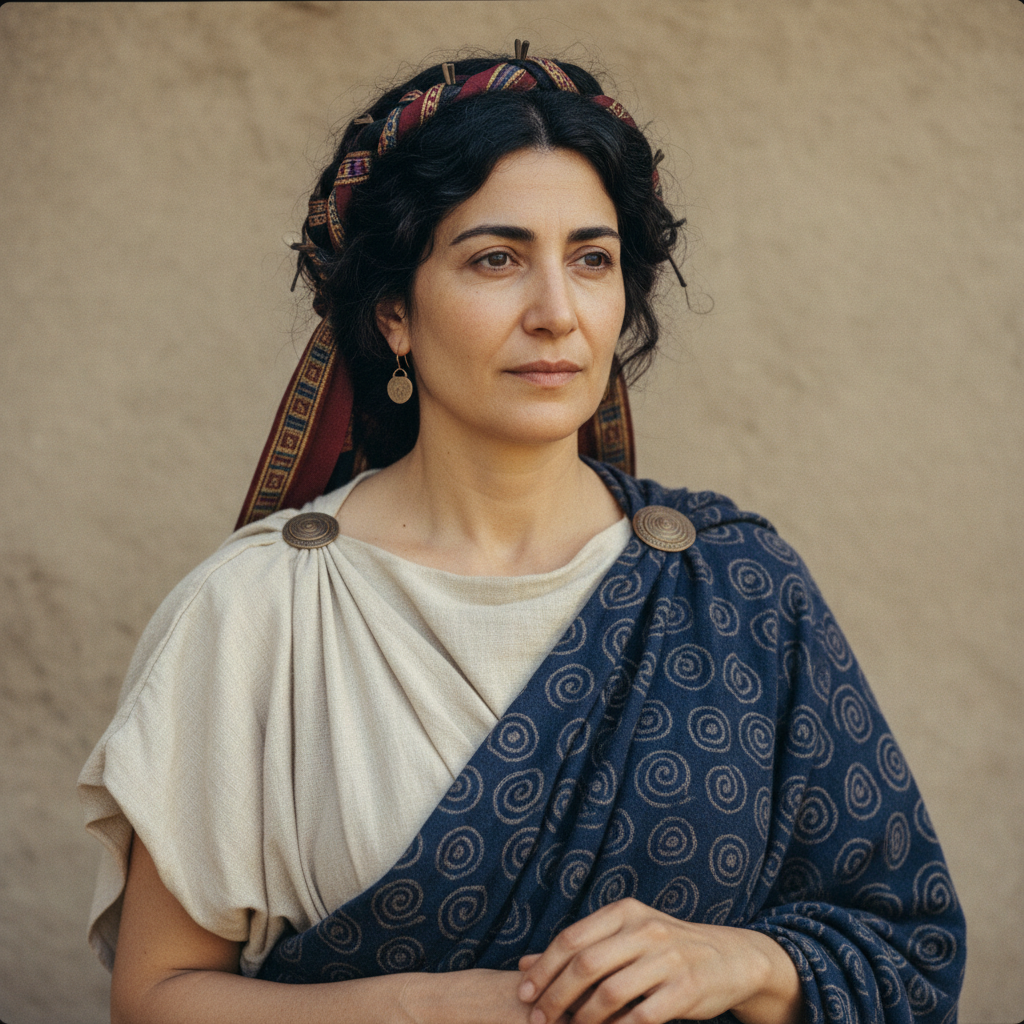
Her hair: probably long, dark, and carefully styled—braids, waves, or pinned-up tresses kept off the face. Images of female musicians and poetesses from the Greek world favor neatly arranged hair with ribbons or pins; for Sappho this suggests a look that's both practical for performance and deliberately arranged to read as dignified. Her face and expression: expect keen, expressive eyes and a face attentive to small gestures—Sappho’s own poems linger on glances, color, and movement, so imagine a face that registers emotion quickly: arched brows, bright eyes, and a sensitive mouth. Complexion would have been Mediterranean—an olive-to-fair tone warmed by sun from Lesbos rather than a pale northern ideal. Her body and bearing: a lithe, erect silhouette—slender and agile rather than heavy-built—comfortable in movement and poised when seated. She would often be shown seated or standing with controlled, elegant hands that suggest both musical technique and the precise gestures of a performer or teacher.
Height / build
Likely average height · Likely slender to moderate build
Hair
Likely dark (brown to black) · Likely wavy · Likely full, usually arranged into braids or ringlets and held with ribbons or pins
Eyes
Likely dark
Complexion
Likely Mediterranean complexion (olive to light‑brown)
Face
Oval to slightly rounded · Straight to slightly aquiline
Notable features
Long, elaborately styled hair; expressive eyes and poised hands (as a lyre player); composed, cultured demeanor.
Grooming
None · Hair was likely well cared for and styled—oiled, braided or curled, and accessorized with ribbons/pins; modest jewelry may have been worn.
Dress / presentation
Archaic Greek female dress: layered chiton and himation, often patterned and fastened with fibulae; hair ribbons and modest jewelry.
hair
Hair color
Likely dark (brown to black)
Ionian/Greek island populations overwhelmingly had dark hair and surviving poetic and artistic traditions portray Greek women with dark hair.
hair
Hair texture
Likely wavy
Mediterranean genetics and vase/statuary hair treatments commonly show wavy locks rather than tightly curled or completely straight hair.
hair
Hair style
Worn long, braided or in ringlets, bound with ribbons/pins
Iconography of female poet/musician figures and Archaic female statuary often show elaborately arranged long hair with ribbons or fillets.
eyes
Eye color
Likely dark
Dark eyes were typical in the eastern Aegean; literary emphasis on powerful glances indicates expressive dark eyes in portrayals.
skin
Complexion
Likely Mediterranean complexion (olive to light‑brown)
Regional population traits for Lesbos and the Ionian Greeks point to olive/light‑brown skin tones common in the Aegean.
height build
Height and build
In Sappho's world, a respectable woman's appearance emphasized neatly arranged hair, layered dress, and modest ornamentation: beauty combined orderliness with expressive features. Female performers and women of artistic standing balanced decorum with visible markers of craft—hair worked into braids or ringlets, patterned textiles, and subtle jewelry signaled both status and feminine virtue.
Lesbos sat in the eastern Aegean, culturally Greek but in contact with Anatolia; the local population typically had Mediterranean features—olive skin, dark hair, and dark eyes. That regional context helps us picture Sappho as an Ionian woman whose physical traits matched the wider eastern Greek world rather than later northern European stereotypes.
Modern images often sexualize or anachronize Sappho (e.g., Victorian or modern glamor styles); actual Archaic portrayals emphasize dress, hairwork, and the poet's role rather than modern fashion looks.
Modern art and media often present Sappho as a modern beauty icon or sexualized romantic heroine in revealing dress; in reality, Archaic portrayals and social expectations favor modest, well‑dressed presentation. Also, many modern images borrow Victorian or contemporary fashion rather than Archaic Greek costume and hairwork.
Likely average height for an Archaic Greek woman.
Likely dark.
Likely dark — brown to black.
Yes — later tradition presents her as attractive and charismatic.
A layered chiton and himation with modest jewelry; hair bound with ribbons or pins.
No securely identified contemporary portrait survives; later statue types and vase images form the visual basis for her image.
Sappho's own fragments (poems)
Sappho (poems/fragments) · c. 7th–6th century BCE (poems date)
Sappho's surviving lines create a poetic persona—obsessive about love and keenly attentive to glance, complexion, and gestures—which informs how later readers imagined her appearance and comportment.
Attic red‑figure pottery showing women with lyres
Attic red-figure pottery (various examples) · 5th–4th century BCE (artworks)
Vase paintings depict female musicians and poetic performers with long styled hair, chitons, and poised hands—visual templates used to imagine Sappho.
Hellenistic/Roman poetess statue types
Roman copies of Hellenistic poetess statues (labelled 'Sappho' in later tradition) · Hellenistic originals c. 3rd–2nd century BCE; Roman copies 1st–2nd century CE
Seated or standing female figures holding scrolls or lyres became identification markers for poetesses; many later collections labelled these as Sappho, shaping her visual identity.
Suda entry on Sappho
Suda (Byzantine lexicon) · 10th century CE (compilation)
The Suda preserves later ancient biographical traditions about Sappho—her family, reputation, and anecdotes such as being called a 'tenth Muse'—which influenced how later generations pictured her appearance.
Athenaeus, Deipnosophistae (anecdotes about poets)
Athenaeus, Deipnosophistae · c. 3rd century CE
Athenaeus preserves quotations and anecdotes about Sappho that fueled later visual and literary impressions of her persona and attractiveness.
Modern scholarship and translations
Modern scholars and translators (e.g., Anne Carson) · 20th–21st century
Contemporary translators and scholars synthesize fragments, iconography, and tradition to produce the most informed modern portraits of Sappho's likely appearance and public persona.
Likely average height, slender to moderate build
Female stature in ancient Greece was modest; artistic types for cultured women emphasize a lithe, not heavy, form suitable for performance.
clothing
Clothing style
Archaic Greek chiton and himation, modest and patterned
Female performers and poetesses are depicted in literary and visual sources wearing layered chitons and himatia with decorative elements.
other
Notable performer features
Poised hands and posture for lyre performance
Iconography of lyric poets emphasizes the hands and posture of performers—Sappho would likely be shown with practiced, expressive hands.
cultural
Grooming
Well‑groomed hair, modest jewelry, tidy appearance
Archaic Greek female respectability and the role of a professional poet imply careful grooming and tasteful ornamentation.
comparison
Perceived attractiveness
Considered attractive and charismatic
Later traditions call her a 'tenth Muse' and praise her allure; this literary reputation shaped artistic portrayals of her as striking and charismatic.