height build
Height
Likely tall for his time
Early European accounts and oral tradition describe Shaka as physically imposing and taller than many he met.
Portrait reconstruction
1787–1828 · KwaZulu/Natal (southern Africa) · Early 19th century
Shaka looked like an imposing, powerfully built Zulu king with dark skin, likely short dark hair, probably clean-shaven, and dressed in practical warrior gear accented by royal hides and ornaments.
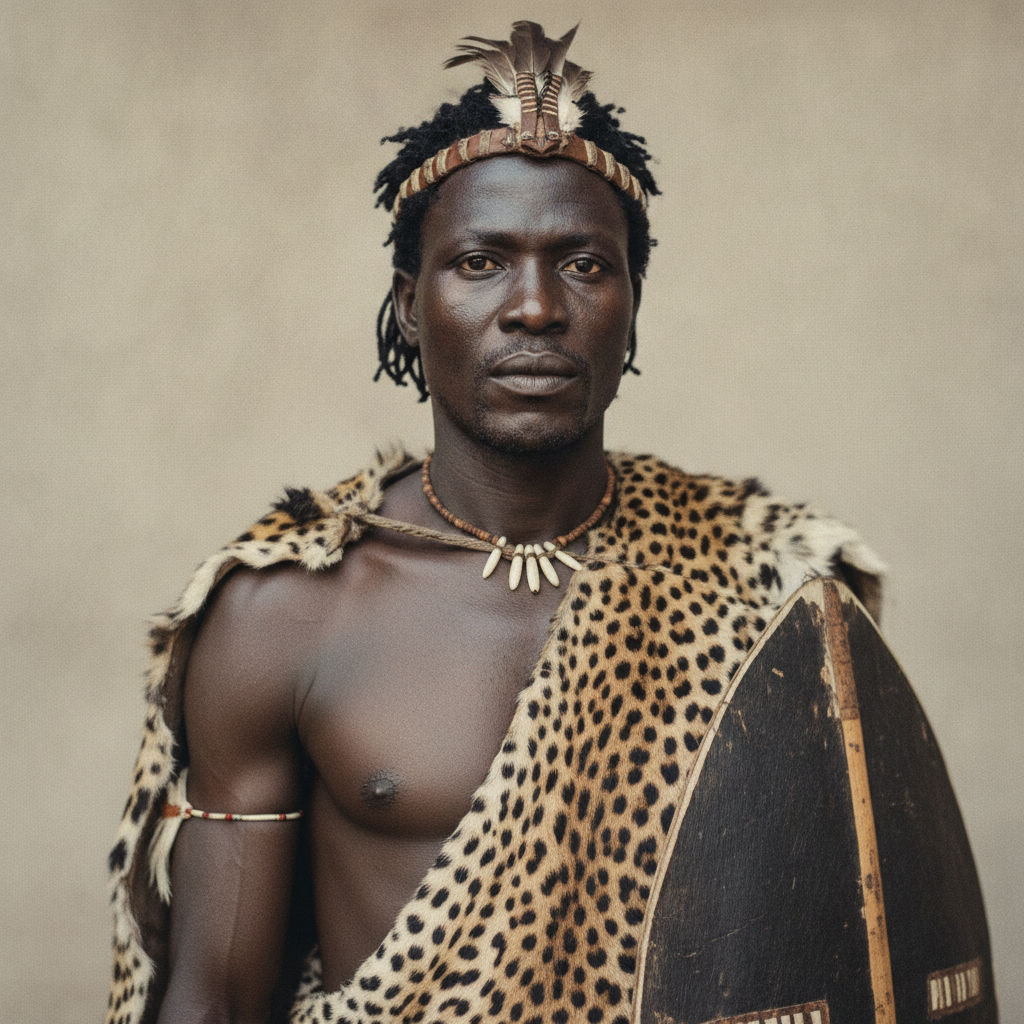
Skin tone and build: Shaka would have had deep brown skin typical of Nguni peoples of KwaZulu/Natal and a compact, muscular warrior’s body—lean, powerful and agile from constant campaigning. His presence was described as intense and commanding rather than simply tall; the body of a man built for quick, disciplined movement and close combat. Face and hair: He most likely had short dark hair or closely cropped styling and was probably clean-shaven, presenting a severe, controlled appearance. Expect broad nose and full lips, high cheekbones and a strong jaw—features consistent with regional Nguni physiognomy—and dark, focused eyes that contributed to a penetrating, authoritative expression. Dress and accoutrements: Shaka’s everyday look balanced practicality and symbolism: short hide garments and a large cowhide shield for battle, with royal insignia—leopard or other animal skins for ceremonial dress, metal armlets, beadwork, and headbands or feathers on special occasions. He often wore compact, functional items suited to warfare while selecting prominent pieces that marked his kingship and command.
Height / build
Likely tall for his time · Likely muscular / stocky
Hair
Likely black · Likely tightly coiled (kinky) hair · Likely hair arranged in traditional Zulu styles (close‑shaven at times with topknot/crest as a leader)
Eyes
Likely dark
Complexion
Likely dark brown
Face
Likely angular to oval with strong cheekbones · Likely broad nose (typical Nguni features)
Notable features
Commanding posture, strong torso, warrior bearing, likely wearing leopard or ox‑hide regalia and distinctive headgear
Grooming
Probably minimal to none (clean‑shaven or light stubble) · Groomed in the Zulu warrior/royal fashion — hair arranged for rank, skin oiled, and body kept fit and scar‑free for combat display.
Dress / presentation
Zulu royal/warrior regalia — hides (often leopard for chiefs), ostrich feathers, leather shield and decorative headbands
height build
Height
Likely tall for his time
Early European accounts and oral tradition describe Shaka as physically imposing and taller than many he met.
height build
Build
Likely muscular / stocky
Leader of a warrior society who personally led troops; sources emphasize endurance and strength from campaigning.
hair
Hair color
Likely black
Typical pigment for Nguni Bantu people and affirmed implicitly by descriptions of dark hair.
hair
Hair texture / style
Likely tightly coiled; styled in Zulu warrior/topknot fashion
Nguni hair texture is tightly coiled; chiefs and warriors wore hair in rank‑signalling styles rather than loose long hair.
face
Eye color
Likely dark
Dark brown eyes are overwhelmingly common among southern African Nguni populations and consistent with traveler notes.
skin
Complexion / skin tone
Likely dark brown
In Shaka's world, physical fitness, visible readiness for combat, and distinctive regalia (animal hides, feathers, shields) broadcasted rank and courage. Clean, maintained bodies and hair arranged to signal regiment and status were more important than delicate 'handsomeness.' Shaka's personal style would emphasize martial authority.
Shaka was Nguni, part of the Bantu peoples of southeastern Africa; picture features common to the region — dark brown skin, tightly coiled black hair, broad nose and strong bone structure — rather than European or North African traits.
Popular films and later art often exaggerate size, ferocity, or 'savage' features and dress him in anachronistic or theatrical costumes rather than historically grounded Zulu royal regalia.
Film and pop imagery often turn Shaka into an oversized 'savage' or dress him in wildly anachronistic costumes. Real Shaka's visual power came from disciplined military dress and rank markers — not mythic or exotic alterations — and his look was culturally specific, not a generic 'primitive' stereotype.
Likely taller than average for his time — contemporaries describe him as physically imposing.
Likely dark brown.
Likely black and tightly coiled; styled in traditional Zulu warrior/royal fashion.
Probably minimal facial hair or clean‑shaven; not a prominent beard.
Zulu royal/warrior regalia: animal hide cloaks (leopard for chiefs), headbands, ostrich feathers and a large cowhide shield.
Contemporary travelers, Zulu oral tradition and later historians combine to give a consistent picture of his bearing, dress and general features.
Recollections of Henry Fynn and Nathaniel Isaacs
Henry Fynn & Nathaniel Isaacs (early travelers) · 1820s–1830s
Early European visitors provided first‑hand descriptive notes of Shaka’s bearing, dress and the impact of his presence — emphasizing a powerful, intimidating leader dressed in hides and regalia.
Zulu oral tradition and praise poems (izibongo)
Zulu oral histories / izibongo · oral tradition (19th century origins)
Oral praise poetry and tradition commemorate Shaka’s martial prowess and public persona, highlighting his imposing nature and kingly dress.
19th–20th century paintings and prints
European and South African artists (various) · mid‑19th to 20th century
Later artistic images show Shaka in leopard skins and dramatic poses; useful for regalia but often influenced by artist imagination and Victorian attitudes.
Modern public statuary and memorials
Various South African memorials (20th–21st century) · 20th–21st century
Public monuments package a visual image of Shaka (regalia, posture) that reflects later national memory more than contemporary likeness.
Modern scholarship on Shaka and the Zulu army
Ian Knight; Jeff Guy; John Laband (historians) · late 20th century – early 21st century
Scholars synthesize early accounts and Zulu sources to describe Shaka’s dress, military bearing and social role, helping build a historically grounded visual profile.
Nguni Bantu populations of KwaZulu have dark sub‑Saharan complexions; contemporary European visitors described dark skin.
grooming
Facial hair
Probably minimal or clean‑shaven
Many Bantu men have sparse facial hair; contemporary descriptions and iconography of Zulu leaders emphasize clean faces or light stubble.
clothing
Regalia / clothing
Leopard or ox‑hide cloak, headband, ostrich feathers, large cowhide shield
Zulu royal and warrior dress used animal hides and feathers as rank markers; sources and later depictions align on these elements.
other
Facial features
Likely strong jaw and prominent cheekbones
Contemporary accounts highlight a striking, severe visage suited to a commanding leader.
cultural
Posture & bearing
Commanding, military bearing
Reports emphasize his disciplined presence, direct gaze, and intimidating authority as part of leadership style.
comparison
How he compared to peers
More imposing and better armed/groomed than most ordinary men/warrriors
As king he wore distinctive regalia and led elite regiments, making him visually stand out.