height build
Height
Likely average height for his time (≈160–165 cm)
Osteological studies and population data place adult male heights in Warring States China in this range; high‑rank status does not imply exceptional height.
Portrait reconstruction
0–0 · State of Wu (lower Yangtze), ancient China · Late Spring and Autumn / Early Warring States period (traditionally 6th–5th century BCE)
Sun Tzu would most likely have looked like a lean, disciplined Wu commander with dark hair in a topknot, modest facial hair, and practical armor or plain robes signaling authority.
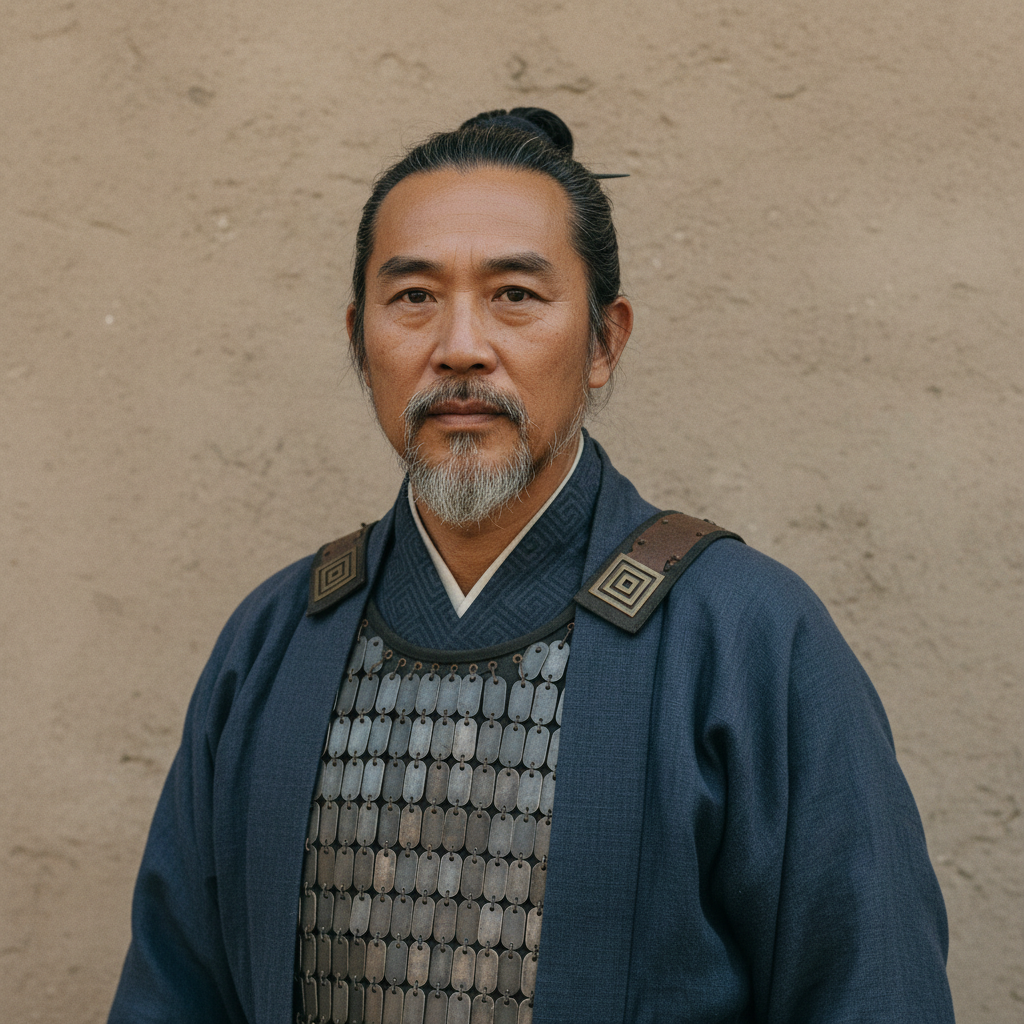
Hair and face: Most likely dark, straight hair gathered into a topknot or tied back—typical of Warring States men—giving a clean, functional silhouette. His face would be composed rather than ornate: a narrow, disciplined profile, alert eyes, and either a short, trimmed beard or a largely clean-shaven jaw that emphasized control and dignity. Clothing and accoutrements: In the field he would favor practical lamellar or scale armor—leather and bronze elements with a protective skirt and shoulder pieces—paired with a simple cloth undergarment and sturdy boots. In court or while teaching he would switch to sober scholar-official robes: long, unadorned sleeves and a plain belt, projecting the same restrained authority as his battlefield dress. Body and bearing: Built for endurance rather than bulk, he would have been relatively short by modern standards (around 160 cm) and lean—compact, wiry, and deceptively strong. His presence came from posture and composure: steady gaze, economical movements, and a calm expression that conveyed strategy and self-control more than physical intimidation.
Height / build
Likely average height for his time (≈160–165 cm) · Likely lean to wiry
Hair
Likely dark to graying · Likely straight · Likely conventional topknot hairstyle; possibly receding with age
Eyes
Likely dark (brown)
Complexion
Likely medium East Asian complexion
Face
Likely oval to angular · Likely straight, medium‑sized
Notable features
Commanding, alert expression; keen eyes; composed military bearing
Grooming
Probably short beard or mustache (or neatly trimmed facial hair) · Likely kept hair tied in a topknot and beard modestly trimmed, reflecting officer status and Confucian/elite grooming norms.
Dress / presentation
Warring‑States military/official robes or practical lamellar armor with rank insignia when on campaign
height build
Height
Likely average height for his time (≈160–165 cm)
Osteological studies and population data place adult male heights in Warring States China in this range; high‑rank status does not imply exceptional height.
height build
Build
Likely lean to wiry
Military life, frequent travel and campaigns favor a wiry, enduring build observed in period depictions and accounts of soldierly life.
eyes
Eye color
Likely dark (brown)
Contemporary and regional population genetics and physical anthropology indicate dark brown eyes were—and are—overwhelmingly predominant.
hair
Hair color
Likely dark to graying
East Asian hair is typically dark; age would bring graying—later portraits show an older man with gray or white hair.
hair
Hair style / texture
Likely straight hair tied in a topknot
Men of his class and period commonly wore hair tied up; archaeological figurines and textual descriptions document topknots and buns.
grooming
Facial hair
In late Spring and Autumn/Warring States China, authority rested on self‑control, age, and orderly presentation: hair neatly tied, modest facial hair, plain but high‑quality clothing, and a composed face. A commanding presence—calm eyes and a measured expression—broadcast competence more than physical bravado.
Sun Tzu, associated with the State of Wu in the lower Yangtze, would look like other southern Chinese elites of his era: East Asian features, dark hair, dark eyes, and a medium complexion influenced by coastal and riverine environments. Clothing and grooming followed elite norms rather than tribal fashions—practical for campaigning but refined enough to mark status.
Modern art often exaggerates age (very long flowing white beard), Westernizes features, or turns him into a fantasy warrior; the historical Sun Tzu was likely less theatrical and more austere.
1) The ultra‑old wise man: Sun Tzu is often shown with an impossibly long white beard—more symbolic than historical. 2) Western features: Some modern art westernizes his face; historically he would have had East Asian features. 3) Theater armor: Film versions outfit him as a fantasy warrior with elaborate, anachronistic armor—actual commanders favored practical armor and sober robes.
Probably average height for his era—around 160–165 cm (about 5'3"–5'5").
Likely dark brown.
Likely dark (turning gray with age) and straight, worn tied in a topknot.
Probably yes—most likely a modest, neatly trimmed beard or mustache.
High‑quality but restrained official robes signaling rank, not gaudy jewelry; on campaign, practical lamellar armor or protective garments.
We combine later literary descriptions, traditional portraits, and archaeological and anthropological data about people, dress, and stature from his region and era to produce the most plausible appearance.
Shiji (Records of the Grand Historian)
Sima Qian, Shiji · c. 91 BCE
Later classical account that places Sun Wu (Sun Tzu) in the State of Wu and recounts his career; shapes later visual tradition though it gives no physical portrait.
The Art of War (Sunzi)
Sunzi (The Art of War) · ancient text (date disputed, traditionally 6th–5th c. BCE)
Foundational military treatise attributed to Sun Tzu; while not a biography, its practical tone informs expectations about a disciplined, composed commander.
Ming/Qing imperial portraits of Sun Tzu
Later Chinese portrait tradition (Ming–Qing era paintings) · 14th–19th centuries
These standardized portraits show Sun Tzu as an older, bearded sage in robes and have strongly influenced modern images—useful for cultural expectations though not contemporary likenesses.
Warring States funerary figurines and armor finds
Archaeological collections (various sites) · 5th–3rd century BCE (Warring States period)
Terracotta and bronze figurines show typical hairstyles (topknots), armor types (lamellar), and proportions for soldiers and officers—useful context for clothing and grooming.
Osteological and anthropometric studies of ancient Chinese populations
Scholarly osteoarchaeology literature · 20th–21st century studies
Skeletal analyses and population studies provide best estimates for stature and build of Warring States era males, supporting an average height near 160 cm and generally lean builds.
Historical descriptions of generals and officers
Various pre‑Han and Han historical texts · pre‑Han and Han periods
Descriptions of military leaders emphasize bearing, discipline, and age as markers of authority—informing how Sun Tzu would have been presented.
Probably short beard or mustache
Elite men and officers in ancient China frequently wore beards or mustaches; later images of Sun Tzu show modest facial hair.
skin
Complexion
Likely medium East Asian complexion
Regional population traits and outdoor military activity suggest a medium yellow‑brown complexion, possibly darker from sun exposure.
clothing
Clothing style
Warring‑States military/official robes or lamellar armor
Historical accounts describe military dress and surviving armor/figurines show lamellar pieces and rank robes for commanders.
face
Facial expression / bearing
Alert, composed, commanding
Literary portraiture of strategists emphasizes clarity, calm, and control; later images of Sun Tzu reflect a reserved, authoritative demeanor.
other
Typical depiction age
Likely portrayed middle‑aged to older (40s–60s)
Authority and experience are central to his image; later portraits show him as an older, wise commander, suggesting tradition favors mid‑to‑older age.