height build
Height
Likely tall for his time
Several contemporary accounts remark on Tecumseh's height and imposing stature compared to other leaders and soldiers.
Portrait reconstruction
1768–1813 · Ohio Valley / Great Lakes (Shawnee nation) · Late 18th — early 19th century (North American frontier)
Tecumseh presented as a tall, muscular Shawnee leader with dark hair and eyes, a commanding, erect bearing, and a practical blend of native and European clothing.
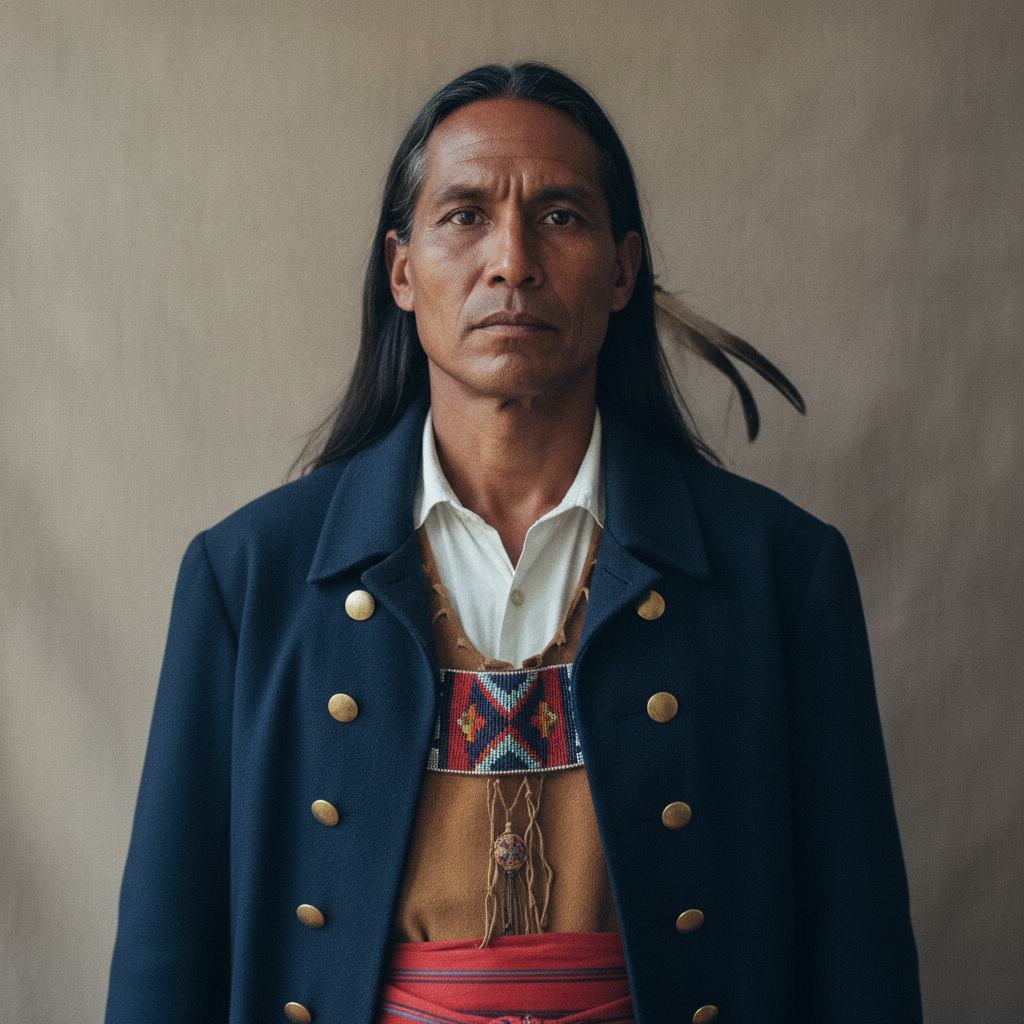
Stature and bearing: Contemporary observers consistently describe Tecumseh as taller than many around him, strongly built and erect in posture. He moved with the energy and confidence of a seasoned leader—broad-shouldered, muscular from frontier life, and physically imposing in person. Face and hair: His face is best imagined with dark eyes and dark hair, likely worn long and often tied back or braided in the Shawnee style, sometimes adorned with a feather or small ornament. Reports emphasize a firm jaw, high cheekbones, and an intense, steady gaze that people remembered as piercing and authoritative. Complexion and facial hair: He likely had a medium-to-darker complexion typical of Ohio Valley indigenous peoples of his time and was generally described as clean-shaven or with little facial hair—presenting a clean, direct facial profile rather than a heavily bearded look. Clothing and surface details: On the frontier he favored a practical, striking appearance—Shawnee buckskin, leggings, moccasins, and sashes for everyday and war dress, but often wore a European coat or cloak during diplomatic meetings. He chose clothes that signaled both native identity and the dignity expected of a statesman.
Height / build
Likely tall for his time · Likely muscular / athletic
Hair
Likely black, possibly dark to graying by death · Likely straight to slightly coarse · Likely full hairline with long hair worn tied back or in traditional styles
Eyes
Likely dark (brown)
Complexion
Likely dark copper-brown
Face
Likely high-cheekboned, oval to angular face · Likely straight to slightly aquiline
Notable features
Tall stature, piercing dark eyes, high cheekbones, long black hair, commanding bearing
Grooming
Probably little facial hair; usually clean-shaven or with minimal mustache · Often wore hair long and bound, sometimes adorned with feathers or a tall plume; combined traditional ornaments with European coats on diplomatic or military occasions.
Dress / presentation
A mix of traditional Shawnee dress (buckskin, beadwork, feathers) and European military or civilian coats and sashes when dealing with officials
height build
Height
Likely tall for his time
Several contemporary accounts remark on Tecumseh's height and imposing stature compared to other leaders and soldiers.
height build
Build
Likely muscular / athletic
As a hunter, warrior, and frequent traveler across the frontier, sources describe him as vigorous and physically fit.
hair
Hair color
Likely black
Shawnee and regional Native populations typically had dark hair; descriptions and portraits consistently show dark hair.
hair
Hair style
Long, tied back or bound, sometimes with feathers/plume
Eyewitness descriptions and period images depict Tecumseh with long hair, often arranged in traditional fashion or adorned when meeting dignitaries.
eyes
Eye color
Likely dark (brown)
Contemporary observers repeatedly note his “piercing” or “keen” dark eyes—consistent with region/population.
skin
Complexion
Likely dark copper-brown
Shawnee and many Eastern Woodland groups valued visible signs of capability and dignity—clear-eyed focus, strong physical bearing, well-kept long hair, and carefully chosen regalia. Leaders often used dress to signal alliances or status, blending traditional ornaments with European coats or sashes when negotiating or fighting.
Tecumseh’s likely dark hair, dark eyes, and copper-brown skin were typical of Shawnee and neighboring tribes of the Ohio Valley—traits shared across Eastern Woodlands peoples shaped by local ancestry and environment.
Modern images often exaggerate or romanticize regalia (full warbonnets, flamboyant feathers) or Europeanize facial features; real descriptions point to a blend of traditional Shawnee dress and practical frontier clothing, plus an unmistakable presence rather than theatrical costume.
Later portraits and films often over-dramatize regalia—showing Tecumseh in elaborate Plains-style warbonnets or anachronistic costumes. In reality he combined practical frontier clothing and Shawnee ornaments; his impact came more from his presence and bearing than theatrical feathered headdresses.
Yes — most contemporary accounts describe him as taller than average, giving him a noticeably imposing presence.
Likely dark (brown); observers describe his eyes as keen and piercing.
Likely black, worn long and bound or decorated with feathers; possibly showing some graying by his 40s.
Probably little to no beard; accounts do not emphasize facial hair and often imply a clean-shaven or lightly mustachioed face.
A combination of Shawnee regalia (buckskin, sashes, feathers) and European-style coats or sashes—intended to show both status and diplomacy.
From contemporary eyewitness reports by officers, traders, and diplomats, plus later biographies that synthesize those accounts and some 19th‑century portraits.
Contemporary eyewitness military and trader reports
Various American and British officers and traders (letters and journals) · c. 1808–1813
Multiple first-hand accounts describe Tecumseh as tall, muscular, dark-eyed, and possessing a commanding presence; they also note his usual combination of Shawnee dress with European coats when on diplomacy.
Tecumseh: A Life
John Sugden · 1997
Modern biography that synthesizes primary documents, offering detailed descriptions of Tecumseh’s appearance, dress, and bearing derived from contemporary sources.
Tecumseh and the Quest for Indian Leadership
R. David Edmunds · 1983
Scholarly treatment of Tecumseh’s life and leadership that discusses how he presented himself visually and politically across the frontier.
19th‑century portraits and lithographs of Tecumseh
Various 19th-century artists (posthumous images) · c. 1815–1870
Posthumous portraits and engravings that show a standardized image—dark hair, tall figure, often embellished regalia; useful for popular image but often romanticized and not eyewitness originals.
Commemorative statues and monuments
Various sculptors and civic memorials · late 19th century onward
Later monuments present heroic visualizations—useful for understanding public memory but based on later interpretations rather than primary likenesses.
The Life and Adventures of Tecumseh
Benjamin Drake · 1841
Early popular biography that collected tradition and some earlier reports; influential in shaping 19th-century image though written decades after Tecumseh’s death.
As an Eastern Woodlands Native American, accounts describe him in terms consistent with a medium-to-dark Indigenous complexion.
grooming
Facial hair
Probably little to no beard; occasional mustache
Many Native men in the region bore little facial hair; sources do not emphasize a heavy beard for Tecumseh.
clothing
Typical dress
Mix of Shawnee regalia and European coats/sashes
Diplomats and warriors of his rank commonly combined traditional clothing with military or civilian coats when meeting officials; descriptions and images of Tecumseh reflect this blend.
face
Facial features
High cheekbones and angular face
Observers comment on his sharp, commanding face and clear, expressive features—qualities often phrased as high cheekbones and an angular profile.
other
Presence
Commanding, charismatic bearing
Numerous reports emphasize Tecumseh’s powerful presence and persuasive look as central to his leadership.