height build
Height
Likely average height (≈150–155 cm)
Osteological averages for the period and absence of claims of unusual stature point to typical female height for Tang-era northern China.
Portrait reconstruction
624–705 · China (Tang court, northern China) · Tang dynasty (7th–8th century)
Wu Zetian likely wore her dark hair swept high into an ornate headdress, a pale, rouged face with shaped brows and kohl‑defined eyes, and sumptuous embroidered robes and jewelry that announced her imperial rank.
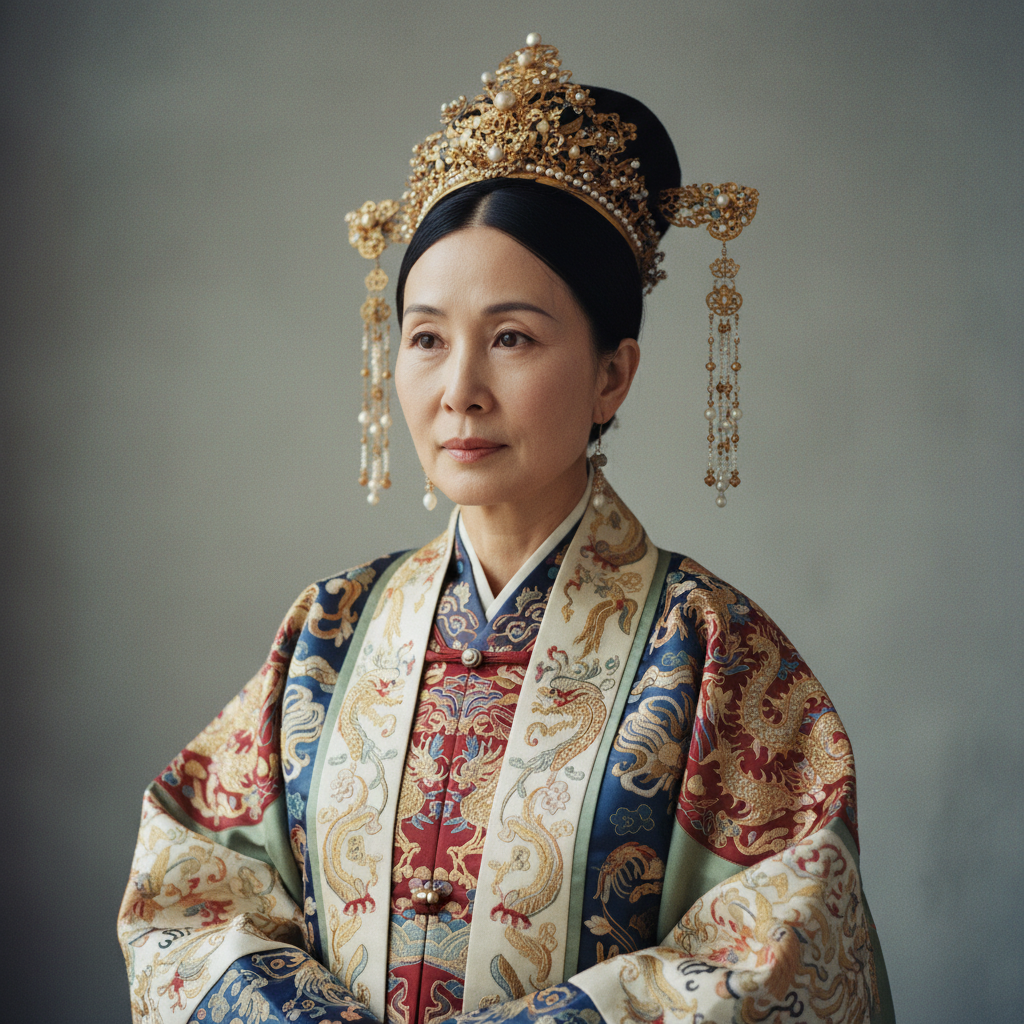
Face and skin: She most likely had an oval, softly rounded face with a smooth, pale complexion enhanced by white powder and red rouge on cheeks and lips—Tang cosmetics favored a luminous, carefully finished skin. Her eyes would have been defined with dark kohl or pigment and framed by shaped, elegant brows—often described in period tastes as willow‑leaf or gently arched; she was probably clean‑shaven and presented a composed, authoritative expression rather than a flashy one. Hair and headdress: Her hair was almost certainly dark and worn piled high in an elaborate coiffure—large buns or loops secured with gold pins, jade and pearl ornaments, and, on ceremonial occasions, the empress’s phoenix coronet (fengguan). Forehead decorations (small floral or jeweled appliqués) and dangling hairpieces were common at court, so she would have appeared tall and richly adorned from the front and profile alike. Clothing and jewelry: For daily court appearance she would have worn layered silk robes with wide sleeves and high‑status embroidery—dragon and phoenix motifs, gold thread, and dense brocade reserved for the court. Jewelry was conspicuous: multi‑strand necklaces, drop earrings, hair jewels and belts of gold, jade, and pearls. Combined with a confident, upright bearing, these elements created an image of imperial dignity and visible authority.
Height / build
Likely average height (for Tang-era Chinese women, roughly 150–155 cm) · Likely average to slender
Hair
Likely dark black · Likely straight · Likely full hair; typically arranged in high, elaborate imperial coiffures
Eyes
Likely dark (dark brown/black)
Complexion
Likely fair to light yellow (paler than outdoor laboring populations)
Face
Likely oval to slightly long/elongated · Likely straight and medium in proportion
Notable features
Regal bearing and composure; refined, elongated face and high forehead; ornate headdress and embroidered robes that emphasized status.
Grooming
None (female) · Elaborate court hairstyling with pins and coronets; cosmetics including powdered face, rouged cheeks, and styled eyebrows.
Dress / presentation
Formal Tang imperial court robes with wide sleeves, layered silks, and imperial headdress (phoenix coronet/ji and hairpins)
height build
Height
Likely average height (≈150–155 cm)
Osteological averages for the period and absence of claims of unusual stature point to typical female height for Tang-era northern China.
height build
Build
Likely average to slender
Court lifestyle and portrait conventions emphasize poise and refined lines rather than heavy musculature.
eyes
Eye color
Likely dark (dark brown/black)
Typical East Asian pigmentation for Han populations of northern China; contemporary portraits and descriptions do not suggest non-dark eyes.
hair
Hair color
Likely black
East Asian phenotype and the way hair is rendered in Tang portraits and tomb art indicate dark-black hair.
hair
Hair texture & style
Likely straight; styled into tall, elaborate imperial coiffures
Tang court fashion for elite women used high coifs, hairpieces and ornate pins visible in murals and statuary.
skin
Complexion
Tang-era elites valued visible signs of wealth and leisure—pale, well-maintained skin, painted cheeks and brows, and elaborate hair and jewelry. For an empress, those beauty practices were combined with ritual dress and symbols (headdresses, specific patterns and colors) that asserted imperial dignity as much as attractiveness.
Wu Zetian was Han Chinese raised in the northern/central Tang court environment. That population context implies straight, dark hair and dark eyes as baseline traits; court cosmetics and hairpieces then layered formal, highly visible signs of status over those biological features.
Modern images often sexualize, exoticize, or westernize Wu Zetian; real Tang presentation was centered on imperial ritual dress, elaborate East Asian coiffure, and a commanding, dignified bearing.
Modern film and art often either sexualize Wu Zetian as a seductress or give her exaggerated western features and dramatic costumes. Historical visual culture presents her as a stately, carefully dressed ruler whose look emphasized ritualized imperial authority rather than personal eroticism.
Likely average height for a Tang-era woman (roughly 150–155 cm).
Likely dark (dark brown to black).
Likely dark black, usually arranged in a tall, elaborate imperial style.
Yes—official histories and later tradition describe her as beautiful and commanding.
No—she was consistently portrayed as a woman with no facial hair.
Not exactly—modern films often exaggerate or westernize features; historically she would have been presented in Tang-style dress and coiffure with East Asian features.
Jiu Tang Shu (Old Book of Tang)
Old Book of Tang · c. 945
Contains biographies and descriptions of Wu Zetian that emphasize her beauty, intelligence, and imperial bearing; influenced later visual portrayals.
Xin Tang Shu (New Book of Tang)
New Book of Tang · c. 1060
A later official history that reiterates descriptions of Wu Zetian's beauty and majesty; used by later painters and sculptors as a literary source for her image.
Zizhi Tongjian (Comprehensive Mirror)
Sima Guang, Zizhi Tongjian · 1084
Chronicle that recounts her life and reign and includes character impressions that shaped later historical memory about her presentation and demeanor.
Mogao Cave murals (Dunhuang) — Tang-period female figures
Mogao (Dunhuang) murals · 7th–8th centuries (Tang)
Courtly images of women from the Tang era showing hair, cosmetics, clothing and posture for elite women—useful visual parallels for how an empress would appear.
Longmen Grottoes sculptures (Tang period)
Longmen Grottoes · 7th–8th centuries
Stone sculptures of courtly and divine figures from the Tang era showing hairstyle, robe folds and jewelry conventions that informed imperial portraiture.
Song–Ming dynasty portraits and album leaves of Wu Zetian
Later imperial portraits (Song–Ming) · 10th–16th centuries (various)
Posthumous portraits created centuries later that codified an imperial image—useful for how later Chinese tradition visualized her but influenced by later aesthetics.
Tang court costume archaeology (textiles, tomb finds)
Likely fair to light yellow (made paler by cosmetics)
Elite indoor life and Tang beauty practices favored paler, powdered skin; murals and literary references to cosmetics support this.
face
Face shape & presence
Likely oval to slightly long with a commanding bearing
Later court portraits and textual praise emphasize refined, dignified facial features and majesty rather than plainness.
grooming
Cosmetics and grooming
Used powdered face, rouged cheeks, styled eyebrows, and elaborate hair ornaments
Tang court beauty routines and surviving visual evidence show powdered face, colored cheeks, and decorative headdresses for elite women.
clothing
Clothing style
Imperial Tang court robes—layered silks, wide sleeves, ornamented headdress (phoenix coronet)
Archaeological textiles, murals, and court records describe high-status Tang dress and imperial insignia.
other
Facial hair
None (female)
She was a woman and portrayed as such in all visual and textual sources; no historical claim of facial hair exists.
Archaeological studies of Tang textiles and costume · 20th–21st century scholarship reporting Tang-period finds
Material evidence of silk cut, embroidery, and accessories corroborates descriptions of elite dress and imperial regalia used in reconstructions of Wu Zetian's court appearance.
Contemporary-style women portraits in Tang tomb art
Tang tomb murals and figurines · 7th–8th centuries
Depict typical elite female physiognomy, hairstyles, and dress conventions that provide the best visual analogues for Wu Zetian's likely presentation.