hair
Hair color
Likely dark brown to black
Coins and busts show dark‑toned hair styles; regional population and portrait conventions point to dark hair.
Portrait reconstruction
0–0 · Palmyra (Roman Syria) · 3rd century CE
Zenobia most likely had dark, center‑parted hair held with a diadem, olive skin, large dark eyes, and wore Hellenized royal dress with bold jewelry.
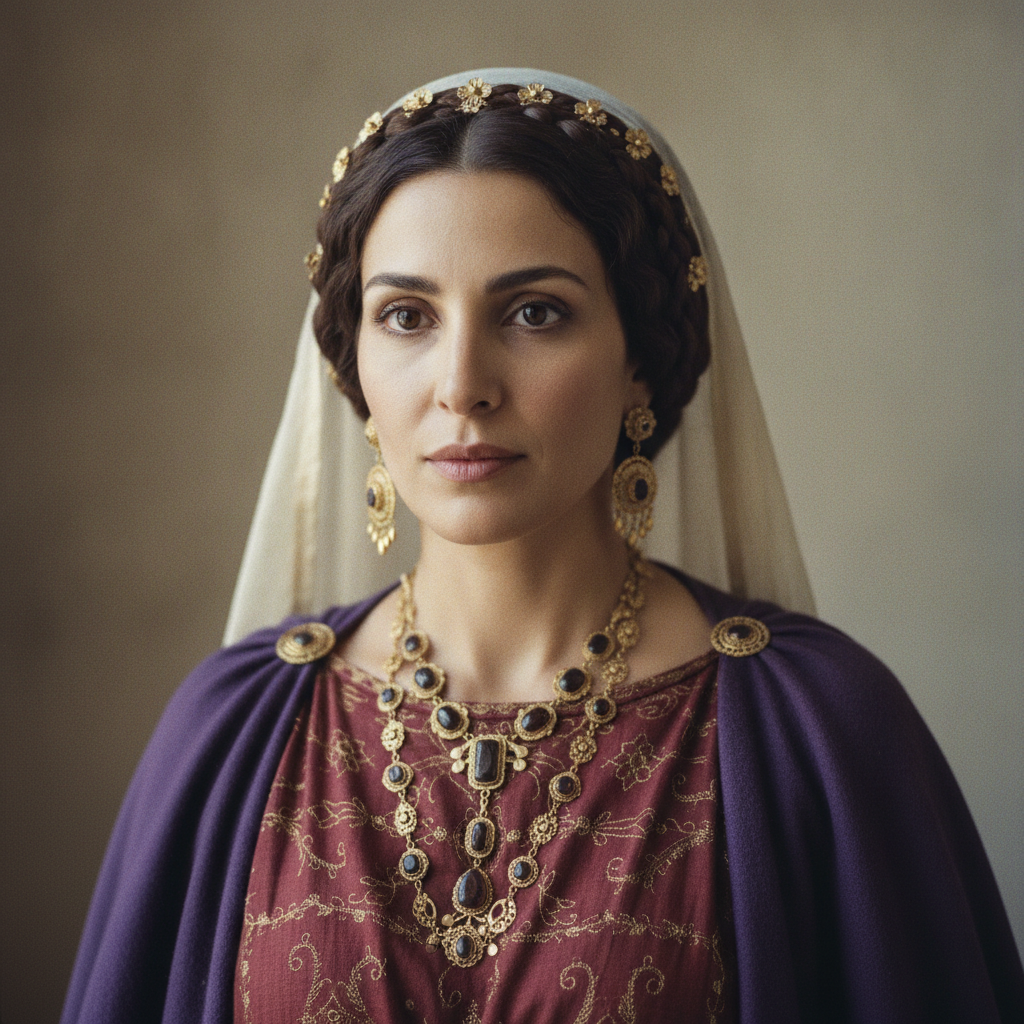
Her face would read as classically Near‑Eastern Mediterranean: olive skin, large almond‑shaped dark eyes emphasized by stylized portraiture, and a straight to slightly aquiline nose set above full lips and a firm jawline. Coins and Palmyrene portraits favor bold, frontal features that convey presence and authority rather than delicate detail. Hair was a defining feature: likely dark and center‑parted, pulled into symmetrical rolls, braids or piled arrangements that frame the face. A thin, jeweled diadem sat across the forehead in official images, sometimes paired with a headband or veil — a neat, formal hairstyle that reads as both fashionable and sovereign. Her clothing and jewelry completed the picture: Hellenized court dress (draped garments with rich folds), large earrings, layered necklaces and decorative pins or brooches. The overall effect is regal and composed — a woman groomed for public power, probably clean‑shaven and presented without facial hair, with jewelry and hairstyle signaling elite status as clearly as her face did.
Height / build
Likely average height · Likely slender to average build
Hair
Likely dark brown to black · Likely wavy · Likely center‑parted and arranged into braids/buns under a diadem or veil
Eyes
Likely dark (brown)
Complexion
Likely Mediterranean / olive
Face
Likely oval with defined cheekbones · Likely aquiline / slightly prominent
Notable features
Large dark eyes, pronounced nose, full lips, diadem/veil and conspicuous jewelry
Grooming
None · Elaborate grooming—styled hair, jewelry, and cosmetics (kohl for eyes, light rouge) consistent with elite Palmyrene and Roman practice.
Dress / presentation
Hellenized eastern royal dress: embroidered robe (tunica/peplos), cloak, diadem or fillet, heavy necklaces and earrings
hair
Hair color
Likely dark brown to black
Coins and busts show dark‑toned hair styles; regional population and portrait conventions point to dark hair.
hair
Hair style
Center‑parted, arranged in braids/buns and adorned with a diadem or veil
Coin portraits and Palmyrene sculpture repeatedly depict a center part and elaborate updo often combined with a royal fillet/diadem.
eyes
Eye color
Likely dark (brown)
Near Eastern Mediterranean populations and artistic convention render eyes as large and dark; literary sources emphasize expressive eyes.
skin
Complexion
Likely Mediterranean / olive
Palmyra's Levantine population and surviving portraits point to olive to light‑brown tones common in the region.
face
Facial shape & features
Oval face with pronounced (aquiline) nose, full lips and large eyes
Busts and coins idealize strong noses, full mouths and large eyes—features emphasized in Palmyrene royal imagery.
height build
Height
Palmyra blended Hellenistic, Roman and Near Eastern aesthetics: authority was signaled by a diadem and imperial dress, wealth by layered jewelry, and femininity by elaborate hair and eye cosmetics. A queen’s public image emphasized regality and dignity over intimate realism.
Zenobia came from a cosmopolitan merchant elite in the Syrian desert city of Palmyra. Imagine a Levantine woman with mixed Mediterranean and Near Eastern features—olive skin, dark eyes, and dark wavy hair—dressed in fashions that mixed Roman formal dress with local jewelry and veiling traditions.
Modern images often exoticize Zenobia as a blond or overtly 'Oriental' fantasy figure; surviving coins and busts suggest a Near‑Eastern Mediterranean look with dark hair and classical regal styling.
Films and paintings often turn Zenobia into a romanticized 'oriental' fantasy—blonde, heavily sexualized, or wearing anachronistic costumes. Surviving portraits emphasize a dignified, Near‑Eastern royal look with dark features and classical styling, not the exotic stereotypes.
Likely average height.
Likely dark (brown).
Likely dark brown to black and wavy, worn center‑parted in braids/buns under a diadem or veil.
Yes—later ancient writers describe her as striking, and official portraits present an idealized, commanding beauty.
No—portraits show a clean‑faced female appearance.
Probably similar in general appearance—coins and Palmyrene portraits present the official, idealized image used for public display.
Coin portrait of Zenobia (c. 267–272 CE)
Imperial/Palmyrene coinage · c. 267–272 CE
Multiple coins show a diademed, frontal female head with center‑parted hair and stylized facial features; these are official royal portraits used to project authority.
Palmyrene funerary portraits and busts (3rd century)
Palmyra archaeological corpus (funerary reliefs and portrait busts) · 3rd century CE
Local sculpted portraits show elite women with center‑parted, elaborately arranged hair, large eyes, jewelry and Mediterranean features consistent with Zenobia’s portrayed style.
Museum head(s) attributed to Zenobia (various modern attributions)
Museum collections (Louvre, British Museum, others—some attributions debated) · 3rd century CE (object dates)
Certain museum portrait heads are popularly labelled 'Zenobia' and show the characteristic hairstyle and diadem that match coin imagery; attribution to her specifically is debated but style is diagnostic of Palmyrene elite.
Historia Augusta and later ancient descriptions
Historia Augusta (and later sources like Zosimus) · 4th–5th century (later ancient)
Later literary sources describe Zenobia as remarkable in beauty and intellect; these accounts shaped medieval and modern reputations though they post‑date her rule.
Byzantine and Arabic medieval accounts
Later chronicles and legends · 6th–12th centuries (various)
Later chronicles amplify her beauty and exoticism; useful for reception history but less reliable for precise physical detail.
Modern scholarly reconstructions
Modern historians and numismatists (e.g., studies of Palmyra and Zenobia) · 20th–21st century
Contemporary work assembles coins, busts and cultural context to propose a Near‑Eastern Mediterranean appearance: dark hair, brown eyes, olive skin and Hellenized royal dress.
Likely average height
No direct measurement survives; most elite women in the region fall around average for Mediterranean populations.
height build
Build
Likely slender to average build
Elite dress and funerary reliefs show a composed, relatively slender silhouette rather than heavy set forms.
grooming
Grooming and cosmetics
Elaborate grooming with kohl, rouge and conspicuous jewelry
Eastern Mediterranean elite used eye cosmetics and jewelry; coins and reliefs show ornamentation and stylized eyes.
clothing
Clothing style
Hellenized eastern royal dress—embroidered tunic, cloak, diadem or fillet, heavy necklaces
Palmyrene royal imagery mixes Roman imperial costume elements with Near Eastern jewelry and veils on coins and busts.
cultural
Public presentation
Commanding and regal rather than intimate or domestic
She appears on coins and official portraits wearing diadems and imperial iconography to project sovereignty.
comparison
Resembles other Palmyrene noblewomen
Probably shared hair and jewelry fashions with Palmyrene elite women
Funerary reliefs and local portraiture show a consistent elite female style: center part, elaborate hair, and rich jewelry.